Beyond the Power Drill: A Comprehensive Guide to the Milwaukee Redlithium USB Ecosystem

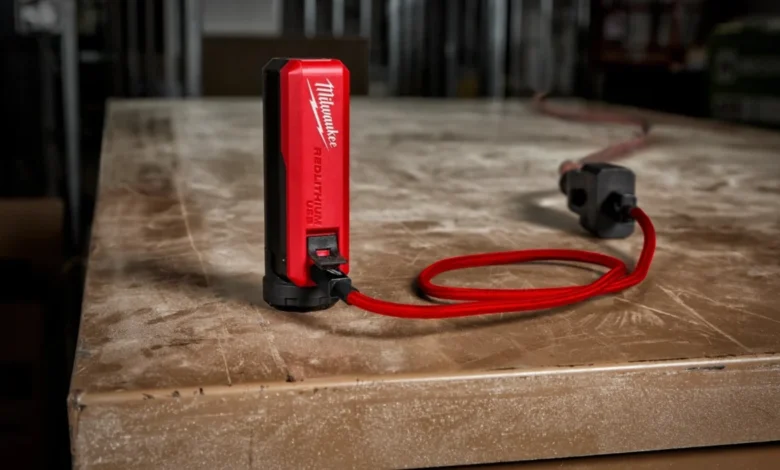
Milwaukee Tool has cultivated a legacy of industrial dominance that spans over a century, tracing its origins to the 1923 collapse of the A.H. Petersen Company. Since its inception, the Wisconsin-based manufacturer has evolved from a niche producer of specialized drilling equipment into a global titan of the construction and DIY sectors. While the company is most frequently associated with its high-voltage cordless platforms—specifically the M12 and M18 systems that have redefined jobsite efficiency—a lesser-known but equally strategic pillar of their catalog is the Redlithium USB line. These compact, portable power solutions represent a pivot toward the "smart" jobsite, focusing on personal equipment, precision measurement, and ergonomic lighting that bridges the gap between traditional power tools and modern electronic utility.
A Century of Engineering Evolution
The history of Milwaukee Tool is a study in iterative innovation. Following the 1923 reorganization, the company pioneered the "Hole-Shooter," the first lightweight, one-handed electric drill. This focus on user-centric design persisted through the mid-20th century, culminating in the 1949 introduction of the Sawzall, which became the industry standard for reciprocating saws. By the early 21st century, Milwaukee recognized that the professional tradesman’s needs were shifting. The demand for cordless power moved beyond heavy-duty sawing and drilling into the realm of site support, safety, and digital instrumentation.
The Redlithium USB platform was introduced to address a specific pain point: the reliance on disposable alkaline batteries for secondary tools. By implementing a standardized, rechargeable, and removable battery architecture across a wide array of support tools, Milwaukee effectively reduced long-term operating costs for professionals and decreased the environmental impact associated with single-use battery disposal.
The Redlithium USB Battery Standard
At the core of this ecosystem is the Redlithium USB battery, a proprietary rechargeable cell that serves as the universal power source for these devices. Unlike integrated battery tools that become "bricks" once their internal cells degrade, the removable nature of the Redlithium USB system ensures that tools remain serviceable for years. According to technical specifications provided by the manufacturer, these batteries are designed to provide consistent voltage output, ensuring that lighting or measurement tools do not suffer from the "dimming" or "fading" effects often seen in legacy NiCd or cheap lithium-ion products.
Precision and Utility: The Redstick Digital Level
One of the most technically sophisticated entries in the lineup is the Redstick Digital Level. In the construction industry, accuracy is the primary currency. While traditional spirit levels rely on the human eye to interpret a bubble’s position within a vial, the Redstick utilizes Pin Point Measurement Technology. This allows for a digital readout that is accurate to 0.03 degrees at level and plumb.
The integration of digital technology allows for features that mechanical levels cannot replicate: a "Pin Mode" that locks in a specific angle for repetitive tasks, and an audible signal that allows a user to achieve a perfect level without having to look at the display. From a structural integrity standpoint, these levels are IP65-rated, meaning they are protected against dust ingress and low-pressure water jets, a critical requirement for tools utilized in the unpredictable environments of active building sites.
Lighting Solutions: From Hard Hats to Neckwear
Milwaukee’s dominance in the jobsite lighting sector is perhaps most visible through its Redlithium USB headlamps and specialized task lights. The company has moved beyond generic illumination, designing lights that integrate directly with personal protective equipment (PPE). The "Bolt" system, for instance, allows for a modular approach where cooling fans and high-lumen headlamps attach directly to safety helmets.
The engineering rationale behind these products is safety-driven. The "Jobsite Aware" mode, found in the Bluetooth Jobsite Earbuds, is a direct response to OSHA-related concerns regarding worker hearing protection and situational awareness. By allowing ambient sound to be filtered into the audio feed, workers can listen to communication or music without being completely isolated from the sound of heavy machinery or verbal warnings. This feature reflects an industry-wide trend of integrating "smart" safety features into traditional gear.
Ergonomic Considerations and User Feedback
While the technical specifications of these tools are robust, industry reception has been nuanced. For example, the Milwaukee Redlithium USB Bluetooth Jobsite Earbuds have generated significant discourse among professionals. While praised for their durability and noise reduction rating (NRR) of up to 26 dB with foam tips, some users have reported connectivity and reliability issues. The 3-out-of-5-star rating on major retail platforms suggests that while the concept of a ruggedized, jobsite-specific earbud is sound, the intersection of high-fidelity audio and extreme construction durability remains a difficult engineering challenge.
Conversely, the 400-lumen Neck Light has received higher marks, with a 4.5-out-of-5-star average. This success can be attributed to the tool’s form factor. By resting on the shoulders, it frees up both hands, solves the problem of "shadowing" caused by overhead lighting, and utilizes a lightweight, sweat-resistant design that is conducive to long hours in automotive shops or crawl spaces.
Economic and Environmental Impact
The broader implication of the Redlithium USB system is the consolidation of charging infrastructure. By utilizing USB-C as the primary charging standard for most of the newer models, Milwaukee has aligned itself with global electronics standards. This reduces the need for proprietary charging cradles, which are notorious for being lost or damaged in transit.
Furthermore, the "Charger and Portable Power Source Kit" highlights the company’s intent to keep users within their ecosystem. By allowing the Redlithium USB battery to serve as a power bank for smartphones or other small devices, the company increases the value proposition of the battery itself. For a professional who already carries multiple batteries, the ability to charge a mobile phone during a lunch break adds a layer of convenience that reduces the "kit weight" of a professional’s bag.
Strategic Outlook: Where Does Milwaukee Go Next?
Looking toward the future, Milwaukee’s strategy appears to be one of "total site integration." By expanding into fans, digital levels, and advanced communications, the company is positioning itself not just as a manufacturer of cutting tools, but as a provider of comprehensive site solutions.
The challenge for the company moving forward will be maintaining the balance between technological innovation and the rugged reliability that built their reputation. As more sensors and microchips are integrated into handheld tools, the failure points inherently increase. The transition from the "analog" durability of a steel hammer to the "digital" complexity of a USB-rechargeable laser-aligned level requires a new kind of maintenance expectation from the end-user.
Conclusion
Milwaukee’s Redlithium USB line serves as a microcosm of the modern construction industry: increasingly digital, focused on ergonomics, and deeply integrated into the daily workflow of the professional. While not every product in the lineup will achieve the legendary status of the Sawzall, the initiative demonstrates a forward-thinking approach to jobsite efficiency. By treating lighting, measurement, and personal comfort as critical components of the trade, Milwaukee continues to influence the way modern construction projects are executed, one battery charge at a time. For the professional, the value of these tools lies not in their singular utility, but in the ecosystem they create—one that is safer, smarter, and significantly more efficient than the analog tools of the past.
Related posts: