AWS Weekly Roundup: Generative AI in Agribusiness, Vulnerability Management Reimagined, and Major Service Launches

Amazon Web Services (AWS) has rolled out a sweeping series of infrastructure updates, advanced developer tools, and security architecture improvements designed to shift how enterprises manage cloud environments, hardware abstraction, and artificial intelligence deployment. The latest updates highlight a definitive industry pivot: traditional sectors like agriculture are adopting generative voice interfaces at rapid scales, while software vulnerabilities are escalating faster than conventional patching schedules can accommodate.
From cutting-edge generative voice engines deployed in South American agricultural hubs to end-to-end vulnerability management platforms, the cloud computing giant continues to expand the boundaries of enterprise automation. This week’s developments reflect a broader technological race to shorten remediation windows, decouple software from underlying silicon choices, and abstract complex cloud architectures into streamlined, developer-friendly interfaces.
Bridging the Digital Divide: Generative AI in Brazilian Agribusiness
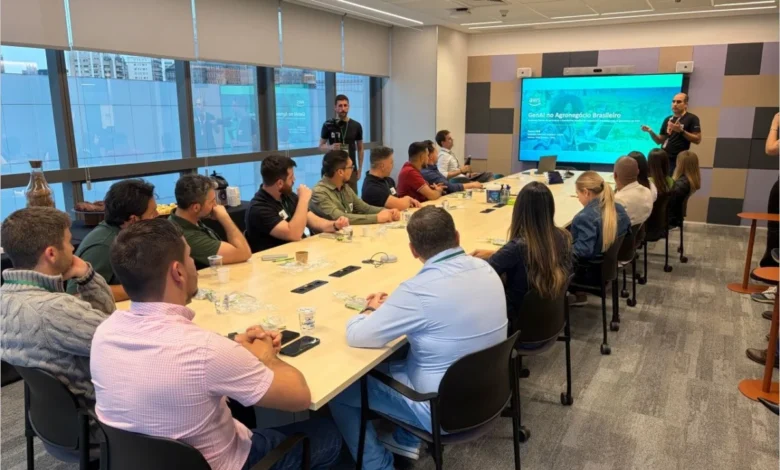
Recent technology briefings at the AWS corporate offices in São Paulo underscored a critical transformation occurring across traditional global industries. Technology leaders within Brazilian agribusiness are moving past theoretical debates regarding the viability of artificial intelligence, focusing instead on practical delivery mechanisms. In demanding operating environments—such as a farm manager driving between remote agricultural plots with both hands on a steering wheel—graphical user interfaces are entirely impractical. Voice represents the primary interface for field operations.
Addressing this real-world operational challenge, the Amazon Polly generative engine upgrade introduces 14 new voices spanning nine locales, including two native Brazilian Portuguese options: Leo and Carolina. With this expansion, Amazon Polly’s catalog now features 57 expressive generative voices across 11 languages and 25 locales. Crucially for engineering teams, this upgrade functions as a drop-in replacement. Existing voice names, API calls to SynthesizeSpeech, and pricing structures remain unchanged, while speech synthesis achieves significantly higher naturalness and conversational fluency. Industry analysts note that tailoring voice engines to regional linguistic nuances accelerates adoption in emerging markets where mobile-first and voice-first applications dictate enterprise productivity.
Reimagining Vulnerability Management with AWS Continuum
Security operations faced a sharp reality check this week as AWS released data proving that the traditional grace period between vulnerability disclosure and active exploitation has virtually vanished. To counter this threat landscape, AWS announced the general availability of AWS Continuum, an advanced service that fundamentally reframes vulnerability management from a passive scanning checklist into an automated, end-to-end remediation pipeline.
Rather than simply handing development teams an extensive list of raw severity scores, AWS Continuum compiles a comprehensive context graph linking code repositories directly to cloud infrastructure. The system evaluates real-world risk by reproducing exploitable findings within an isolated sandbox environment, generating verifiable proof-of-concept code. Findings are automatically ranked based on how closely an active attack path approaches mission-critical corporate systems. Once prioritized, the system generates automated pull requests containing the necessary fixes.
To maintain strict operational governance, the control boundary currently requires human authorization: engineers must review and merge the pull request. However, future iterations will introduce autonomous remediation classes gated behind configurable organizational confidence thresholds. AWS Continuum is currently available in the US East (N. Virginia) and US West (Oregon) regions.
The Shrinking Patch Window: Evidence from MadPot Telemetry
The urgency behind automated tools like AWS Continuum was starkly illustrated by telemetry data published by Amazon Threat Intelligence. Security researchers analyzed activity from MadPot, AWS’s proprietary honeypot network, which captured active exploitation attempts targeting the PHP2Shell vulnerability.
According to official telemetry reports, exploitation attempts for PHP2Shell were logged on October 17—four full days prior to the public disclosure of CVE-2026-109618 and CVE-2026-109619. Furthermore, malicious proof-of-concept exploit code was actively circulating across threat actor forums at approximately 02:00 UTC on disclosure day, a full twelve hours before the official embargo was lifted at 14:00 UTC.
This intelligence yields critical implications for enterprise security strategies. Security analysts emphasize that relying on a patch window measured in days or weeks assumes a delay that no longer exists in the modern threat landscape. Incident response and forensic investigations must now initiate tracking from the earliest recorded exploitation timestamp rather than the official vulnerability disclosure date. In tandem with these findings, AWS published targeted mitigation guidelines utilizing AWS WAF (Web Application Firewall) to protect infrastructure against the PHP2Shell Remote Code Execution (RCE) vulnerabilities.
Streamlining Microservices Architecture with Amazon ECS Gateway
Addressing the operational friction often found in containerized microservices architectures, AWS introduced Amazon ECS Gateway. The new service cleanly divides operational responsibilities between network administration teams and application developers.
Under the new architecture, platform engineering teams define a single, centralized gateway encompassing the organization’s core subnets, security groups, Transport Layer Security (TLS) certificates, listener configurations, and AWS WAF web Access Control Lists (ACLs). Application development teams can then seamlessly opt in by simply attaching a gateway connector to their individual service definitions. In response, Amazon ECS automatically provisions an ACM certificate, a unique DNS hostname, listener routing rules, a target group, and an isolated security group permitting inbound traffic exclusively from the Application Load Control.
Economic and operational metrics for the gateway are compelling: up to 25 distinct services can share a single Application Load Balancer (ALB). ECS autonomously provisions the initial ALB upon the first service connection and gracefully decommissions load balancers when traffic ceases. Furthermore, a single gateway can associate with up to 10,000 individual clusters, with a maximum limit of five gateways per cluster. Enterprises can adopt the architecture incrementally using the UpdateService API without disrupting existing load balancer deployments. Amazon ECS Gateway is available at no additional charge in all commercial AWS regions where Amazon ECS is supported.

Expanding Hardware Freedom and Model Customization
In the artificial intelligence and machine learning sector, hardware lock-in remains a primary concern for enterprise architecture teams. To mitigate this risk, AWS announced the public beta of TorchNeuron, an open-source PyTorch backend designed to facilitate native model execution on AWS Trainium chips.
By executing a simple configuration adjustment—switching model allocation to .to('neuron')—developers can deploy PyTorch models directly onto Trainium infrastructure without code rewrites, preserving standard eager execution and torch.compile functionality. TorchNeuron integrates deeply with the Neuron Kernel Interface, allowing engineers to implement custom operators across Trainium2 and Trainium3 instances. This launch coincides with the release of AWS Neuron 2.33, reinforcing the company’s strategic commitment to offering high-performance, cost-effective alternatives to traditional GPU hardware.
Concurrently, Amazon SageMaker AI introduced new capabilities enabling developers to customize foundational models without the operational overhead of managing physical GPU infrastructure. Fully managed training sessions are now generally available, giving data scientists granular control over advanced post-training loops, including custom loss functions and specialized reward signals. While SageMaker AI manages distributed execution, underlying GPU allocation, automated fault recovery, and checkpoint storage, organizations are billed solely for active processing tokens. The billing meter automatically pauses while custom reward functions evaluate batch outputs. This release expands SageMaker support to include advanced models such as Muse Glimmer, Qwen 3.8, and Ministral 3.
Enterprise Data and Infrastructure Enhancements
Cloud application developers and database administrators also received significant feature upgrades across core AWS data services:
- Structured Outputs on Amazon Bedrock: Anthropic Claude models hosted on Amazon Bedrock now natively support schema-compliant JSON outputs across both
bedrock-runtimeandbedrock-mantleendpoints. This capability eliminates the need for custom parsing scripts, programmatic retry loops, or complex post-processing layers, substantially increasing the reliability of automated financial report analysis, clinical document parsing, and customer support ticket routing. - Zero-Downtime Migration for ElastiCache Serverless: Amazon ElastiCache Serverless for Valkey now supports zero-downtime online migration. Organizations can seamlessly transition self-managed Valkey or Redis OSS databases running on Amazon EC2 directly into ElastiCache Serverless without introducing client errors or requiring third-party replication utilities. Data synchronization and cutover processes can be managed manually or automatically while maintaining strict service-level agreements.
- Dynamic Tool Discovery via AWS Agent Registry: Designed for sophisticated multi-agent AI frameworks, AWS Agent Registry provides a managed catalog for Model Context Protocol (MCP) servers, autonomous agents, and specialized skills. Orchestrator agents can dynamically discover and query approved capabilities at runtime rather than hardcoding tools at build time, retrieving necessary connection metadata while strictly isolating invocation credentials.
Upcoming Industry Events
As the calendar year draws to a close, preparation is underway for major industry gatherings. Registration and session catalog scheduling are officially live for AWS re:Invent, which will take place in Las Vegas from November 30 to December 4, featuring over 2,200 specialized technical sessions. Additionally, the regional community event circuit concludes with AWS Community Day Brasil Norte, scheduled for October 31 in Belém.