Apple iPhone Duo Launch Hits Turbulence as Early Adopters Report Screen Cracking and Severe Creasing Issues

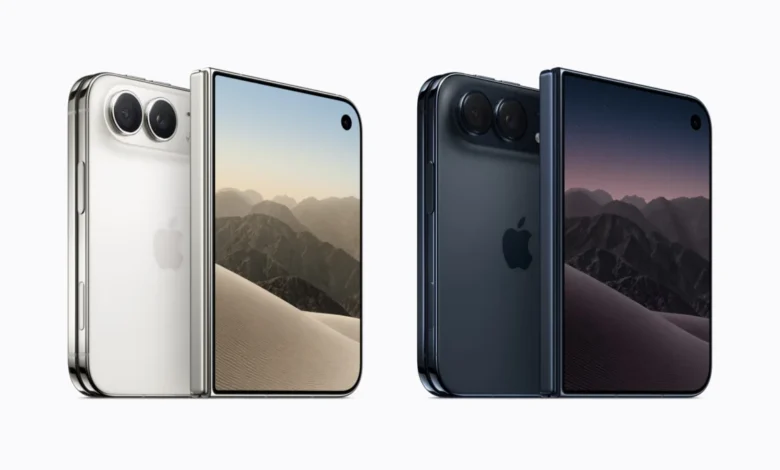
The consumer technology landscape has been shaken by an unexpected hardware crisis following the commercial rollout of the iPhone Duo, Apple’s heavily promoted entry into the foldable smartphone market. Initially unveiled during the company’s high-profile "Surprise and Shine" hardware event, the device was marketed as a masterclass in engineering durability, with Apple executives asserting that the tech giant had finally resolved the persistent durability hurdles that have plagued the foldable sector for nearly a decade.
However, within days of hitting store shelves and arriving on the doorsteps of pre-order customers, the device has become the center of a burgeoning controversy colloquially dubbed "Crackgate." According to investigative reports from Bloomberg and technology publication 404 Media, numerous early adopters have taken to online forums and social media platforms to report catastrophic failures of the device’s inner flexible display.
The complaints describe a distressing user experience: consumers detail hearing a distinct, alarming crunching or popping sound when attempting to unfold the device, immediately followed by the spontaneous development of fractures traversing the active display area. Other users have documented sudden display blackouts, touch-input unresponsiveness, and the rapid formation of pronounced structural ridges running down the center of the panel. For a device carrying a steep starting price tag of $2,000, these structural failures represent a significant quality control challenge for a company renowned for its rigorous hardware reliability standards.
The Evolution of the Foldable Form Factor and Apple’s Delayed Entry
To understand the gravity of the current situation surrounding the iPhone Duo, it is necessary to examine the historical trajectory of foldable mobile devices. For years, Silicon Valley and major international electronics manufacturers—most notably Samsung, Google, and Motorola—have chased the holy grail of flexible display technology. The promise has always been enticing: a compact smartphone that seamlessly expands into a tablet-sized workspace, maximizing productivity, media consumption, and multitasking capabilities.
Yet, translating this concept into a commercially viable, long-lasting consumer product has proven remarkably difficult. Early iterations of foldable phones released by competitors between 2019 and 2023 were plagued by similar structural maladies. Issues included debris ingress beneath the flexible organic light-emitting diode (OLED) panels, hinge mechanisms that collected dust and failed prematurely, and high rates of pixel degradation along the primary fold line.
While competitors iterated rapidly through successive generations—progressively minimizing the visible crease and reinforcing hinge durability—Apple notably remained on the sidelines. Industry analysts and supply chain watchers frequently noted that Apple’s deliberate delay was part of its traditional playbook: wait for an emerging technology to mature, allow competitors to absorb the initial consumer and engineering backlash, and enter the market only when perfection could be approximated.
When Apple finally pulled back the curtain on the iPhone Duo at the Surprise and Shine event, the company leaned heavily into this narrative of deliberate patience. Executives emphasized proprietary ultra-thin glass (UTG) technologies, a newly engineered zero-gap multi-pivot hinge, and advanced stress-distribution layers designed to mitigate the fatigue that flexible materials experience under repeated mechanical strain. Consumers and investors alike were led to believe that Apple’s engineering prowess had successfully leapfrogged the structural vulnerabilities that had haunted the category for years.
Chronology of the iPhone Duo Release and Crisis
The timeline leading up to the current hardware crisis highlights the rapid escalation from marketing triumph to public relations vulnerability.
September 9, 2026: Apple officially unveils the iPhone Duo at its Surprise and Shine hardware showcase. The presentation highlights the device’s sleek profile, advanced multi-tasking software integrations, and proprietary hinge design. Pre-orders open later that week, generating immense consumer demand and pushing shipping estimates back by weeks within hours of going live.
October 20, 2026: The official global release date arrives. Devices are delivered to pre-order customers, and retail stores experience long queues as consumers rush to purchase the $2,000 foldable. Initial unboxing videos and early reviews praise the physical feel of the device, the brightness of the inner display, and the fluidity of the operating system tailored specifically for dual-screen workflows.
October 24, 2026: The first isolated complaints begin to surface on Reddit, MacRumors forums, and X (formerly Twitter). Users report unusual mechanical resistance when opening the phone, accompanied by audible cracking sounds.
October 26, 2026: Major media outlets pick up the story. Bloomberg publishes an investigative report detailing widespread consumer grievances regarding screens cracking "after just hours or days of use." Concurrently, 404 Media reports on early adopters encountering severe display deformations, describing "big fat creases down the middle of the folding screen" that render media consumption distracting and touch inputs erratic. Later that day, Apple issues a preliminary statement acknowledging the issue.
The Nature of the Technical Failures

Technical analysts and hardware repair specialists have begun dissecting the reported failures to understand the root mechanical causes behind the iPhone Duo’s display cracking. Unlike traditional rigid smartphones, which rely on rigid aluminosilicate glass like Corning’s Gorilla Glass or Apple’s proprietary Ceramic Shield, foldable devices must utilize flexible polymer substrates or ultra-thin layers of glass capable of bending hundreds of thousands of times without fracturing.
The primary engineering challenge lies in balancing flexibility with surface hardness. If the material is too flexible, it feels plastic-like and is prone to deep, permanent creases. If the material is too rigid, the repeated tensile and compressive stresses concentrated along the fold axis will eventually exceed the material’s yield strength, resulting in catastrophic brittle failure.
Reports from early iPhone Duo owners suggest that the stress distribution mechanism within the hinge assembly may be failing to properly support the central crease zone when the device is opened or closed. When the multi-pivot hinge applies uneven tension to the ultra-thin display layer, micro-fissures can form in the protective coating or the underlying substrate. Once a microscopic fracture is initiated, the mechanical pressure of subsequent folding cycles rapidly propagates the crack across the entire width of the panel.
Furthermore, the emergence of prominent creases—described by frustrated consumers as unsightly ridges—indicates that the internal support plates designed to push the display flat when unfolded may not be locking securely into place, or are exerting excessive upward pressure against the pliable screen material.
Official Responses and Corporate Stance
As consumer pressure mounted and tech journalism outlets began demanding answers, Apple issued a cautious preliminary statement addressing the hardware anomalies.
In a statement provided to financial and technology publications, an Apple spokesperson confirmed that the company is "aware of an issue impacting the inner display on a small number of iPhone Duo units." The company emphasized that its engineering and customer support teams are actively investigating the root causes and are collecting defective units from retail stores for laboratory analysis in Cupertino.
When TechCrunch and other prominent publications reached out directly for an elaboration on whether the defect stems from a manufacturing batch error, a design flaw, or quality control lapses at assembly partner facilities, Apple declined to provide further specifics, reiterating its standard policy of supporting customers through its AppleCare+ service network.
Industry experts note that how Apple handles the warranty claims and repair protocols for the iPhone Duo will be critical. Given the $2,000 price point, consumers expect white-glove customer service, immediate device replacements, and transparent communication regarding whether the defect is systemic or limited to specific manufacturing runs.
Broader Market Implications for Apple and the Foldable Industry
The early hardware struggles of the iPhone Duo carry significant implications not only for Apple’s financial and brand standing, but for the broader consumer electronics market.
For Apple, the situation represents an uncharacteristic stumble in hardware execution. Historically, the company has built its market dominance on an unyielding reputation for reliability and polish. While occasional software bugs or minor peripheral issues accompany major product launches, structural hardware failures that render a flagship product completely unusable within days of purchase are exceptionally rare for the brand. If the issue is found to stem from a fundamental design flaw in the hinge or display architecture rather than a localized component defect in a specific manufacturing batch, Apple could face costly recall programs, extended repair queues, and potential reputational damage among early adopters.
From an industry perspective, the iPhone Duo’s struggles underscore just how difficult the foldable form factor remains to master. Proponents of foldable technology had hoped that Apple’s entry would serve as the definitive turning point that normalized flexible displays for the mainstream consumer base. Instead, the current crisis demonstrates that even the world’s most valuable technology company, backed by unmatched supply chain leverage and research capital, is not immune to the unforgiving physics of flexible materials.
Competitors such as Samsung and Google may find temporary relief in Apple’s misstep, as it validates their own arduous multi-year journeys in refining hinge mechanics and display durability. However, the broader lesson for the entire mobile industry is that consumer patience for structural fragility in ultra-expensive devices is wearing thin.
As Apple works to diagnose the root causes of Crackgate and formulate a comprehensive remediation strategy, millions of prospective buyers watching from the sidelines will be waiting to see how the tech giant rectifies a launch that has fundamentally altered the narrative surrounding its first major new device category in years.