NASA Awards Relativity Space Terran R Launch Contract Under NLS II On-Ramp Provision

In a strategic expansion of its launch capabilities, NASA has officially awarded Relativity Space Inc. a position on the NASA Launch Services (NLS) II contract, formally inducting the company’s Terran R launch vehicle into the agency’s diverse stable of flight providers. This move, finalized on September 9, 2026, utilizes the NLS II contract’s "on-ramp" provision—a mechanism specifically designed to integrate emerging launch technologies into the government’s operational portfolio. By securing this contract, Relativity Space joins an elite group of aerospace entities tasked with carrying out critical NASA missions, ranging from scientific research and deep-space exploration to climate monitoring for the National Oceanic and Atmospheric Administration (NOAA).
Understanding the NLS II Contract Framework
The NLS II contract serves as the backbone for NASA’s procurement of launch services for uncrewed missions. It is categorized as an indefinite-delivery/indefinite-quantity (IDIQ) contract, which offers NASA the necessary flexibility to order launch services as specific mission requirements arise. This structure is essential for an agency that manages a wide array of payloads with varying mass, orbit, and destination requirements.
The ordering period for these contracts is currently set to run through June 2030, with an overall period of performance extending through December 2032. This timeline provides a long-term roadmap for both the agency and its contractors, allowing for the meticulous planning required for complex scientific missions. The inclusion of the "on-ramp" provision is particularly vital; it ensures that NASA is not locked into legacy technologies. By allowing new providers to compete annually and enabling current partners to introduce upgraded launch vehicles, NASA ensures that its mission architecture remains at the cutting edge of aerospace innovation.
The Significance of the Terran R Vehicle
Relativity Space’s Terran R is a medium-to-heavy lift, reusable launch vehicle that represents a significant shift in manufacturing methodologies. Designed with a heavy emphasis on 3D printing and autonomous manufacturing, the Terran R is engineered to provide a rapid, cost-effective alternative to traditional, labor-intensive rocket construction.
For NASA, the addition of the Terran R provides a versatile tool that bridges the gap between smaller, dedicated small-sat launchers and the ultra-heavy-lift vehicles currently used for large-scale planetary missions. As the commercial space industry moves toward increased reusability, the Terran R’s ability to offer competitive pricing and high-cadence flight schedules aligns with NASA’s broader goal of reducing the cost of access to orbit. The vehicle’s performance profile, characterized by its payload capacity to Low Earth Orbit (LEO) and beyond, makes it a viable candidate for a broad spectrum of agency needs, including the resupply of orbital facilities and the deployment of high-resolution Earth-observing satellites.
Chronology of NASA’s Procurement Strategy
The evolution of the NLS II contract reflects the broader transition of the aerospace industry from a government-led model to a public-private partnership model.
- Pre-2020s: NASA relied heavily on a small set of established contractors for the vast majority of its launch requirements.
- 2020–2022: The agency finalized the structure of NLS II, establishing the on-ramp provisions that would allow for a more competitive marketplace.
- 2023–2025: Several milestones were achieved in the certification of new launch providers, with an increasing emphasis on rapid turnaround times and lower per-kilogram costs.
- September 2026: Relativity Space is officially onboarded, signaling the agency’s confidence in the maturity of the Terran R platform after extensive testing and successful demonstration flights.
This timeline demonstrates a deliberate, multi-year strategy to cultivate a "commercial space economy." By expanding the supplier base, NASA not only mitigates the risk of mission delays—caused by technical issues or fleet-wide groundings—but also stimulates competition, which historically leads to lower costs and higher reliability across the industry.
Broader Impact and Inter-Agency Cooperation
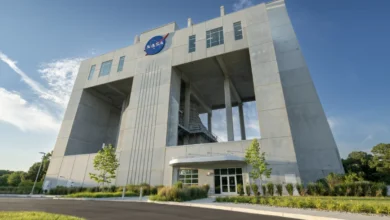
While the contract is managed by NASA’s Launch Services Program (LSP) at the Kennedy Space Center in Florida, its implications extend well beyond the agency’s internal requirements. The LSP is responsible for the end-to-end management of launch services, including mission integration, flight analysis, and launch vehicle oversight.
Furthermore, the NLS II contract serves as a vehicle for inter-agency cooperation. Agencies such as the National Oceanic and Atmospheric Administration (NOAA) frequently leverage NASA’s procurement expertise to launch weather and climate satellites. The addition of the Terran R provides these agencies with increased mission assurance and scheduling flexibility. In an era where climate data is becoming increasingly critical for global policy, the ability to launch sophisticated sensor suites into specific orbital planes on short notice is a strategic asset for the U.S. government.
Analysis of Implications for the Aerospace Industry
The entry of Relativity Space into the NLS II roster is a clear indicator that the "new space" manufacturing paradigm—centered on additive manufacturing and high-rate production—is now considered a mission-critical asset by the federal government.
- Risk Mitigation: By adding new providers, NASA reduces the "single point of failure" risk. If one provider experiences a technical setback, the agency has pre-vetted alternatives available to ensure that time-sensitive scientific missions remain on track.
- Technological Maturity: The qualification process for NLS II is rigorous. Being awarded a spot on this contract is widely viewed as a "seal of approval," indicating that a vehicle has reached a level of reliability suitable for high-value government payloads.
- Market Dynamics: This contract will likely pressure legacy providers to accelerate their own innovation cycles. As Relativity Space and other NLS II contractors compete for mission task orders, the resulting competition is expected to drive further efficiency in launch operations.
Looking Toward the Future
As NASA looks toward the late 2020s and early 2030s, the agency’s focus remains on sustaining a robust presence in LEO while simultaneously pursuing ambitious deep-space exploration goals. The integration of the Terran R is a key component of this vision. With the ordering window open for several more years, the aerospace sector can expect continued competition as companies vie for mission-specific task orders.
The management team at Kennedy Space Center, led by the Launch Services Program Office, will now begin the process of integrating Relativity Space into the mission planning pipeline. This involves a series of technical reviews, safety audits, and mission-specific integration tasks to ensure that the Terran R meets all mission-critical requirements.
In summary, the addition of Relativity Space to the NLS II contract is more than just a procurement decision; it is a tactical evolution of NASA’s launch strategy. By leveraging the agility of private industry, the agency is ensuring that it has the capacity, the technology, and the resilience to meet the complex demands of the next decade of space exploration. As the industry matures, the combination of established launch heritage and innovative new manufacturing techniques will be the cornerstone of the United States’ leadership in the space domain.
For the public and stakeholders, this news confirms that the pipeline for scientific research and satellite deployment remains secure. As NASA continues to utilize the on-ramp provisions of its contracts, the agency effectively keeps its doors open to the most advanced technologies available, ensuring that the next generation of space missions will be powered by the most efficient and reliable launch systems currently in development. Through this systematic approach, NASA continues to fulfill its mandate to explore the unknown while providing tangible benefits back to Earth, whether through climate data, technological breakthroughs, or the simple advancement of human knowledge.
Related posts: