Zenno Astronautics Moves Headquarters to Los Angeles to Scale Superconducting Space Technologies

Zenno Astronautics, a pioneering aerospace startup originating from New Zealand, has officially announced its strategic decision to redomicile its primary operations and headquarters to the United States. This move, centered on establishing a significant presence in Los Angeles, California, marks a pivotal transition for the company as it seeks to commercialize its proprietary superconducting magnetic technology. By relocating to the heart of the American aerospace ecosystem, Zenno aims to capitalize on the proximity to major commercial satellite manufacturers, defense contractors, and a robust venture capital landscape that remains the most concentrated in the world.
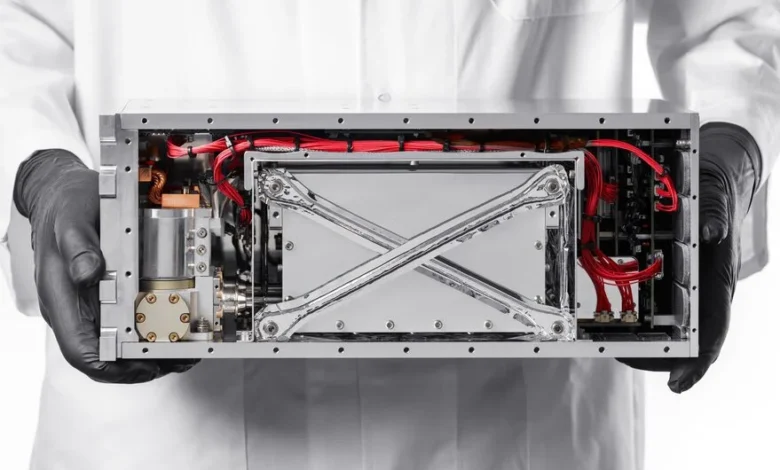
The relocation follows a string of technical and financial milestones that have positioned Zenno as a leader in the niche but critical field of superconducting space hardware. Chief among these was the successful June 2024 on-orbit demonstration of the Z01 Supertorquer, a superconducting magnetic actuator, which was integrated into Impulse Space’s Mira satellite. This mission served as a proof of concept, validating that high-temperature superconductors (HTS) can operate reliably in the harsh environment of space to provide high-precision attitude control for modern spacecraft.
The Strategic Shift to Southern California
The decision to move from Auckland to Los Angeles was driven by the practicalities of scaling a deep-tech hardware company. Max Arshavsky, Zenno’s CEO and co-founder, highlighted the density of the aerospace industry in Southern California as the primary catalyst for the move. During a recent site-scouting mission in Los Angeles, Arshavsky noted that the region offers an unparalleled concentration of partners, customers, and specialized talent that is difficult to replicate elsewhere.
While cities like Denver, Seattle, and Austin have emerged as secondary space hubs, Los Angeles—specifically the corridor spanning Hawthorne, El Segundo, and Long Beach—remains the historical and functional epicenter of the industry. It is home to industry titans like SpaceX, Northrop Grumman, and Boeing, as well as a burgeoning fleet of "New Space" startups. For Zenno, being within driving distance of its primary customer base allows for rapid iteration, face-to-face engineering collaboration, and a more streamlined supply chain.

The company plans to have a fully operational facility in Los Angeles by September or October of 2024. This facility will not only serve as a corporate headquarters but will also function as a high-scale production center. Arshavsky emphasized that the production capacity required to meet the growing global demand for satellite components far exceeds what was feasible within the New Zealand ecosystem. By hiring locally in California while also relocating key personnel from New Zealand, Zenno intends to build a workforce capable of bridging the gap between experimental physics and mass-market aerospace manufacturing.
Revolutionizing Spacecraft Control with Superconductors
At the core of Zenno’s value proposition is the application of high-temperature superconductors to spacecraft mobility. Traditionally, satellites manage their orientation, or "attitude," using reaction wheels or standard magnetorquers. Reaction wheels rely on moving parts—spinning flywheels—which are prone to mechanical wear and eventual failure. Standard magnetorquers use copper coils to interact with Earth’s magnetic field, but they are often heavy and limited in the amount of torque they can generate relative to their power consumption.
Zenno’s Z01 Supertorquer utilizes superconducting magnets to generate powerful magnetic fields with near-zero electrical resistance. This allows for a device that is significantly more powerful, lighter, and more energy-efficient than traditional electromagnetic systems. Because the system has no moving parts, it offers a level of reliability and longevity that mechanical systems cannot match.
The June 2024 mission with Impulse Space was the ultimate litmus test for this technology. By successfully demonstrating the Supertorquer on the Mira satellite, Zenno proved that its cryogenic cooling systems and magnetic shielding could withstand the rigors of launch and the thermal cycles of low Earth orbit (LEO). This flight heritage is a critical prerequisite for securing contracts with major satellite constellation operators and government agencies, who often require "flight-proven" technology before integration into expensive orbital assets.
A Chronology of Growth and Innovation
Zenno Astronautics was founded in 2017 by Max Arshavsky and Sebastian Wieczorek, the company’s Chief Product Officer. The founders recognized early on that while superconductivity was a well-understood phenomenon in terrestrial laboratories (used in MRI machines and particle accelerators), its application in space was an untapped frontier.

The company’s growth has been marked by several key phases:
- 2017–2021: Research and Development. The early years were focused on the fundamental physics of managing superconductors in a vacuum. This involved developing proprietary thermal management systems to keep the magnets at the ultra-low temperatures required for superconductivity while minimizing the energy required for cooling.
- 2022: Seed Funding. Zenno raised 10.5 million New Zealand dollars (approximately $6.12 million USD) in a seed round. This capital allowed the company to move from laboratory prototypes to flight-ready hardware.
- 2023: Strategic Partnerships. Zenno began collaborating with international partners, including a notable relationship with Mitsubishi Electric Corporation. This partnership underscored the global interest in Zenno’s technology, particularly from the Japanese aerospace sector.
- June 2024: Orbital Validation. The Z01 Supertorquer was launched and successfully operated aboard Impulse Space’s Mira satellite, providing the company with invaluable on-orbit data.
- July 2024: Redomicile Announcement. The company confirmed its move to the United States to begin the next phase of commercial scaling.
Financial Backing and Market Potential
The financial trajectory of Zenno reflects the growing appetite among venture capitalists for "hard tech" that addresses fundamental infrastructure needs in space. Following its 2022 seed round, Zenno received a significant boost in early 2024 when Mitsubishi Electric Corporation’s Innovation Fund provided additional capital. This investment was not merely financial; it signaled a strategic interest from one of the world’s largest electronics and aerospace conglomerates in integrating superconducting technology into future satellite platforms.
The market for attitude control systems is expanding rapidly as the number of satellites in LEO continues to grow. Large-scale constellations, such as SpaceX’s Starlink or Amazon’s Project Kuiper, require highly reliable, low-maintenance components to manage thousands of assets. Zenno’s technology is particularly well-suited for these "megaconstellations," where the failure of a single mechanical reaction wheel can lead to the loss of a satellite and contribute to the growing problem of orbital debris.
Furthermore, the shift to the U.S. opens doors to the Department of Defense (DoD) and the U.S. Space Force. National security space programs are increasingly prioritizing "resiliency" and "maneuverability." Superconducting magnets offer the potential for rapid, high-torque maneuvers that could help satellites avoid threats or reposition themselves for tactical advantages—capabilities that are highly valued in the current geopolitical climate.
Broader Implications: Beyond Earth Orbit
While Zenno’s immediate commercial focus is on attitude control for LEO satellites, the company’s long-term vision is far more expansive. Arshavsky has articulated a philosophy of "living off the resources" available in space. In the vacuum of space, energy—primarily from the sun—is abundant, but physical resources like fuel are finite and expensive to transport from Earth.

Superconducting magnets could play a transformative role in lunar and deep-space exploration:
- Radiation Shielding: One of the greatest hurdles to long-term human habitation on the Moon or Mars is cosmic radiation. Powerful superconducting magnets could potentially create a "magnetic bubble" around a spacecraft or lunar base, deflecting harmful charged particles in a manner similar to Earth’s magnetosphere.
- Lunar Infrastructure: As the world moves toward a permanent presence on the Moon through programs like NASA’s Artemis, there is a need for efficient transport and power systems. Superconducting technology could enable magnetic levitation (maglev) transport systems on the lunar surface or contactless docking and berthing for lunar orbiters.
- Space-to-Space Logistics: Zenno’s technology could eventually be used for "magnetic tugs" that can move other satellites or debris without physical contact, reducing the risk of collisions and extending the life of orbital assets.
Analysis of the "Brain Drain" and Regional Impact
Zenno’s departure from New Zealand highlights a recurring challenge for emerging space nations. While New Zealand has successfully fostered a vibrant space ecosystem—anchored by the presence of Rocket Lab—it often struggles to provide the late-stage capital and massive market access required for hardware companies to reach global scale.
For the United States, Zenno’s relocation is a win for domestic industrial capability. It brings a unique technological edge in superconductivity, a field where the U.S. is in a strategic race with other global powers. By integrating Zenno into the Southern California aerospace cluster, the U.S. strengthens its supply chain for advanced satellite components and reinforces its position as the preferred destination for global space entrepreneurs.
Conclusion
The relocation of Zenno Astronautics to Los Angeles is more than a change of address; it is a calculated move to transform a promising laboratory technology into a standard component of modern space architecture. As the company prepares to open its new facility this autumn, the industry will be watching closely to see how quickly Zenno can translate its orbital success into large-scale commercial contracts. With the backing of international investors like Mitsubishi Electric and the validation of its first successful space mission, Zenno is well-positioned to lead the transition toward a more efficient, magnetically-driven era of space exploration. By harnessing the power of superconductivity, Zenno is not just building better satellites; it is laying the groundwork for the infrastructure that will define humanity’s future in the solar system.
Related posts: