NASA Advances Future Aviation with Successful Structural Failure Testing of SWEET-15 Truss-Braced Wing Design

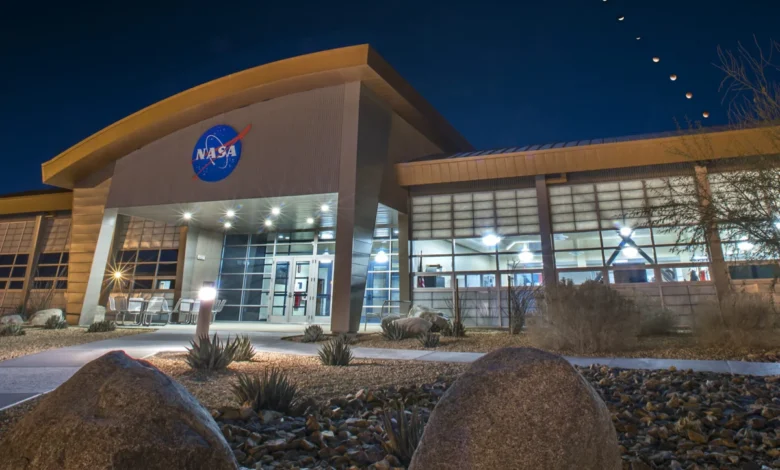
In a decisive step toward the next generation of sustainable commercial aviation, NASA researchers have successfully concluded a rigorous series of structural tests on a novel wing design that could fundamentally alter the silhouette and efficiency of future airliners. The project, known as the 15-foot Structural Wing Experiment Evaluating Truss-bracing (SWEET-15), recently underwent a "test-to-failure" protocol at NASA’s Armstrong Flight Research Center in Edwards, California. The results of these evaluations have exceeded engineering expectations, providing critical data that validates advanced computer modeling and innovative manufacturing techniques designed to reduce the carbon footprint of global air travel.
The SWEET-15 test article represents a physical manifestation of NASA’s Transonic Truss-Braced Wing (TTBW) concept. This design departs from the traditional cantilevered wings seen on modern Boeing and Airbus jets, instead utilizing an ultra-thin, high-aspect-ratio wing supported by an aerodynamic strut. By bracing the wing with a structural support, engineers can make the wing significantly longer and thinner without the risk of structural fluttering or snapping under load. This geometry dramatically reduces aerodynamic drag, which is the primary hurdle in improving fuel efficiency for subsonic flight.
The Engineering Philosophy Behind the SWEET-15
The core objective of the SWEET-15 project was to determine if a lightweight, composite-based truss-braced wing could withstand the extreme forces encountered during takeoff, turbulence, and high-speed maneuvers. Modern aviation is currently facing a "plateau" in fuel efficiency gains using traditional wing architectures. To achieve the industry’s goal of net-zero carbon emissions by 2050, radical shifts in airframe design are required.
The SWEET-15 design is the culmination of five distinct advanced composite manufacturing and assembly technologies. These technologies allow for the creation of complex, high-strength structures that are lighter than traditional aluminum alloys. By reducing the weight of the wing while maintaining its structural integrity, NASA aims to provide a blueprint for aircraft that consume up to 30% less fuel than today’s most efficient models.
The construction of the 15-foot test article took place at NASA’s Langley Research Center in Hampton, Virginia. The facility utilized the Integrated Structural Assembly of Advanced Composites (ISAAC) robot, a state-of-the-art system capable of precision-placing composite materials to create structures with optimized fiber orientations. This robotic assembly ensures that every ounce of material contributes to the wing’s strength, eliminating the "over-engineering" weight penalties often associated with manual manufacturing.
Chronology of the Testing Phase
The journey of the SWEET-15 from a digital concept to a physical milestone followed a meticulous multi-month timeline. After the fabrication was completed at NASA Langley, the article was transported to the Flight Loads Laboratory at NASA Armstrong. This facility is renowned for its ability to simulate the stresses of flight on full-scale aircraft components.
Upon arrival, the wing was outfitted with an extensive array of sensors. Traditional strain gauges were supplemented by NASA’s proprietary Fiber Optic Sensing System (FOSS). This system uses hair-thin glass fibers to take thousands of strain and temperature measurements simultaneously along the length of the structure. The use of FOSS provided the research team with a high-resolution "nervous system" for the wing, allowing them to see exactly how the internal stresses shifted as external loads were applied.
The testing began with "limit load" trials. These tests applied forces equivalent to the maximum stress the wing is expected to encounter during its service life. Over several weeks, hydraulic actuators bent and twisted the 15-foot structure in incremental stages. Throughout this phase, the wing behaved exactly as NASA’s predictive computer models suggested, showing no signs of premature fatigue or structural instability.
Reaching the Breaking Point: The Test-to-Failure
The climax of the research program was the deliberate test-to-failure. In aerospace engineering, understanding how a structure fails is just as important as understanding how it holds together. By pushing the SWEET-15 beyond its design limits, engineers can identify the "weakest link" in the chain, ensuring that future full-scale versions include appropriate safety margins without being unnecessarily heavy.
During the final test, the hydraulic systems increased the load far beyond the 100% design limit. The wing continued to hold as the forces climbed to 110%, then 120%. It was not until the load reached approximately 127% of the design limit that the structure finally gave way. The failure was characterized by visible damage near the trailing edge (back edge) of the wing and within the upper wing cover.
The fact that the wing survived to 127% of its intended load is a significant victory for the research team. It proves that the composite joints—specifically those connecting the main wing to the primary strut and the "jury strut" (a secondary support designed to prevent the main strut from buckling)—are robust enough for commercial applications. This "over-performance" provides a comfortable safety buffer, suggesting that the manufacturing techniques used at Langley are ready for further scaling.
Data Integration and Technological Synergy
The success of the SWEET-15 test is not merely a win for structural engineering; it is a validation of NASA’s integrated approach to aeronautics. The data collected by the FOSS sensors is now being fed back into the agency’s computational fluid dynamics (CFD) and structural analysis software. This feedback loop allows engineers to refine their digital twins, making future simulations more accurate and reducing the need for expensive physical prototyping.
Furthermore, the SWEET-15 project benefits from cross-center collaboration. While Langley focused on the "how" of manufacturing and Armstrong focused on the "how much" of structural limits, the Subsonic Flight Demonstrator project provided the overarching strategic framework. This project is a key component of NASA’s Sustainable Flight National Partnership, which seeks to mature technologies that can be adopted by the private sector in the 2030s.
Broader Implications for the Aviation Industry
The implications of the SWEET-15 results extend far beyond the laboratory. The aviation industry is currently under intense pressure to decarbonize. While sustainable aviation fuels (SAF) and electric propulsion are often cited as solutions, they are limited by energy density and cost. Improving the "aerodynamic "fitness" of the aircraft through designs like the Truss-Braced Wing remains the most effective way to reduce energy demand regardless of the power source.
Industry analysts suggest that the success of these tests will likely accelerate the development of the X-66A, an experimental aircraft NASA is developing in partnership with Boeing. The X-66A is intended to be a full-scale flying demonstrator of the TTBW concept. The SWEET-15 data provides the foundational confidence needed to proceed with the construction of that full-scale aircraft, as it mitigates the risks associated with the new wing-to-strut attachment points.
If the TTBW concept is successfully commercialized, it could lead to a new generation of single-aisle aircraft—the workhorses of the global airline fleet—that are quieter, more efficient, and capable of operating from existing runways despite their wider wingspans (potentially utilizing folding wing-tip technology).
Conclusion and Future Outlook
The SWEET-15 experiment has concluded, but the work of the NASA research team is far from over. The next steps involve a "forensic" analysis of the failed test article. Engineers will perform non-destructive and destructive inspections of the composite layers to see if there were internal delaminations that occurred before the final break. This will provide insight into the long-term durability and maintenance requirements of truss-braced structures.
The successful testing of the SWEET-15 marks a pivotal milestone in the journey toward a greener sky. By proving that ultra-thin, truss-braced wings are not only aerodynamically superior but also structurally resilient, NASA has cleared a major hurdle for the future of flight. As the agency moves forward with its Research Technology Mission Directorate goals, the lessons learned from a 15-foot piece of composite material in a California desert will likely resonate in the design of every commercial airliner for decades to come.
Through the combination of robotic manufacturing, fiber-optic monitoring, and aggressive structural testing, NASA continues to serve as the vanguard of aerospace innovation, ensuring that the next century of flight is defined by efficiency and environmental stewardship. The SWEET-15 has shown that even when pushed to its breaking point, the future of aviation remains incredibly strong.
Related posts: