Starfleet Reaches Orbit: European Space Agency Astronaut Sophie Adenot Celebrates Star Trek’s 60th Anniversary Aboard the International Space Station

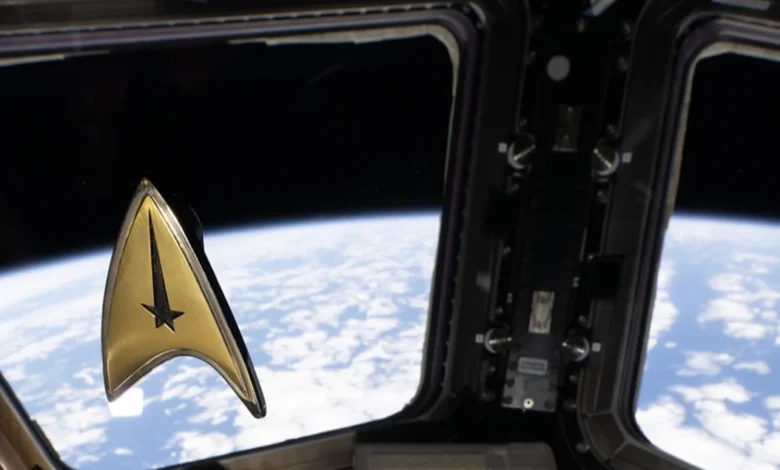
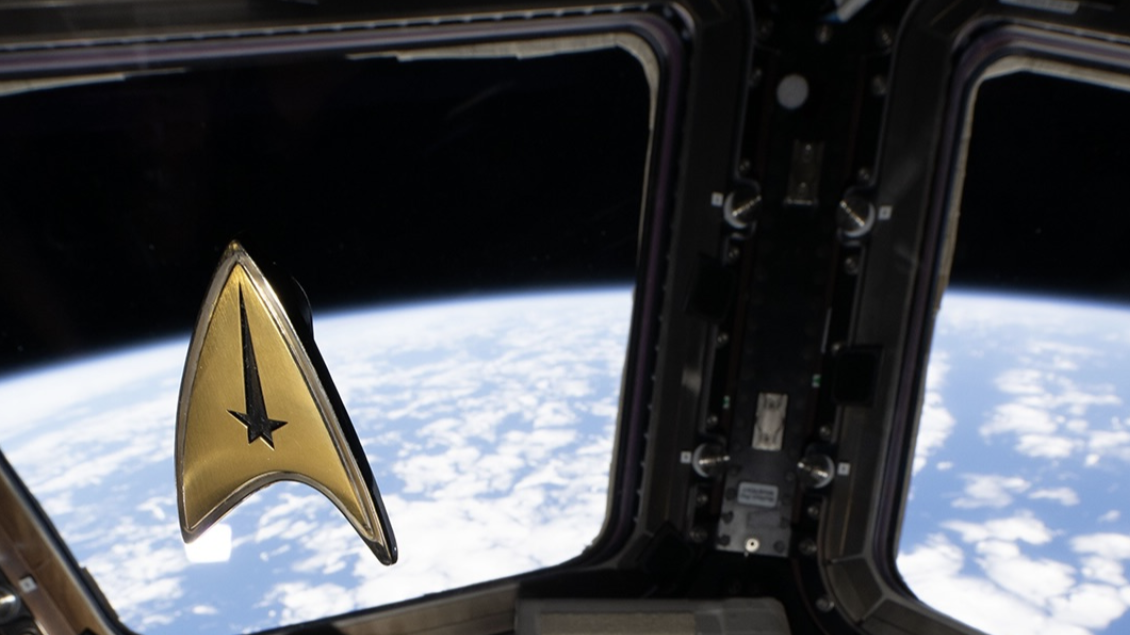
The intersection of science fiction and scientific reality merged in low-Earth orbit as European Space Agency (ESA) astronaut Sophie Adenot commemorated the upcoming 60th anniversary of the iconic franchise Star Trek from aboard the International Space Station (ISS). Floating within the confines of the station’s European-built Columbus laboratory module, Adenot wore an authentic Starfleet delta badge from the modern series Star Trek: Strange New Worlds. This symbolic gesture bridged six decades of visionary storytelling with the modern realities of international space exploration, highlighting a shared ethos of curiosity, unity, and scientific endeavor.
The commemorative badge, featuring its distinctive golden design and central star motif, was delivered to the orbiting laboratory among standard provisions and scientific hardware ahead of Adenot’s mission milestones. In official media released jointly by the ESA and franchise representatives, the badge was photographed floating weightlessly against the backdrop of the ISS Cupola windows, with the curvature of Earth visible far below.
The event serves as a poignant reminder of the cultural longevity of Gene Roddenberry’s creation, which first aired on television screens on September 8, 1966. Over the past sixty years, the franchise has evolved from a mid-century television show into a massive global phenomenon that has continuously inspired generations of scientists, engineers, and astronauts to pursue careers in space exploration.
Chronology of a Historic Mission
Sophie Adenot’s journey to the final frontier began on February 13, when she lifted off from Kennedy Space Center in Florida aboard a SpaceX Falcon 9 rocket. Riding inside the SpaceX Dragon spacecraft alongside fellow crewmates for NASA’s Crew-12 mission, Adenot successfully docked with the ISS to join the Expedition 75 crew as a flight engineer.
This mission marks the first orbital flight for Adenot, a seasoned helicopter test pilot and flight engineer who was selected as part of the ESA’s elite 2022 astronaut cohort. Her tenure aboard the orbital outpost is structured around a busy roster of scientific investigations, maintenance tasks, and educational outreach. Her time on the station is drawing to its scheduled conclusion, pending the arrival of the upcoming SpaceX Crew-13 mission, which will facilitate a standard handover and return protocol.
Throughout her flight, Adenot has utilized her platform to emphasize the parallels between fictional space crews and the multinational cooperation required to maintain permanent human habitation in space. Her video appearance wearing the Starfleet badge underscored a career-long dedication to collaborative scientific discovery.
"For me, exploration and science are about curiosity and cooperation, daring to go a little farther together, learning from what we discover and build, and turning that knowledge into a better future for everyone," Adenot stated during her on-orbit broadcast.
The Philosophy of Star Trek and Real-World Spaceflight
The enduring appeal of Star Trek within the aerospace community lies in its optimistic portrayal of humanity’s future. Creator Gene Roddenberry envisioned a post-scarcity society where humanity had united, overcoming terrestrial divisions through mutual respect and a dedication to intellectual and scientific growth.
In a 1976 spoken-word recording titled The Star Trek Philosophy, Roddenberry articulated the foundational moral of his work, noting that humanity’s ascension to the stars was contingent upon its ability to embrace diversity. "The whole show was an attempt to say that humanity will reach maturity and wisdom on the day that it begins not just to tolerate, but to take a special delight in differences in ideas and differences in life forms," Roddenberry observed. He added that a society unable to appreciate diversity on Earth is inherently unready to navigate the vast and varied cosmos.
This philosophy has long resonated with the agencies and individuals tasked with building humanity’s actual presence in space. The International Space Station itself stands as a monumental physical manifestation of international cooperation, having been jointly constructed and operated by the United States, Russia, Europe, Japan, and Canada since the launch of its first modules in 1998.
Official Responses and Institutional Perspectives
Space agencies have increasingly leaned into cultural milestones to engage the public and inspire younger generations in Science, Technology, Engineering, and Mathematics (STEM) fields. The ESA formally acknowledged the philosophical alignment between its real-world objectives and the fictional missions of the USS Enterprise through statements accompanying Adenot’s broadcast.
"It’s a small object, but it carries something bigger: sixty years of a story that taught us to dream about exploring together," the ESA noted in a published statement. "Science fiction imagines the future. We build it. From the crew of the USS Enterprise to the crews on the International Space Station, the mission hasn’t really changed. Explore. Discover. Do it together."
The symbolic integration of popular culture into professional spaceflight missions is not without precedent. Astronauts routinely pack personal items, national flags, and items of cultural significance into their official payload allowances. However, the explicit alignment with a science-fiction franchise that helped catalyze public enthusiasm for the Apollo era and subsequent space programs carries a distinct weight.
Broader Implications and the Future of Exploration
As the International Space Station approaches its third decade of continuous human occupation, questions regarding the future of low-Earth orbit infrastructure remain at the forefront of international space policy. With plans to deorbit the ISS in the early 2030s, space agencies are actively transitioning toward commercial low-Earth orbit destinations while setting their sights on sustainable exploration of the Moon through NASA’s Artemis program and eventual crewed missions to Mars.
In this context, cultural touchstones like Star Trek serve a critical psychological and sociological function. They provide a shared narrative framework that helps contextualize the immense technical challenges, financial investments, and international cooperation required to push human presence further into the solar system.
The image of a golden Starfleet emblem floating in the microgravity environment of the ISS bridges the gap between the speculative fiction of the 1960s and the engineering realities of the 21st century. It underscores a continuous, unbroken line of ambition: a collective human desire to look up at the stars, recognize the vastness of the unknown, and choose to explore it collectively.
Related posts: