YouTube Ad Growth Moderates in Q3 2026 as Connected TV and AI-Driven Subscriptions Fuel Expansion

YouTube’s financial trajectory experienced a notable shift in the third quarter of 2026, characterized by a slight deceleration in advertising revenue growth offset by explosive momentum in subscription services, connected television viewership, and artificial intelligence integration. According to financial data released by parent company Alphabet, YouTube generated $11.2 billion in advertising revenue for the period. While this figure underscores the platform’s enduring dominance in the digital media ecosystem, the year-over-year growth rate of 9% represents a modest cooldown from the 13% expansion recorded in the preceding second quarter.
Despite the moderation in ad revenue growth, YouTube continues to diversify its financial model. The platform is successfully capitalizing on subscription offerings, e-commerce integrations, and programmatic advertising innovations. These revenue streams are increasingly vital as digital platforms navigate changing consumer habits, particularly the migration of traditional television audiences to living room streaming devices.
Financial Overview and Subscription Surge
The latest earnings report highlights a robust diversification strategy, with YouTube playing a central role in driving an 11% overall increase in Google’s subscription revenues for the quarter. A primary driver of this growth is the surging popularity of YouTube Music and YouTube Premium, which collectively surpassed 150 million subscribers.
This milestone represents a dramatic acceleration for the platform. YouTube first crossed the 100 million subscriber threshold for its premium and music services in early 2024. Reaching 150 million subscribers within roughly two and a half years demonstrates a compounding adoption rate, driven largely by strategic marketing, bundling, and shifts in global media consumption.
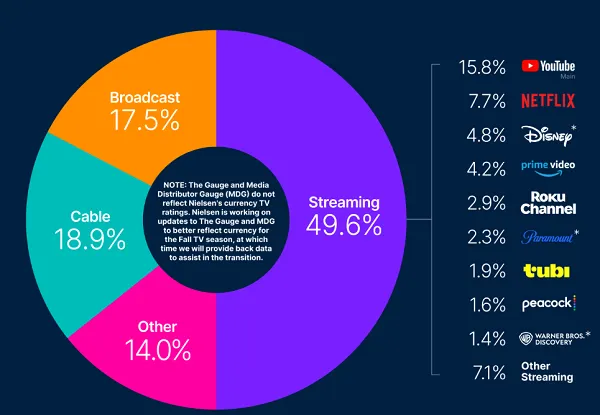
During Alphabet’s second-quarter earnings call in July, executives noted that a significant catalyst for Premium sign-ups was the rapid adoption of connected TV (CTV) viewing. As more households replace traditional linear television with streaming alternatives, YouTube has solidified its position as the premier viewing destination in the United States. Data from Nielsen’s "The Gauge" report published in August 2026 confirmed that YouTube remains the top streaming platform in the U.S. market, outperforming traditional broadcast and cable networks as well as competing subscription video-on-demand services.
The Living Room Revolution and Connected TV Dominance
The intersection of YouTube and the living room environment has fundamentally altered the platform’s revenue mechanics. During the accompanying third-quarter earnings call, Google Chief Business Officer Philipp Schindler emphasized that the "Living Room" connected TV experience is no longer merely a complementary viewing format, but a primary engine of financial growth.
According to Schindler, connected TV advertising now accounts for more than one-third of YouTube’s total ad revenue. This structural shift reflects changing advertiser demands. Brands are increasingly eager to allocate budgets to CTV inventory, which mirrors the high-impact visual nature of traditional television advertising while retaining the advanced targeting capabilities of digital platforms.
Furthermore, the expansion into living rooms has directly catalyzed subscription growth. Viewers accustomed to commercial-free experiences on premium cable and SVOD services are increasingly willing to pay for YouTube Premium to bypass ads on their living room displays. This synergy between hardware, living room usage, and subscription uptake forms a cornerstone of Alphabet’s long-term strategy for the platform.
E-Commerce Integration and Creator Economy Expansion

Beyond advertising and subscriptions, YouTube is rapidly transforming into an e-commerce powerhouse. The platform’s commitment to bolstering creator revenue opportunities has yielded tangible results, with more than three million creators now participating in the YouTube Partner Program.
Small and medium-sized businesses (SMBs) have also shown strong adoption of YouTube’s Demand Gen advertising products, signaling that the platform remains an effective acquisition channel for enterprises of all sizes. Concurrently, YouTube’s shopping ecosystem is expanding at a rapid pace. More than 1.3 million channels are currently enrolled in the platform’s shopping program, enabling creators to monetize their audiences through direct product recommendations and merchandise sales.
A major milestone in this e-commerce push came with the announcement of a strategic affiliate partnership with Amazon. This collaboration allows U.S.-based creators to seamlessly tag Amazon products within their long-form videos, Shorts, and livestreams. By bridging the gap between content creation and direct retail transactions, YouTube is positioning itself as a formidable competitor in the social commerce space, offering brands a direct line to highly engaged consumer demographics.
Artificial Intelligence as a Creative and Advertising Catalyst
Alphabet’s Q3 report also placed heavy emphasis on the role of artificial intelligence in shaping YouTube’s future. With more than 20 million videos uploaded to the platform every day, scaling moderation, discovery, and creative output has become a monumental task. YouTube is addressing this challenge by embedding generative AI tools directly into its production and advertising infrastructure.
During the earnings call, Schindler highlighted the rollout of new generative AI capabilities in YouTube Studio, alongside conversational editing assistants designed for Shorts and YouTube Create. These tools are engineered to lower the barrier to entry for content creation, enabling creators to produce polished, high-engagement videos with minimal technical friction.
The integration of AI has progressed steadily throughout the year. In March, YouTube launched an AI-powered "reimagine" option for Shorts, allowing viewers to generate alternative video iterations based on existing clips created by other users. This was followed by trials of an "Extend with AI" feature, which empowered creators to autonomously generate alternative video endings.
These iterative rollouts appear to be successfully driving user adoption. A report published by YouTube in mid-October 2026 revealed that 61% of individuals who posted videos on the app over the preceding 12 months expressed a strong interest in utilizing AI tools to seamlessly insert themselves into video content.
Implications and Industry Outlook
The third-quarter results for 2026 paint a picture of a maturing platform successfully navigating a transitional phase. While the deceleration of ad revenue growth from 13% to 9% indicates that YouTube’s core advertising business is facing natural market saturation, the company’s aggressive diversification is effectively cushioning the slowdown.
By capitalizing on the connected TV boom, scaling its subscription model to 150 million users, deepening e-commerce ties with giants like Amazon, and aggressively integrating generative AI into the creative workflow, YouTube has constructed a resilient multi-pillar business model.
As the digital media landscape continues to evolve, the platform’s ability to maintain user engagement while mitigating challenges such as content saturation and AI-generated media management will be critical. Nevertheless, the Q3 data indicates that YouTube’s strategic investments in the living room, commerce, and artificial intelligence are resonating with both creators and consumers, securing its financial foundation for the foreseeable future.