Meta Expands Parental Supervision Tools to Threads to Enhance Teen Safety and Digital Wellbeing

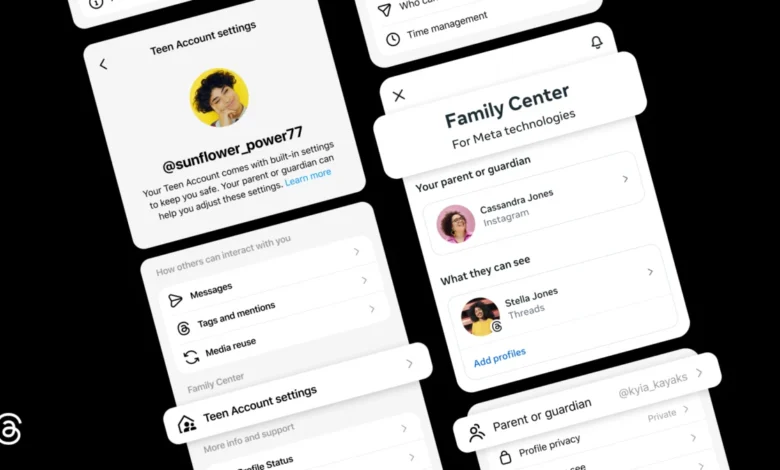
Meta is officially integrating Threads into its comprehensive suite of parental supervision tools, marking a significant step in the company’s ongoing effort to provide guardians with oversight across its ecosystem of social platforms. Starting next week in the United States, parents and guardians will be able to access the Meta Family Center to monitor and manage their teenagers’ activities on Threads, the text-based social media platform launched as a competitor to X. This update ensures that the safety protocols currently available on Instagram and Facebook are mirrored on Threads, creating a unified safety architecture for families.
The introduction of these tools comes at a time when digital safety for minors is under intense scrutiny from lawmakers, child advocacy groups, and mental health professionals. By extending supervision to Threads, Meta aims to offer a consistent experience for parents who are increasingly concerned about the time their children spend online and the types of content they encounter. The new features will allow parents to view who their teens follow and who follows them back, set daily time limits, and see how much time is being spent on the app.
The Framework of Parental Supervision on Threads
The core of Meta’s safety strategy for Threads involves a combination of automated protections and manual parental controls. For users identified as teenagers—specifically those under the age of 18—Threads already implements several "built-in" protections. These include default private accounts, which require users to approve follow requests, and stricter content filtering settings designed to minimize exposure to sensitive or age-inappropriate material.
Beginning next week, the dynamic of these settings will shift for users under the age of 16. Under the new supervision framework, parents will have the authority to decide whether their teen can change these default settings to be less restrictive. For instance, if a teen attempts to switch their account from private to public, a parent who has enabled supervision can block that change. This "lock-in" mechanism is designed to prevent minors from inadvertently exposing their profiles to a broader audience without adult guidance.
The Family Center dashboard will serve as the central hub for these activities. When supervision is established—a process that requires mutual consent between the parent and the teenager—guardians will receive insights into the teen’s digital habits. While the tools do not allow parents to read private messages, they provide a high-level overview of social circles and engagement patterns. Parents can also schedule "quiet times" or breaks, effectively locking the app during school hours or late at night to encourage healthier sleep patterns and focus.
A Chronology of Meta’s Safety Initiatives
The expansion of tools to Threads is the latest entry in a multi-year timeline of safety-related updates at Meta. To understand the significance of this move, it is necessary to look at the evolution of the company’s approach to minor safety:
- March 2022: Meta launched the first iteration of the Family Center and parental supervision tools on Instagram in the U.S., following significant public pressure and internal research regarding the platform’s impact on teen mental health.
- June 2022: Supervision tools were expanded to include Quest VR headsets, acknowledging the growing presence of minors in the metaverse.
- November 2022: Meta introduced more robust privacy settings for teens on Facebook and Instagram, including "Teen Accounts" with limited ad targeting.
- July 2023: Threads launched globally. At launch, the app included basic safety features like the ability to hide words and phrases, but it lacked the deep parental integration seen on older platforms.
- January 2024: Meta announced new "Nighttime Nudges" for teens, encouraging them to close Instagram or Threads after spending more than 10 minutes on the app late at night.
- Next Week (Scheduled): The full rollout of parental supervision for Threads begins in the United States, with a global expansion expected to follow later in the year.
This timeline reflects a reactive and proactive hybrid strategy, where Meta updates its safety stack as new platforms gain traction. Threads, which reached 100 million sign-ups within its first five days, represents a significant portion of Meta’s future growth, making the implementation of safety features a priority for retaining a younger demographic and satisfying regulatory requirements.
Supporting Data on Teen Digital Consumption
The necessity for these tools is underscored by recent data regarding teenage internet usage and the associated risks. According to a 2023 report by the Pew Research Center, nearly 95% of American teenagers have access to a smartphone, and approximately 35% say they are using at least one of the major social media platforms "almost constantly."
Furthermore, a study by the American Psychological Association (APA) highlighted that while social media can provide social support and a sense of community for teens, the lack of "digital literacy" and adult supervision can lead to increased rates of cyberbullying, body image issues, and sleep deprivation. The APA recommended that social media use for mid-teens (ages 14-17) should be accompanied by parental monitoring to mitigate these risks.
Internal data from Meta suggests that when parental supervision tools are active, teens are 25% more likely to utilize built-in "take a break" reminders. However, adoption rates for these tools remain a challenge for the company. Many parents remain unaware that the Family Center exists, or they find the invitation-based setup process cumbersome. By integrating Threads—a newer, "trendier" platform—Meta hopes to increase the visibility and adoption of its entire suite of safety products.
Regulatory Pressure and Public Reaction
The move to fortify Threads is not happening in a vacuum. Meta, along with TikTok, Snap, and X, has faced a barrage of legislative challenges. In the United States, the Kids Online Safety Act (KOSA) has gained bipartisan support in the Senate, aiming to create a "duty of care" for social media companies to protect minors from harmful content and addictive features.
State-level legislation has also moved faster than federal action. In states like Florida and Ohio, laws have been proposed or passed that would require parental consent for minors to open social media accounts. By self-regulating through the Family Center, Meta is attempting to demonstrate to lawmakers that the industry can provide solutions without the need for restrictive government mandates that could potentially infringe on user privacy or platform accessibility.
Safety advocates have offered a cautious welcome to the news. "Providing parents with more visibility is a positive step, but it is not a panacea," says one digital safety analyst. "The burden still remains on the platform to ensure that the algorithms themselves are not serving harmful content to teens in the first place. Visibility is good, but safety by design is better."
Broader Implications for the Social Media Landscape
The integration of Threads into the Family Center has broader implications for the "Fediverse" and the future of decentralized social media. Threads has recently begun testing integration with ActivityPub, the protocol that powers Mastodon and other decentralized platforms. This presents a unique challenge for parental supervision: how does a parent monitor a teen’s activity when that activity might be visible on servers not owned or controlled by Meta?
For now, Meta appears to be keeping supervision localized to the Threads app itself. However, as the platform becomes more interconnected with the open web, the company will likely need to evolve its tools to account for cross-platform interactions. This could lead to a new standard for "portable safety settings" where a user’s age and safety preferences follow them across different corners of the internet.
Additionally, the rollout reflects Meta’s strategy of "platform convergence." By centralizing controls in the Family Center, Meta is making it harder for users (and their parents) to leave the Meta ecosystem. If a parent has already set up controls for Instagram, adding Threads is a seamless process. This ecosystem "stickiness" provides a competitive advantage over platforms like X, which currently lacks a similarly robust and centralized parental dashboard.
Conclusion and Future Outlook
As Meta prepares to launch these tools next week, the focus will shift to how effectively parents utilize them. The success of the Threads supervision rollout will be measured not just by the number of parents who sign up, but by the quality of the conversations it sparks between guardians and their children regarding digital citizenship.
Meta has signaled that this is not the end of its safety roadmap. The company stated it will continue expanding supervision tools to make it easier for parents to find controls and get meaningful visibility in one place. Future updates are expected to include more granular controls over AI-generated content and enhanced reporting features that allow parents to see if their teen has reported another user for harassment.
In a digital environment that is constantly shifting, the move to include Threads in the Meta Family Center is a calculated effort to build trust. For Meta, the goal is to prove that its platforms can be a safe space for the next generation of internet users, even as the nature of social media continues to evolve toward more rapid, text-based, and interconnected forms of communication. For parents, it provides one more tool in the kit to navigate the complexities of raising children in the smartphone era.
Related posts: