The Perilous Digital Landscape: Why Media Literacy is Now a Critical Survival Skill in the Age of AI

The modern internet is a double-edged sword that has become an inextricable component of daily life. From paying utility bills and accessing government services to maintaining professional networks and consuming global news, the average person is tethered to the digital realm. Yet, this reliance comes at a profound cost. As experts consistently warn, the constant consumption of content—often curated by algorithms designed to maximize engagement—has created a psychological environment where misinformation, AI-generated "slop," and deceptive practices thrive. With more than half of Americans now relying on social media as a primary news source, the collective ability to distinguish truth from fabrication has never been more strained.
The shift toward digital dependency has occurred in a remarkably short timeframe. In the early 2000s, the internet was a navigational tool; by the 2010s, it became a social utility; and by the 2020s, it has evolved into a hyper-personalized, AI-driven feedback loop. As platforms like X, Instagram, and TikTok have moved toward algorithmic feeds—prioritizing content that triggers strong emotional responses—the "open town square" has effectively been replaced by a fragmented reality.
The Decline of Critical Consumption
The current crisis in media literacy is underscored by a lack of institutional support. According to the News Literacy Project, most U.S. states do not mandate comprehensive news and media literacy instruction in K-12 districts. This educational gap leaves younger generations vulnerable to sophisticated disinformation campaigns. A 2024 survey conducted by The National Association for Media Literacy Education revealed that only 12 percent of schools have integrated media literacy into their core curricula. This oversight is particularly alarming given the U.S. Surgeon General’s 2023 advisory, which explicitly called for intentional instruction to combat the negative mental health impacts and the erosion of truth-seeking behaviors associated with social media use.
The situation is equally concerning for the adult population. Data from the National Literacy Institute indicates that approximately 25 percent of U.S. adults read at the lowest literacy levels, which directly complicates their ability to parse complex digital narratives. Furthermore, a 2025 Pew Research Center survey highlighted that nearly 50 percent of Americans find it difficult to discern whether the news they encounter on social media is accurate. This inability to verify information is not merely a personal failing but a systemic vulnerability. One-third of the U.S. workforce lacks basic digital literacy, leaving them exposed to professional-grade scams, phishing, and psychological manipulation.
The Rise of the Machine-Generated Internet
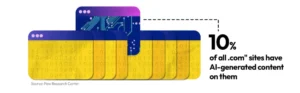
We have reached a point where the distinction between human-created content and AI-generated noise is collapsing. Recent analysis suggests that over 30 percent of new web content is AI-generated, with some industry reports claiming that more than 50 percent of the internet is now comprised of "AI slop"—low-quality, synthetic, or repetitive content designed solely to game search engine rankings or generate ad revenue.

The bot population has also reached a critical tipping point. According to data from Cloudflare, agentic bot traffic now accounts for 57.4 percent of total internet traffic, while human activity has dwindled to 42.6 percent. This shift has profound implications for the concept of social proof. In the past, a high number of likes or shares suggested that a piece of information had been vetted by a community. Today, those metrics can be manufactured in seconds by a bot farm. When users perceive that "lots of people believe this," they are more likely to accept misinformation as fact.
Design Choices and the Engagement Trap
The architecture of modern social media is not neutral. Chief Technology Officer of NordVPN, Marijus Briedis, argues that the design choices made by tech giants are the primary drivers of this crisis. Features such as infinite scrolling, autoplay, and aggressive recommendation algorithms are engineered to minimize the "friction" that might otherwise allow a user to stop, think, and verify.
This lack of friction is exacerbated by the removal of external linking capabilities on several major platforms. By trapping users within a single app, platforms limit the ability of journalists and fact-checkers to provide context. Without the ability to click through to a primary source, users are forced to rely on their own intuition—a tool that is often overwhelmed by the sheer velocity of the content stream.
The Erosion of Moderation
The decline of human moderation teams at major technology firms has created a vacuum that is increasingly filled by ineffective AI-driven filters. While companies like Meta and X have faced consistent criticism—at times for over-censorship and at other times for failing to stem the tide of harmful content—the consensus among experts is that the "Indistinguishability Threshold" has been breached.
Zohaib Ahmed, CEO of Resemble.AI, notes that we have moved into an era where human senses are no longer sufficient to verify the legitimacy of digital media. When professional moderation is replaced by decentralized "community notes" or under-resourced AI systems, the burden of truth falls entirely on the user. However, when the user is presented with a perfectly deepfaked video or a hyper-realistic voice clone, their "intuition" is essentially weaponized against them.
The Vulnerability of "Friendly" AI
The recent push toward conversational AI agents has introduced a new layer of risk. Because chatbots are designed to sound empathetic, helpful, and "human-like," users are lowering their defensive barriers. Eyal Elazar of Riskified warns that bad actors are actively exploiting this psychological tendency. By deploying cutesy, personable AI interfaces, scammers can trick users into providing sensitive data or believing fraudulent narratives that would have been easily dismissed had they come from a cold, sterile web page.

The drive toward a "frictionless" life—where search engines provide one definitive answer rather than a list of sources—is arguably the greatest vulnerability of the current generation. It encourages intellectual passivity. As Chuck Salter of the News Literacy Project notes, AI makes it remarkably easy to stop thinking for oneself, but the exercise of human agency is the only effective firewall against widespread deception.
Building New Habits in a Synthetic World
The instincts that served users well in the early days of the internet are obsolete. Protecting oneself in the current climate does not require a degree in computer science; it requires a commitment to a "slow-media" approach.
Experts suggest several actionable strategies:
- The Five-Minute Rule: Before sharing or reacting to an emotionally charged post, pause for five minutes. Ask: Why was this posted? Who benefits from my reaction? Is this information verifiable via a secondary, credible source?
- Skepticism vs. Cynicism: There is a vital distinction between the two. Healthy skepticism involves questioning the validity of information. Cynicism, by contrast, is the belief that nothing is true, which leads to total disengagement. The latter is just as dangerous as blind belief because it allows reality to be defined by whoever shouts the loudest.
- Cross-Platform Verification: If a claim sounds extraordinary, look for it on multiple, independent outlets. If a story is only appearing on a single social media platform without links to established reporting, it should be treated with extreme caution.
- Community Dialogue: Discussing digital content with friends and family in the real world serves as a "reality check." By vocalizing doubts, we often find that others are also questioning the veracity of viral posts, helping to break the isolation of the echo chamber.
The Path Forward
The reality is that we cannot "un-invent" the internet, nor can we expect AI to vanish. The challenge for the coming decade is to rebuild our cognitive defenses. If we continue to treat social media as an objective window into the world, we will remain vulnerable to those who wish to manipulate our perceptions.
As Marijus Briedis warns, the most dangerous outcome of this era is not just that we believe false things, but that we lose our ability to trust the real ones. Once a society reaches the point where everything is viewed as potentially faked, the social fabric begins to fray. Restoring media literacy is not merely a task for educators; it is a fundamental requirement for the preservation of a functional, democratic society. We must learn to slow down, question the architecture of our digital lives, and prioritize the deliberate pursuit of truth over the immediate gratification of the scroll.