Meta Unveils Next-Generation AI Ecosystem Featuring Muse Personal Agents and Immersive VR Glass Technology

At the 2026 Meta Connect conference, the company solidified its transition from a social media giant into a hardware-first AI entity, unveiling a sweeping portfolio of wearable technology designed to integrate personal artificial intelligence into the fabric of daily life. The centerpiece of this year’s announcements is the expansion of "Muse," a sophisticated personal AI agent, across a new family of devices that promises to redefine how users interact with digital information, entertainment, and their own physical environments.
The Evolution of the Personal AI Agent: Muse
Launched earlier this month, Muse represents a departure from traditional, query-based chatbots. Unlike standard large language models, Muse is designed as a proactive, persistent agent that maintains context across tasks, helping users meet long-term goals rather than merely answering isolated questions. Mark Zuckerberg, during his keynote address, emphasized that Muse is powered by a state-of-the-art, real-time voice model that learns from user interactions, becoming more precise and helpful over time through new feature sets and specialized connectors.
The integration of Muse into Meta’s AI glasses marks a strategic shift toward "ambient computing." By moving the agent from a smartphone screen to a heads-up display or voice-enabled wearable, Meta aims to eliminate the friction between intent and action. Users will no longer need to retrieve a device to check a calendar or process visual data; the agent will effectively exist as an invisible layer over the user’s reality.
Introducing the Muse Charm and Expanded Wearables
Complementing the glasses is the "Muse Charm," a pocket-sized device designed specifically for high-fidelity voice interaction. Recognizing that some users prefer not to wear glasses throughout the day, the Charm serves as a dedicated hardware tether to the Muse agent. While technical specifications remain limited ahead of its release later this year, the device is marketed as a "delightful" interface for the Muse ecosystem, leveraging real-time voice processing to handle complex tasks on the fly.
This expansion is part of a broader hardware strategy that includes the Ray-Ban Meta (Gen 3) glasses. These devices feature a slimmer chassis, extended battery life, and a dedicated, customizable action button for instant AI invocation. The company is also doubling down on aesthetics, collaborating with cultural icons such as Kylie Jenner and LISA to introduce a diverse range of styles. This move indicates a shift in focus toward mass-market appeal, moving beyond the "tech-enthusiast" demographic to position AI wearables as standard fashion accessories.
The Meta VR Glasses: A New Paradigm for Immersive Media
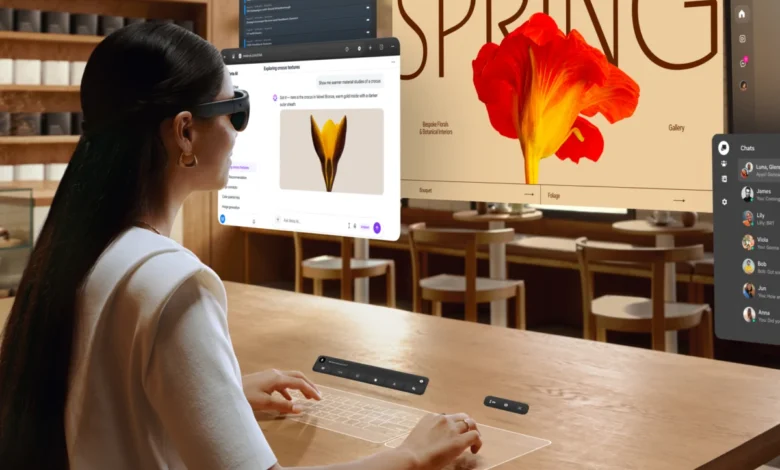
Perhaps the most ambitious hardware reveal at Connect was the Meta VR Glasses, a lightweight, 100-gram headset that promises to replace heavy, cumbersome VR equipment. Weighing roughly the same as a standard deck of playing cards, the device is engineered to deliver high-definition personal cinema, gaming, and productivity workspaces without isolating the user from their physical surroundings.
The technological breakthrough here is the form factor. By removing the traditional straps and heavy battery arrays that have long plagued VR adoption, Meta has lowered the barrier to entry for casual users. The device is the first to be IMAX Enhanced certified, allowing for the consumption of select films in their native, expanded aspect ratio. To support this, Meta has secured high-profile partnerships with streaming giants including Prime Video, YouTube, DIRECTV, AMC+, and Crunchyroll.
For sports fans, the implications are particularly significant. Meta has collaborated with ESPN, MLB, NBC Sports, and UFC to provide over 100 immersive live sports events annually. These broadcasts aim to place the viewer in a "courtside" position, utilizing the glasses’ spatial capabilities to simulate a front-row experience. Furthermore, for the professional segment, the glasses offer a virtual workspace where any flat surface can be digitally mapped to function as a keyboard and touchpad, effectively turning any physical location into a private, multi-monitor office.

Healthcare Innovation: FDA-Cleared Hearing Enhancement
One of the most impactful announcements regarding the Gen 3 glasses is the introduction of FDA-cleared hearing enhancement software. This feature, which helps adults with mild-to-moderate hearing loss, is a significant milestone in the convergence of consumer electronics and medical technology.
The software, set to launch in the U.S. later this year, can be calibrated at home, bypassing the traditional, often expensive, clinical route. Priced at $149.99—and eligible for HSA/FSA reimbursement—the feature positions Meta’s wearables as essential health devices. Coupled with new audio-balancing tools, such as the ability to shift sound toward a specific ear or utilize mono routing, these advancements demonstrate a commitment to accessibility that could significantly expand the product’s total addressable market.
Global Expansion and the Future of the Ecosystem
Meta’s strategy for the coming year is one of aggressive growth. The company intends to offer over 100 different configurations of AI-enabled glasses by the end of 2026. This diversity in hardware, combined with the underlying intelligence of the Muse agent, suggests that Meta is building a closed-loop system where AI and hardware are inseparable.
Additionally, the Meta Ray-Ban Display is seeing significant updates, including hands-free navigation, personalized holograms for video conferencing, and Dolby Atmos spatial surround sound. These features are slated for release in the UK, Canada, France, Italy, and Germany, signaling a global rollout intended to challenge regional competitors and solidify Meta’s dominance in the wearable AI space.
Analysis: The Long-term Implications
The events of the 2026 Connect conference highlight a pivotal moment for the tech industry. Meta is betting heavily that the "smartphone era" is nearing its sunset, to be replaced by a "wearables era" defined by ambient, AI-driven interaction.
From an economic standpoint, the strategy is twofold: hardware adoption and data integration. By embedding Muse into glasses, the company gathers high-fidelity, real-world context data that can further train its models, creating a virtuous cycle of improvement. However, this raises significant questions regarding privacy and the societal impact of constant, AI-assisted surveillance. Meta’s emphasis on "staying connected" while being "aware of surroundings" attempts to address these concerns, yet the integration of such powerful technology into daily attire will likely face ongoing scrutiny from regulators and privacy advocates.
Technically, the success of these products will hinge on battery efficiency and thermal management. Shrinking a high-performance VR console into 100 grams of hardware while maintaining consistent AI responsiveness is an engineering feat that, if achieved at scale, could disrupt the personal computing market entirely.
As Meta moves forward, the focus will likely remain on refining the "Muse" experience. The ability for an AI to act as a genuine, proactive assistant—not just a tool, but an extension of the user—is the ultimate goal. With this new lineup, Meta has moved beyond the theoretical, providing a tangible, accessible roadmap for how the average consumer will interact with the digital world for the next decade. The coming months will be critical as these devices enter the hands of the public, testing whether the reality of the experience matches the ambition of the vision presented at Connect.
Related posts: