Meta Unveils Groundbreaking AI-Driven Capacity Efficiency Platform, Revolutionizing Hyperscale Infrastructure Management


Meta has unveiled a groundbreaking AI-driven capacity efficiency platform that employs unified AI agents to automatically detect and resolve performance issues across its vast global infrastructure, marking a monumental stride toward truly self-optimizing systems at hyperscale. This transformative initiative, detailed in a comprehensive engineering blog published on April 16, 2026, is a cornerstone of Meta’s broader Capacity Efficiency Program, meticulously designed to drastically reduce operational overhead, dramatically improve resource utilization, and liberate highly skilled engineers from the tedious, time-consuming tasks of manual performance tuning. The deployment of this sophisticated system represents a critical inflection point in how global technology giants manage their increasingly complex and resource-intensive digital ecosystems, particularly as the demands of artificial intelligence workloads continue to skyrocket.
The Imperative of Hyperscale Efficiency: A Growing Challenge for Tech Giants
The sheer scale of Meta’s operations presents an unprecedented challenge in infrastructure management. With billions of users interacting across platforms like Facebook, Instagram, WhatsApp, and Threads, and its ambitious, multi-billion dollar investments in the metaverse, Meta operates one of the largest and most intricate data center networks globally. This infrastructure comprises millions of servers, exabytes of storage, and an immense web of networking equipment, all constantly processing unfathomable volumes of data and supporting a diverse array of applications. In such an environment, even minor inefficiencies can propagate exponentially, leading to substantial waste in compute resources, excessive power consumption, and detrimental latency spikes that directly impact user experience and, ultimately, the company’s profitability.
Historically, managing performance at this scale has relied heavily on human expertise—teams of specialized engineers diligently monitoring metrics, diagnosing bottlenecks, and implementing fixes. However, as the complexity of both the infrastructure and the applications (especially large language models and other generative AI systems) continues to grow at an astonishing pace, this human-centric approach is becoming unsustainable and increasingly inadequate. The costs associated with powering and cooling these massive data centers are already immense, often running into billions of dollars annually for hyperscale operators. For instance, Meta reported capital expenditures of $35.4 billion in 2023, a significant portion of which is dedicated to data center build-out and hardware, underlining the immense investment in its physical infrastructure. Furthermore, the burgeoning demand for AI training and inference, which requires specialized hardware like GPUs and TPUs and consumes vast amounts of energy, exacerbates the efficiency imperative. Training a single large language model can cost tens of millions of dollars in compute alone, and the energy footprint is substantial. Meta’s strategic pivot towards AI-driven automation is not merely an incremental improvement; it is a fundamental re-architecture of its operational philosophy, recognizing that human capacity for real-time, continuous optimization cannot match the speed and scale required by modern AI-centric infrastructure. This shift has been a multi-year effort, likely commencing in Meta’s labs several years prior to this 2026 announcement, as the company grappled with the implications of its rapidly expanding AI ambitions.
Meta’s Innovative AI-Driven Solution: Unifying Agents and Encoded Expertise
At the heart of Meta’s new platform lies a sophisticated fusion of cutting-edge AI technologies, particularly large language model (LLM)-based agents, meticulously integrated with structured tooling and a vast repository of encoded engineering knowledge. This synergy enables the system to continuously analyze infrastructure performance across Meta’s entire global footprint, proactively identify subtle inefficiencies that might otherwise go unnoticed, and autonomously apply targeted optimizations. Unlike traditional automation scripts that follow predefined rules, these LLM-powered agents possess a degree of contextual understanding and adaptability, allowing them to reason about complex scenarios and infer solutions based on vast amounts of data and expert knowledge. This capability is crucial for navigating the nuanced interdependencies within hyperscale systems.
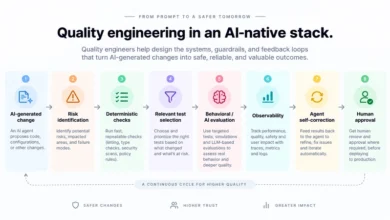
The architecture is built upon standardized interfaces, referred to as "tools," which allow the AI agents to interact seamlessly with various parts of Meta’s infrastructure stack. These tools enable agents to perform actions such as querying profiling data from thousands of servers, inspecting system configurations, modifying parameters in real-time, or even deploying validated code changes. Crucially, the platform incorporates reusable "skills" derived directly from the collective expertise of Meta’s senior engineers. These skills encapsulate diagnostic methodologies, troubleshooting sequences, and optimization best practices that have been refined over years of operational experience. By embedding this institutional knowledge directly into the agents’ capabilities, Meta effectively democratizes and scales the expertise of its most seasoned professionals, making it available 24/7 across its entire infrastructure footprint. For instance, an agent might possess a "skill" to detect memory leaks in a specific type of database service, another to optimize CPU utilization for a particular machine learning inference workload, or yet another to reconfigure network routes to mitigate congestion. The unified nature of these AI agents means they can operate cohesively across multiple layers of the technology stack, from granular code-level performance metrics and configuration files to broader system-level health indicators and resource allocation policies. This multi-layered visibility and control allow the agents to both diagnose root causes with high precision and implement holistic fixes, reducing the need for manual intervention in a wide array of routine performance engineering tasks. This represents a significant departure from previous generations of AIOps solutions that often focused primarily on anomaly detection and alerting, leaving the resolution phase largely to human operators.
A Paradigm Shift: From Reactive to Proactive and Autonomous Optimization
This new platform signifies a profound shift from traditional reactive performance management, where issues are addressed primarily after they have manifested and caused impact, towards a paradigm of continuous, automated, and proactive optimization. Instead of waiting for alerts or user complaints, Meta’s systems are now designed to be constantly self-tuning in real-time. This continuous feedback loop allows for dynamic adjustments to resource allocation, configuration parameters, and even code deployments, ensuring that infrastructure operates at peak efficiency around the clock. By embedding domain expertise directly into reusable agent capabilities, Meta aims to ensure that best practices are not only identified but also applied consistently and effectively, even as its systems grow exponentially in complexity and scale. This proactive approach minimizes downtime, prevents performance degradation before it impacts billions of users, and significantly reduces the mean time to resolution (MTTR) for any emergent issues.
The ability to capture and operationalize institutional knowledge is a key innovation here. In many large organizations, critical operational knowledge resides primarily within the heads of a few expert engineers. When these experts are unavailable or move on, their unique insights can be lost, creating knowledge silos and operational vulnerabilities. Meta’s approach systematically encodes this expert reasoning into modular agent "skills" that can be continuously updated, refined, and scaled across the entire organization. This not only allows the platform to identify problems but also to apply context-aware, proven solutions, effectively democratizing access to deep engineering expertise and making the infrastructure more resilient to personnel changes and brain drain.
Quantifying the Impact: The Economic, Operational, and Environmental Benefits
The anticipated results of this capacity efficiency platform are multifaceted and substantial, touching upon financial, operational, and environmental dimensions. Economically, even marginal improvements in resource utilization at Meta’s scale can translate into savings of hundreds of millions, if not billions, of dollars annually. For instance, if Meta can achieve even a 5% reduction in its global compute footprint through smarter allocation and optimization, considering its vast expenditures on data center operations and hardware, the financial benefits would be immense. Reduced resource waste directly translates into lower capital expenditure on new hardware and decreased operational expenditure on power and cooling. According to industry estimates, data centers globally consume approximately 1-2% of the world’s electricity. For a company like Meta, whose data centers are among the largest, even small efficiency gains contribute meaningfully to sustainability goals and reduce its carbon footprint, aligning with growing ESG (Environmental, Social, and Governance) pressures and regulatory demands for greener tech. This move is also a strategic response to the increasing cost of energy and the global push for carbon neutrality.
Operationally, the platform promises faster resolution of performance bottlenecks and a significant reduction in incident frequency. By automating routine performance engineering tasks, Meta frees its highly compensated and specialized engineers to focus on higher-value work. This includes designing innovative new systems, developing next-generation features for billions of users, pushing the boundaries of AI research, and tackling truly novel, complex engineering challenges that still require human ingenuity. This shift not only improves engineering morale and retention but also accelerates Meta’s product development cycles and strengthens its competitive position in the rapidly evolving tech landscape. The strategic value of this platform extends beyond mere cost savings; it fundamentally enhances Meta’s ability to innovate at speed, deploy more complex AI models, and deliver richer experiences to its users without being constrained by the operational overhead of its own growth.
The Broader Industry Landscape: A Race for Autonomous Infrastructure Efficiency
Meta’s initiative reflects a wider and accelerating trend across the technology industry toward agent-based automation and self-optimizing infrastructure. As AI workloads continue to grow exponentially in scale and complexity—with models now containing trillions of parameters and requiring unprecedented computational resources—traditional approaches to performance management are indeed proving insufficient. Industry forecasts, such as those from AI Agent Store in March 2026, suggest that AI agents will rapidly become a standard, indispensable component of enterprise systems, automating an ever-wider array of routine tasks and enabling vastly more efficient operations at scale. Meta’s implementation serves as a powerful demonstration of how this concept can be applied to the most demanding infrastructure management challenges, transforming AI from a tool for passive analysis into an active, autonomous participant in system optimization.
Other hyperscale players are converging on similar ideas, albeit with varying emphases across the technology stack:
-
Google’s "AI Hypercomputers": Google, a pioneer in AI, is investing heavily in a strategy centered on deeply integrated AI-optimized infrastructure and orchestration. This involves combining custom hardware, most notably its Tensor Processing Units (TPUs), with sophisticated software systems like JAX and Pathways. The goal is to dynamically balance workloads across massive clusters, creating what Google terms "AI hypercomputers." This approach, highlighted by their push for eighth-generation TPUs, focuses on tight hardware-software co-design, ultra-low-latency networking, and real-time workload distribution. It aims to optimize not just applications, but the entire compute fabric that runs them, often at the silicon level. Concurrently, Google is also doubling down on embedding AI agents into its enterprise platforms, using them to manage and optimize workflows at scale, similar in spirit to Meta’s agent-driven approach but more tightly integrated into its expansive Google Cloud ecosystem. For instance, Google Cloud’s operations suite already leverages AI for anomaly detection and intelligent alerting, and the next logical step is full autonomous remediation.
-
Cloud Providers and Autonomous Optimization: Leading cloud providers like Amazon Web Services (AWS) and Microsoft Azure, along with newer, specialized platforms such as Cast AI, are intensely focused on autonomous resource optimization and cost efficiency for their customers. These platforms leverage advanced AI and machine learning algorithms to continuously right-size infrastructure, intelligently scale workloads up or down based on demand, and optimize resource placement across various regions, availability zones, and instance types. This is particularly crucial for dynamic environments like Kubernetes and for managing GPU-heavy workloads that are common in AI/ML development. Tools like AWS Compute Optimizer and Azure Advisor provide AI-driven recommendations, with an increasing trend towards autonomous implementation of these recommendations to ensure customers are not over-provisioning resources, thereby cutting cloud spend.
-
Emerging AI Infrastructure Specialists: A new generation of AI infrastructure providers is emerging with a laser focus on specific aspects like inference efficiency and energy-aware scaling. Companies like Antimatter are deploying distributed edge architectures that bring compute closer to users. This strategy significantly reduces latency for inference tasks and addresses power constraints by distributing workloads across a vast network of smaller data centers, often bypassing grid bottlenecks. Their ambitious plans, such as rolling out 400,000 GPUs by 2030 across 1,000 data centers, underscore the industry’s commitment to optimizing AI delivery from the ground up. These providers often specialize in highly efficient, purpose-built hardware and software stacks optimized for specific AI tasks, complementing the broader hyperscaler offerings and addressing the unique demands of AI at the edge.
The Future of Autonomous Infrastructure: A Unified Vision for Technological Progress
Across all these diverse approaches—whether through Meta’s unified AI agents, Google’s custom silicon and "hypercomputers," or the intelligent orchestration layers offered by cloud providers and specialized startups—a clear and unmistakable pattern is forming. The entire industry is rapidly moving towards fully automated, truly self-optimizing infrastructure. In this evolving landscape, critical parameters such as performance, cost, and energy efficiency are not merely monitored and adjusted manually but are instead continuously balanced and optimized in real-time by intelligent, autonomous systems. This convergence signals a future where infrastructure management, once a labor-intensive and reactive domain, becomes a self-governing, highly efficient, and continuously evolving entity, capable of adapting to the unprecedented demands of the AI era. The vision is clear: to build resilient, cost-effective, and sustainable digital foundations that can support the next generation of technological innovation without human bottlenecks. Meta’s new platform is not just an internal tool; it is a powerful harbinger of this future, demonstrating the transformative potential of AI to redefine the very fabric of global computing. The implications extend far beyond mere operational savings, promising a future where technological progress is unleashed from its previous infrastructural constraints, paving the way for innovations that are currently unimaginable.