NASA Launches $1 Million Moon Base Student Challenge to Cultivate Future Generations of Aerospace Innovators

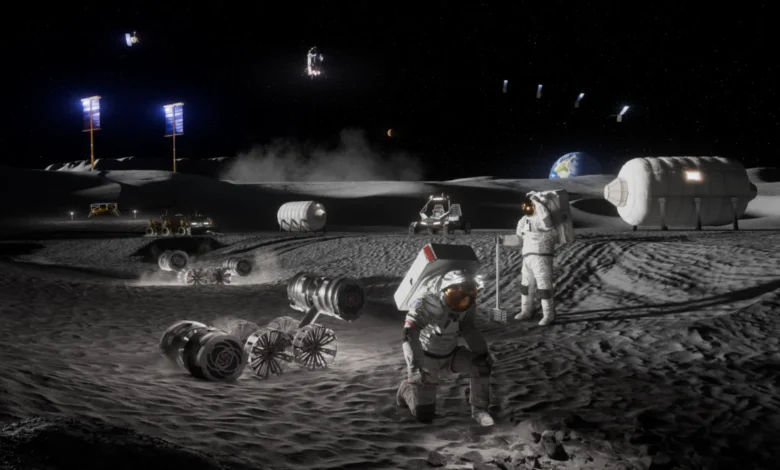
The National Aeronautics and Space Administration (NASA) officially inaugurated its $1 million Moon Base Student Challenge this past Sunday, marking a significant milestone in the agency’s ongoing effort to establish a sustainable human presence on the lunar surface. The announcement, which took place during the high-profile MAX POWER event at the Kennedy Space Center Visitor Complex in Florida, signals a strategic pivot toward integrating academic ingenuity into the technical architecture of the agency’s lunar objectives. This competition invites teams from U.S. high schools and post-secondary institutions to conceptualize and design critical systems for the proposed lunar South Pole base, a central hub for the agency’s broader Artemis campaign.
Strategic Context: From Artemis to the Moon Base
The Moon Base program is not merely a destination but a foundational component of NASA’s long-term exploration architecture. By establishing a permanent or semi-permanent habitat at the lunar South Pole—a region of immense scientific interest due to the presence of water ice in permanently shadowed craters—NASA aims to create a "proving ground" for technologies required for deep-space missions, most notably the eventual crewed exploration of Mars.
The Moon Base serves as a logistical and operational bridge. Operations on the lunar surface will require the development of closed-loop life support, autonomous power grids, and radiation-shielded habitats. These challenges are significant, as the lunar environment presents extreme temperature fluctuations, abrasive regolith (moon dust), and limited communication bandwidth. By crowdsourcing these problems, NASA is effectively widening its talent pipeline, tapping into the creative potential of students who are not yet tethered to the conventional design constraints of legacy aerospace engineering.
A Multiphase Approach to Engineering Challenges
The challenge is structured into six distinct categories, each representing a critical bottleneck in current lunar mission planning: power generation and storage, construction techniques, advanced life-support systems, surface mobility, communication network infrastructure, and astronaut safety.
NASA’s choice to structure the challenge as a multiphase competition reflects the realities of the aerospace development cycle. Participants are required to produce deliverables that mirror actual industry standards, including comprehensive trade studies, detailed conceptual proposals, and high-stakes stakeholder briefings. This methodology is designed to provide students with tangible, career-ready skills. By focusing on "authentic environmental and mission design parameters," the competition forces teams to grapple with the same trade-offs that NASA engineers face daily—balancing mass, power consumption, cost, and reliability.
The project is a collaborative effort between the Office of STEM Engagement and the Moon Base Program. It is being administered by the Institute of Competition Sciences, acting under a contract with the NASA Center of Excellence for Collaborative Innovation, which resides within the agency’s Research and Technology Mission Directorate.
Official Perspectives on Human Capital
During the launch at Kennedy Space Center, NASA leadership emphasized that the challenge is as much about people as it is about hardware. NASA Administrator Jared Isaacman addressed the student demographic directly, noting that the agency’s future hinges on the willingness of younger generations to engage with "hard problems without obvious answers."
"We’re looking for students ready to think creatively, work as a team, and take on real problems connected to NASA’s future on the Moon," Isaacman stated. "You do not have to wait until graduation to contribute. Curiosity, creativity, and the willingness to tackle hard problems without obvious answers are exactly the qualities we need as we build what comes next."
This sentiment was echoed by Carlos García-Galán, manager of the Moon Base Program. García-Galán highlighted the generational significance of the initiative, noting that the infrastructure currently being conceptualized is being designed for the students participating today. "As we build and design the foundations of Moon Base, we want to leverage all the ingenuity and innovation to think of every consideration our explorers might need to live and work there," García-Galán said. "Students bring exactly the bold ideas that we’re looking for, and I’m looking forward to their fresh perspective. Ultimately, Moon Base is for them, people who will experience a world where humans are on the Moon to stay."
Timeline and Operational Framework
The competition timeline is extensive, reflecting the complexity of the tasks involved. Registration for the challenge is currently open and will remain accessible through the NASA STEM Gateway until January 25, 2027. This long lead time allows academic institutions to integrate the challenge into their curricula or extracurricular engineering programs, ensuring that student teams have adequate time to iterate on their designs.
- Registration Period: Open now through January 25, 2027.
- Design Phase: Teams will conduct research, develop trade studies, and refine technical solutions.
- Submission Review: NASA and its partners will evaluate proposals based on technical feasibility, innovation, and adherence to mission requirements.
- Finalist Selection: Successful teams will advance through the multi-phase vetting process, culminating in a final evaluation of their concepts.
Broader Implications for the Aerospace Industry
The Moon Base Student Challenge serves a dual purpose: solving technical hurdles and addressing the aerospace industry’s looming "skills gap." As the commercial space sector—driven by entities like SpaceX, Blue Origin, and various satellite constellations—continues to expand, the demand for qualified engineers, systems architects, and project managers has reached an all-time high.
By providing a platform that welcomes students from various academic tracks—including those without specialized engineering experience—NASA is broadening the base of the talent pyramid. The emphasis on "stakeholder briefings" and "concept proposals" suggests that the agency is prioritizing communication and systems-level thinking alongside technical prowess. This aligns with the reality that modern aerospace projects are rarely the product of a single discipline; they are the result of intense interdisciplinary collaboration.
Elaine Ho, associate administrator for the Office of STEM Engagement at NASA Headquarters, underscored this during the event, framing the challenge as a vehicle for the next generation to influence the agency’s trajectory. "Students are the next generation of explorers and innovators," Ho remarked. "Their unique perspectives are key to helping us envision a future away from Earth, and I’m excited to see the creativity and ingenuity spurred by this challenge."
Analysis: Economic and Technical Impacts
The $1 million prize pool acts as a significant catalyst, incentivizing schools to allocate resources toward aerospace-related projects. In a broader economic context, this initiative encourages a "culture of innovation" within secondary and higher education. When schools prioritize the specific constraints of lunar life—such as the vacuum of space, extreme thermal cycling, and the necessity of in-situ resource utilization (ISRU)—they are inherently training students in advanced manufacturing, materials science, and systems integration.
Furthermore, the focus on the lunar South Pole is a strategic decision that aligns with the Artemis Program’s broader goals of international and commercial collaboration. The solutions generated by these student teams, while conceptual, could inform the "living laboratory" that the Moon Base is intended to become. If a student team develops a novel way to manage power distribution during the extended lunar night or a new approach to dust mitigation, that design concept could theoretically be fed into the research pipelines of NASA contractors.
Conclusion and Participation Details
The Moon Base Student Challenge represents a unique convergence of educational outreach and mission-critical research. By inviting the next generation to contribute to the lunar architecture, NASA is ensuring that its long-term goals for human spaceflight are supported by a continuous pipeline of talent.
Interested institutions and student teams are encouraged to review the full scope of the competition, including eligibility criteria and detailed mission parameters, via the official portal. Participation is not restricted to traditional engineering programs; the agency encourages a diverse range of academic backgrounds to reflect the multifaceted nature of life on the lunar surface.
For complete competition details, eligibility requirements, and official rules, visit the official website at https://moonbasechallenge.org. Registration remains open until the January 2027 deadline, providing ample opportunity for teams to organize, design, and submit their contributions to the future of human space exploration.