The Fiery Farewell of the Ferrari of Space: Reflecting on GOCE’s Historic Mission and Reentry

November 10, 2013, marked the final chapter for one of the most uniquely engineered spacecraft ever sent into Earth orbit. Four years after its launch, the European Space Agency’s (ESA) Gravity field and steady-state Ocean Circulation Explorer—universally known as GOCE—succumbed to the inevitable pull of Earth’s atmosphere, concluding a groundbreaking mission that fundamentally transformed our understanding of our planet’s hidden internal and external forces.
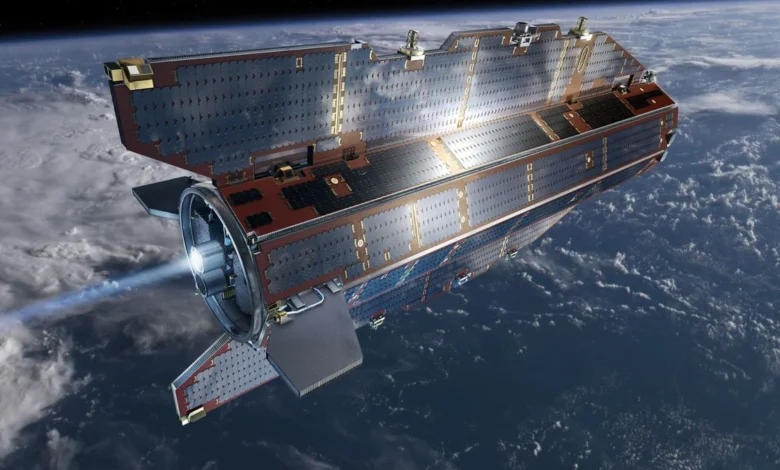
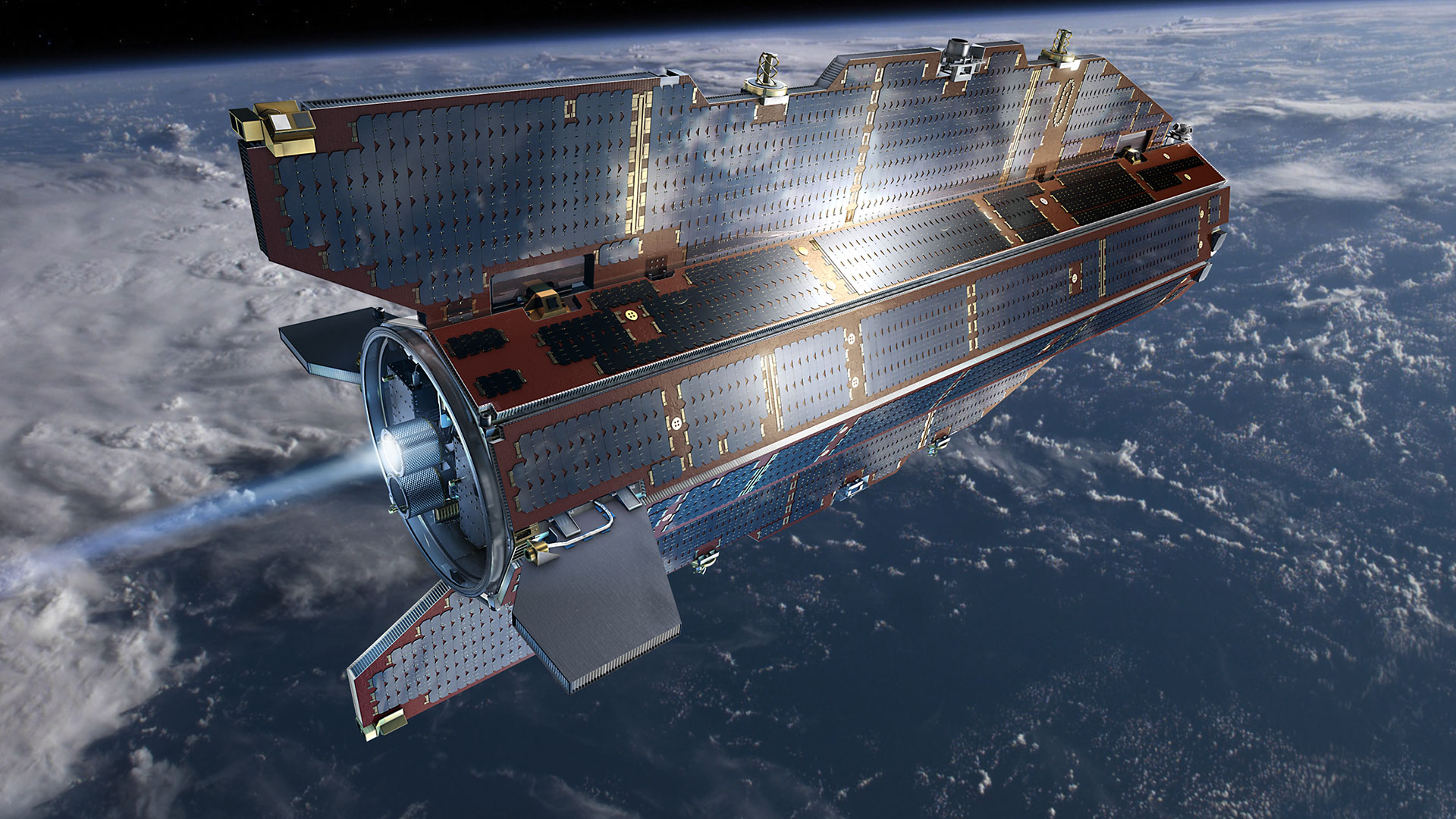
Affectionately dubbed the "Ferrari of space" by engineers and scientists due to its aerodynamic, sleek silhouette and stabilization fins covered in advanced solar arrays, GOCE was unlike any satellite that came before it or has flown since. Operating at an extraordinarily low altitude to meticulously map Earth’s gravitational irregularities, the spacecraft pushed the boundaries of technological endurance. When its xenon ion propellant finally ran out in October 2013, the satellite could no longer actively counteract atmospheric drag, setting the stage for a highly anticipated and heavily scrutinized descent back to the surface of the planet.
The Genesis of an Unprecedented Gravity Mission
To understand the magnitude of GOCE’s achievements, one must examine the fundamental challenge of measuring Earth’s gravity from space. Earth is not a perfect sphere; it is an oblate spheroid with an uneven mass distribution caused by towering mountain ranges, deep ocean trenches, and shifting dense mantle material beneath the crust. These variations create minute fluctuations in the local gravitational field, which in turn influence global ocean circulation, sea-level rise, and climatological patterns.
Before GOCE, scientists lacked a unified, high-resolution model of what is known as the geoid—the hypothetical shape that global oceans would take under the sole influence of Earth’s gravity and rotation, absent winds or tides. Recognizing this critical gap in Earth observation data, the European Space Agency selected GOCE as the core gravity mission within its Living Planet Programme.
Approved in 1999 and constructed by an industrial consortium led by prime contractor Thales Alenia Space, GOCE was engineered to detect these subtle gravitational variations with unprecedented precision. The satellite was equipped with an ultra-sensitive electrostatic gradiometer, an instrument comprising three pairs of orthogonal accelerometers designed to measure the spatial derivatives of the gravitational potential simultaneously. To isolate these measurements from external disturbances, the spacecraft had to be completely free of mechanical vibrations, operating as an ultra-quiet laboratory in the thermosphere.
Engineering the "Ferrari of Space" and the Challenge of Low-Earth Orbit
The defining characteristic of GOCE—and the reason behind its iconic sports-car moniker—was its exterior design. Measuring approximately 17 feet (5.3 meters) in length, 3.2 feet (1 meter) in width, and weighing roughly 2,425 pounds (1,100 kilograms), the spacecraft featured octagonal, wing-like fins entirely covered in solar panels. This aerodynamic, dart-like configuration was not chosen for aesthetic appeal, but out of sheer physical necessity.
To map Earth’s gravity with maximum fidelity, GOCE needed to fly as close to the surface as possible. While typical Earth observation satellites orbit at altitudes ranging from 400 to 800 miles, and the International Space Station cruises at roughly 250 miles, GOCE operated at an unprecedentedly low altitude of just 139 miles (224 kilometers).
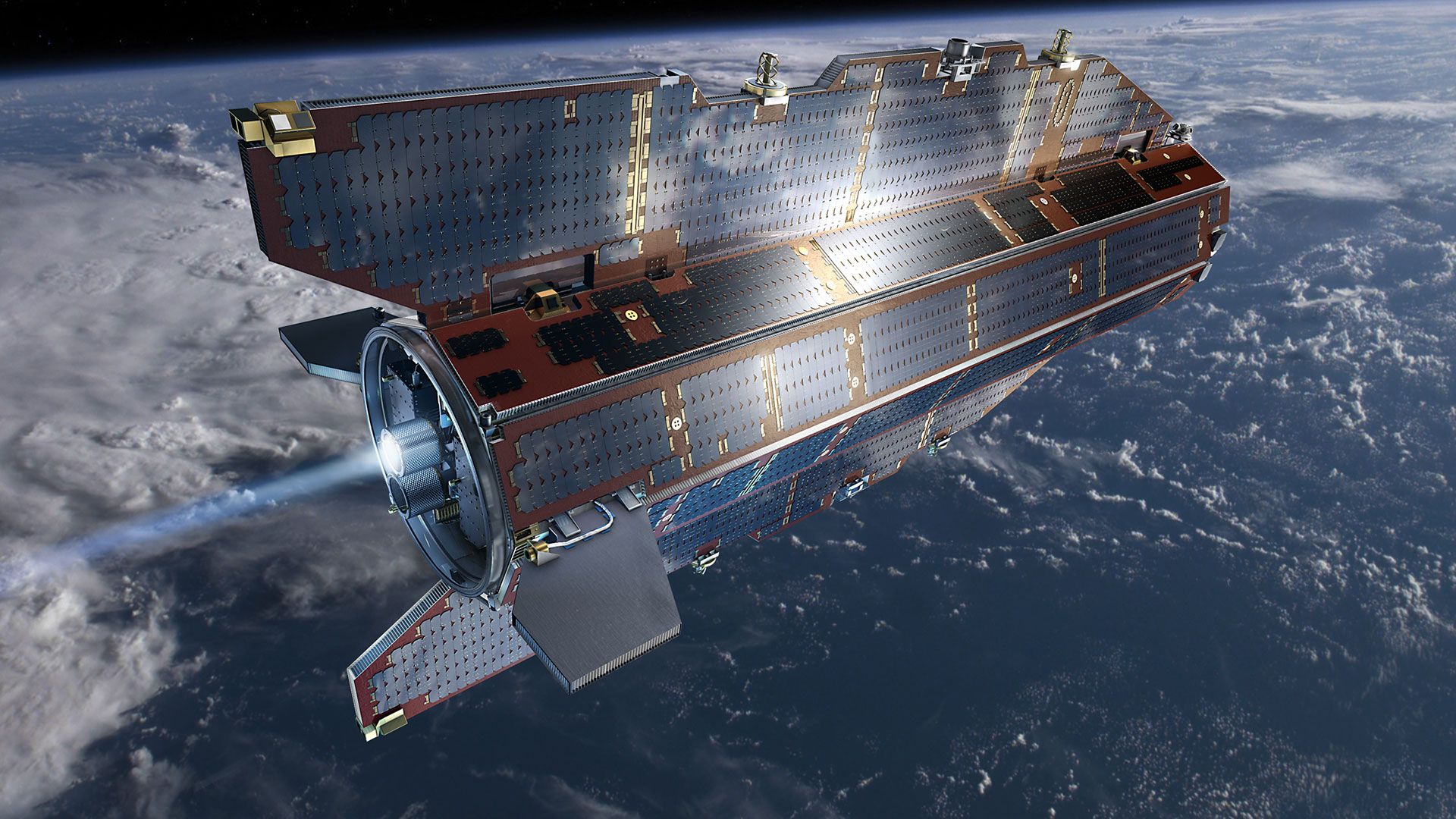
At this altitude, the Earth’s atmosphere—though exceptionally thin—still exerts measurable drag. Left uncorrected, atmospheric friction would rapidly destabilize and decelerate a conventional satellite, causing it to tumble and reenter prematurely. To solve this problem, ESA engineers integrated an innovative propulsion system: an ion thruster fueled by xenon gas. Positioned at the rear of the spacecraft, the xenon thruster continuously fired micro-newtons of thrust, instantly adjusting to the varying density of the thermosphere and maintaining a true "drag-free" flight path.
For four consecutive years, this high-tech balancing act worked to perfection, allowing the gradiometer to continuously record the gravitational pulls exerted by subsurface geological structures and ocean currents below.
The Exhaustion of Fuel and the Countdown to Reentry
By the autumn of 2013, the mission had exceeded its original design life. The xenon propellant that had sustained GOCE’s impossibly low orbit for 48 months was finally depleted. Without fuel to power the ion engine’s continuous corrections against atmospheric drag, the satellite’s orbital decay became inevitable.
On October 21, 2013, mission controllers at the European Space Operations Centre (ESOC) in Darmstadt, Germany, confirmed that the spacecraft had run out of propellant. At that moment, GOCE transformed from an active scientific observatory into a passive, decaying object subject entirely to the friction of Earth’s upper atmosphere.
The ensuing weeks triggered intense tracking and monitoring operations across international space agencies. As GOCE spirated downward, losing altitude day by day, public interest and anxiety mounted regarding where the one-ton satellite would eventually land. Space debris tracking networks, including the Inter-Agency Space Debris Coordination Committee (IADC) and United States Strategic Command, closely monitored the descent trajectory.
Because the spacecraft’s final orientation could not be actively controlled without propellant, predicting the exact geographic coordinates of the impact zone remained nearly impossible until the final hours of flight. Analysts reassured the public that while GOCE was structurally robust—utilizing high-melting-point materials such as carbon-carbon composites—the vast majority of the spacecraft was expected to burn up harmlessly under extreme aerodynamic heating during reentry.
The Fiery Reentry and Disintegration Over the South Atlantic
The end came on November 10, 2013. Atmospheric drag finally overwhelmed the structural integrity of the satellite at an altitude of approximately 50 miles (80 kilometers) above the Falkland Islands in the South Atlantic Ocean.
As GOCE plunged into the denser layers of the thermosphere at hypersonic speeds, intense friction generated temperatures exceeding 3,000 degrees Fahrenheit (1,650 degrees Celsius). Telemetry and tracking data indicated that the spacecraft largely disintegrated into smaller fragments high above the ocean. While initial mission assessments suggested that up to 25 percent of the satellite’s mass—primarily heat-resistant internal components—might survive the fiery descent and reach the surface, no reports of structural damage, injuries, or impacts on populated areas ever materialized.
The final confirmation of the reentry brought a mix of solemnity and celebration to the mission control team at ESOC. The spacecraft had successfully completed its operational life, burning up in a blaze of light that marked the conclusion of one of the most technically demanding missions in the history of Earth observation.
Scientific Legacy and Broader Implications for Geodesy
Despite its dramatic demise, the scientific return of the GOCE mission was nothing short of revolutionary. Researchers utilized the high-precision gravity data collected by the satellite to construct the most accurate global geoid ever produced.
This ultra-precise gravitational map allowed oceanographers to improve models of ocean circulation, heat transport, and sea-level dynamics with unprecedented accuracy. By subtracting the geoid from mean sea surface height data, scientists gained a clearer view of global ocean currents, helping to refine climate change models and weather forecasting systems.
Furthermore, geophysicists leveraged GOCE data to peer beneath the Earth’s crust. The satellite’s measurements mapped regional gravity anomalies associated with tectonic plate boundaries, mantle convection plumes, and deep geological structures. This provided new insights into the inner workings of the planet, including the dynamics driving earthquakes and volcanic activity.
Conclusion: A Lasting Benchmark in Space Exploration
The GOCE mission proved that high-risk, technologically innovative engineering could yield monumental rewards for Earth science. By pushing the boundaries of aerodynamic design and maintaining a stable orbit in the upper reaches of the atmosphere, the ESA spacecraft redefined the field of satellite geodesy.
Years after its fiery plunge over the South Atlantic, the data gathered by the "Ferrari of space" continues to serve as an indispensable baseline for oceanographers, climate scientists, and geophysicists worldwide. GOCE’s legacy endures not only in the textbooks of space exploration history, but in the ongoing efforts to understand, monitor, and protect our changing planet.