The End of an Era: Western Massachusetts Lesbian Bar Last Ditch Closes Amidst Pandemic Policy Controversy and Internal Turmoil

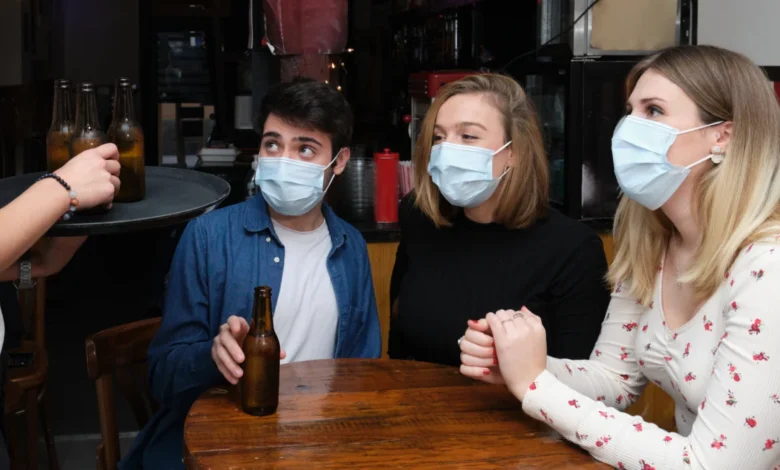
The landscape of American nightlife for LGBTQ+ individuals is shrinking, and this week, that reality became starker as Last Ditch, a prominent COVID-conscious lesbian bar in Western Massachusetts, announced its immediate closure. The venue, which had carved out a niche as a radical, health-conscious sanctuary for queer women and non-binary individuals, confirmed its shuttering via an Instagram post on Monday. While the doors are effectively closing to the public, the announcement framed the move as a "soft closure," leaving a narrow window for potential new ownership to step in and preserve the space.
The closure follows weeks of intense public scrutiny and internal organizational strain, triggered primarily by a high-profile report in the Boston Globe that highlighted the venue’s struggles to navigate the conflicting demands of its community regarding pandemic safety protocols.
A Chronology of Conflict
To understand the dissolution of Last Ditch, one must look at the intersection of public health policy and community governance. Last Ditch was founded on the principle of accessibility, specifically for the immunocompromised, enforcing strict KN-95 masking mandates long after most businesses had abandoned such requirements. However, the equilibrium of this space was disrupted when leadership attempted to relax these policies.
The timeline of the collapse accelerated rapidly:
- Mid-2024: Last Ditch operates as a community-oriented, worker-led venue, maintaining a reputation for being one of the few strictly COVID-conscious bars in the region.
- Late 2024: Reports emerge of internal disagreement regarding the relaxing of the KN-95 mask mandate.
- November 2024: The Boston Globe publishes an investigative piece detailing the backlash. The article captures a volatile situation, noting that the shift in policy triggered accusations of ableism from patrons, leading to an online firestorm.
- December 2024: The fallout from the public outcry reaches a breaking point. The leadership team, already strained by the effort to manage a co-op model, struggles to contain the vitriol directed at the venue.
- January 2025: Last Ditch officially announces its closure, citing a lack of management infrastructure and the exhaustion of its founding team.
The Anatomy of the Backlash
The controversy that engulfed Last Ditch was unique in its intensity. When the Boston Globe reported on the internal friction, the reaction on social media platforms was instantaneous and severe. Critics, many of whom identified as regular patrons or members of the broader queer community, argued that the relaxation of mask policies represented a betrayal of the venue’s core mission to protect vulnerable bodies.
The discourse quickly devolved from policy critique into personal attacks. Some commenters accused the owners of ableism, while others issued threats of violence. The intensity of the reaction forced the venue to pivot between apologies, public town halls, and internal defensive measures. This environment, described by staff as unsustainable, contributed to the disintegration of the leadership team.
Furthermore, the media coverage itself became a point of fascination for the internet. The Boston Globe report, while intended as a factual account of a local conflict, contained specific, idiosyncratic details—including mentions of staff members’ enrollment in clown school—that prompted a wave of viral mockery. The juxtaposition of serious public health debates with the "parody-like" nature of the venue’s internal operations created a narrative that overshadowed the bar’s original purpose.
The Economic and Cultural Context
The closure of Last Ditch occurs against a sobering national backdrop. According to the Lesbian Bar Project, a non-profit dedicated to the preservation and celebration of lesbian bars, there are fewer than 30 such establishments remaining in the United States. This represents a staggering decline from the mid-20th century, when these spaces served as the primary, and often only, safe havens for lesbian communities.
The decline is attributed to several factors: rising commercial rents, the assimilation of queer spaces into broader nightlife, and the specific challenges of maintaining physical community centers in a post-digital, post-pandemic world. Last Ditch represented an attempt to reverse this trend by emphasizing "networks of care," yet it ultimately succumbed to the logistical realities of operating a business under extreme public pressure.
Organizational Challenges and the Co-op Model
A significant factor in the closure, as stated by the owners themselves, was the inability to finalize a worker-owned cooperative transition. The founders of Last Ditch had expressed a desire to pass the torch, stating, "We have put our lives on hold to foster networks of care, resources, and a home base for organizing. It’s time we pass it on."
However, the transition required a stable board or leadership structure—a requirement the venue could not meet. The administrative burden of running a small business, combined with the emotional toll of the recent controversies, left the current leadership without the capacity to oversee the handover. The result is a "soft closure," where the business remains in limbo, waiting for a savior to step forward and assume the mantle of ownership.
Broader Implications for Queer Spaces
The fate of Last Ditch serves as a case study in the challenges of "care-based" business models. While these venues seek to provide a safer environment than traditional commercial bars, they often lack the capital reserves and the professional management infrastructure to weather crises. When a space is built on a specific, non-negotiable ideology, the margin for error is razor-thin. When that ideology is perceived as being compromised, the community response can be swift and fatal.
Industry analysts suggest that the Last Ditch incident highlights a broader tension within the queer community: the desire for radical, inclusive spaces versus the practicalities of operating in a market economy. For those in Western Massachusetts, the loss of Last Ditch is not merely the loss of a bar, but the loss of a hub for political organizing and social cohesion.
Looking Ahead
As of this week, the physical location remains closed, with the exception of pre-booked private events. The call for new owners remains open, though the appetite for such an undertaking is currently unknown. The situation has left many in the LGBTQ+ community in a state of reflection, mourning the loss of a space that, despite its tumultuous end, sought to prioritize the health and safety of its patrons above profit—a rarity in the modern hospitality industry.
The story of Last Ditch will likely be cited in future discussions regarding the viability of independent, community-funded nightlife. It is a reminder that while the demand for queer-centric, safe spaces is higher than ever, the sustainability of those spaces requires not only passion but a robust, resilient, and professional infrastructure capable of withstanding the pressures of the modern digital and physical landscape.
For now, the silence at the Last Ditch venue stands as a testament to both the high aspirations of its founders and the unforgiving nature of the current cultural climate. The question remains whether any entity will step forward to take on the challenge of resurrecting the space, or if this marks the final chapter for what was, for a time, a unique experiment in community-led queer hospitality. As the LGBTQ+ community continues to navigate these shifts, the loss of Last Ditch underscores the precariousness of the remaining few lesbian bars that serve as the last bastions of a storied history.
Related posts: