Meta Platforms Shines Light on Muse AI Growth Strategy Amid Surging Infrastructure Costs and Mounting Regulatory Scrutiny

Meta Platforms has provided a comprehensive look into the performance, growth metrics, and monetization strategies of its flagship Muse artificial intelligence agents during its third-quarter earnings report. As the technology titan pours unprecedented capital into expanding its artificial intelligence infrastructure, the success of Muse has emerged as a central pillar in the company’s roadmap to profitability. However, despite rapid initial adoption and high-value commercial transactions, the rollout faces considerable headwinds, underscored by steep user retention drop-offs, intensifying privacy controversies, and a staggering legal penalty.
Initial Adoption and Consumer Engagement
During the Q3 earnings call, Meta Chief Executive Officer Mark Zuckerberg revealed that Muse has surpassed 10 million downloads since its rollout to consumers in the United States and Canada the previous month. The application has demonstrated robust initial momentum, maintaining the top spot on the Apple App Store charts nearly every day since its debut.
According to metrics shared by Zuckerberg, approximately 25% of users who complete the initial setup process engage with Muse on a daily basis. Engagement and retention figures at the outset have outpaced internal projections, validating the company’s aggressive push into consumer-facing generative artificial intelligence tools.
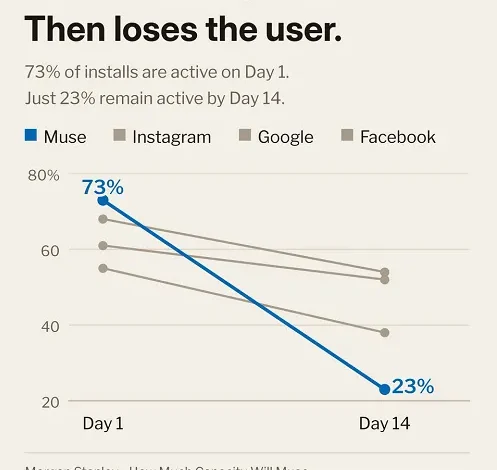
Despite the encouraging top-line acquisition numbers, independent third-party analytics paint a more nuanced picture of long-term sustainability. Data insights compiled by mobile intelligence firm Sensor Tower and highlighted by industry analysts on social media platforms indicate that user retention for Muse dips significantly approximately two weeks after the initial download.
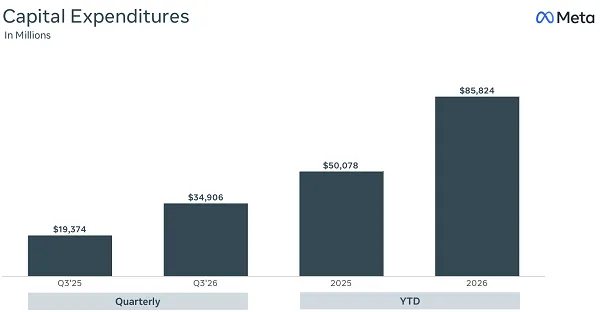
This retention curve aligns with broader industry trends observed across competing AI chatbots and conversational assistants, where novelty-driven downloads frequently give way to plateauing daily active usage. Nevertheless, the tapering engagement poses a critical question for Meta’s leadership: whether consumer habits can stabilize sufficiently to justify the astronomical capital expenditures dedicated to the underlying infrastructure.
Monetization and High-Value Commercial Transactions
Meta’s strategy for Muse centers heavily on commerce, transforming the AI agent from a conversational novelty into a functional transactional gateway. By integrating seamless payment and financial infrastructure, Meta aims to capture a percentage of sales facilitated directly within the application, creating a direct revenue pipeline to offset rising operational costs.
Zuckerberg highlighted that shopping is currently the most popular use case for Muse, with over 25% of users leveraging the agent to discover better deals, compare products, and execute purchases. Furthermore, the average transaction size conducted through Muse exceeds $200, signaling that consumers are willing to use the platform for high-value retail decisions.
The commercial velocity has occasionally strained existing financial networks. Zuckerberg noted that financial technology infrastructure provider Plaid reported unprecedented activity levels through its connector service on Muse. Additionally, during the application’s first week on the market, Meta was forced to coordinate with Stripe to rapidly raise credit limits to accommodate transaction volumes that significantly exceeded pre-launch forecasts.
This transactional emphasis represents a calculated gamble. With cumulative estimates suggesting Meta could invest up to $1 trillion into its overarching artificial intelligence initiatives, capturing a slice of digital commerce through conversational interfaces serves as a primary vehicle for achieving a return on investment.
Privacy Controversies and Security Vulnerabilities
While commercial metrics offer cause for optimism, Meta’s broader regulatory and cybersecurity landscape remains fraught with peril. The integration of deeply personal conversational agents requires vast collections of user data, placing privacy practices under intense public and legal scrutiny.
Just days prior to the earnings announcement, a New Mexico state judge ordered Meta to pay $25 billion in punitive and compensatory fines following a landmark jury trial that determined the company had systematically misled consumers regarding its data privacy safeguards. The ruling represents one of the largest corporate penalties of its kind, compounding the financial pressures facing the social media conglomerate.
Specific to the Muse ecosystem, security researchers and media outlets, including Ars Technica, reported vulnerabilities that allowed external observers to access substantial volumes of user query data through basic exploration techniques. The exposure of private personal and business conversations has exacerbated consumer apprehension regarding data security.
In response to these mounting challenges, Zuckerberg announced that Meta is developing a specialized architecture termed the "Muse Confidential VM." This secure virtual machine environment is designed to fortify user privacy within the application and restore consumer trust. However, analysts note that overcoming entrenched skepticism regarding data handling will remain a formidable obstacle as Meta attempts to scale the service to a global user base numbering in the billions.
The Evolution Toward a Distributed Muse Network
Looking ahead, Meta outlined ambitious technological horizons for its artificial intelligence ecosystem. Zuckerberg detailed plans to construct a large-scale "Muse Network," designed to transition the application from a solitary assistant into a collaborative, interconnected mesh of autonomous agents.
Under this proposed architecture, individual user Muses would communicate directly with friends, family members, and business-facing AI agents. Rather than a consumer manually navigating to a commercial website to complete a purchase, their personal Muse would negotiate directly with the vendor’s designated agent to secure goods and services. Meta anticipates that orchestrating these decentralized agent-to-agent interactions will unlock unprecedented operational efficiencies and economic value at scale.
This vision bears structural similarities to earlier proposals discussed by Meta regarding the deployment of millions of automated bots across Facebook and Instagram to boost engagement. However, the Muse Network framework explicitly prioritizes task optimization, administrative efficiency, and commercial facilitation rather than purely social interactions.
Hardware Integration and Future Outlook
To further broaden the accessibility and utility of its conversational technology, Meta confirmed that Muse will expand beyond mobile devices and integrate into Meta’s line of smart glasses beginning in November. This hardware integration aims to weave artificial intelligence assistance seamlessly into the daily physical routines of users, bridging the digital-physical divide.
As Meta navigates the complex intersection of heavy capital expenditure, evolving consumer habits, regulatory penalties, and cybersecurity demands, the trajectory of Muse will likely serve as a bellwether for the entire technology sector. Whether conversational AI can successfully transition from an expensive experimental novelty into a sustainable, profit-generating utility remains the defining question for Meta’s corporate future.