Threads launches comprehensive suite of tools to bridge the gap between podcast creators and social audiences

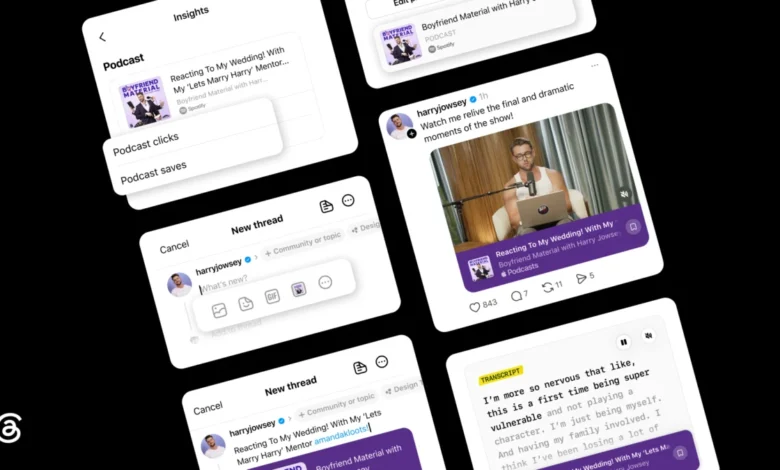
The digital audio landscape is undergoing a significant transformation as Meta officially introduces a new ecosystem of specialized tools designed to integrate podcasting directly into the Threads user experience. By facilitating a more seamless bridge between audio content and social interaction, these features aim to solidify Threads as the primary destination for real-time discourse surrounding episodic audio. This rollout, which marks a strategic pivot in how social media platforms handle long-form media consumption, provides creators with enhanced distribution capabilities while offering listeners sophisticated ways to engage with, discuss, and curate their favorite shows.
The Evolution of Social Audio Integration
The integration of podcasts into social feeds is not a novel concept, but the execution has historically been fragmented. Platforms have long struggled to translate the passive nature of audio listening into the active nature of social commentary. Historically, the podcasting industry has operated in a silo, relying on RSS feeds and third-party aggregators that lack a built-in community layer. Threads is now attempting to dismantle this barrier.
The shift began in early 2023 when Meta launched Threads as a text-based companion to Instagram. Within months, data showed that creators were increasingly using the platform to share links to audio episodes, asking followers for feedback or episode recommendations. Recognizing this organic behavior, Meta’s product team initiated a development roadmap aimed at formalizing the link between audio creators and their digital community. This evolution follows a trajectory of social platforms attempting to capture the lucrative audio market, mirroring shifts seen in the broader creator economy where "discoverability" remains the primary pain point for independent podcasters.
Chronology of Development
The journey toward this feature set spans several quarters of iterative testing and community feedback gathering:
- Q3 2023: Threads reaches 100 million sign-ups, with internal reports highlighting a surge in discussions surrounding pop culture and news podcasts.
- Q1 2024: Meta begins quiet testing of enhanced URL previews for audio-hosting platforms, allowing for richer metadata display.
- Q3 2024: Developers roll out "Conversation Threading" for specific media content, laying the groundwork for episode-specific discourse.
- September 2026: The official launch of the dedicated podcast toolset, providing creators with direct linking, enhanced analytics, and community-building widgets.
Supporting Data and Market Context
The podcasting industry has experienced exponential growth, with projections suggesting the market will reach over $4 billion in advertising revenue globally by the end of 2026. Despite this growth, the "discovery gap" remains a persistent challenge. According to industry surveys, 45% of listeners report finding new shows through social media recommendations, yet only 12% of those interactions lead to a sustained, long-term subscription.
Threads aims to address this conversion deficit. By embedding tools that allow listeners to play clips or interact with show notes without leaving the application, Meta hopes to shorten the distance between the "discovery" phase and the "consumption" phase. Current market metrics indicate that content shared via native social integration—as opposed to external links—receives 30% higher engagement, suggesting that these tools could significantly alter the distribution landscape for independent producers.
Official Stance and Creator Sentiment
While official company statements have remained focused on the user-centric benefits of the update, industry analysts point to the strategic necessity of these tools. An internal spokesperson for Meta noted that the platform’s goal is to ensure that "the conversations people are already having about audio content are supported by a user interface that respects the creator’s vision and the listener’s curiosity."
Early reactions from the creator community have been largely positive, though tempered with a degree of cautious optimism. Podcasters have long sought a centralized location for community management. For many independent creators, relying on fragmented comments sections across multiple platforms has been a major operational hurdle. The ability to manage a cohesive, episode-specific conversation on a platform as high-traffic as Threads represents a major efficiency upgrade. "It’s about reducing the friction," says Sarah Jenkins, a producer for a prominent independent podcast network. "When we can provide a direct, high-quality gateway from a social feed into our audio stream, we see an immediate uptick in listener retention."
Implications for the Podcasting Industry
The introduction of these tools carries several broader implications for the future of digital media. Firstly, it signals a potential shift in power away from closed-loop audio hosting platforms toward open-access social networks. If Threads succeeds in becoming the de facto "water cooler" for podcast listeners, it may compel other platforms to adopt similar integration standards.
Secondly, the move highlights the rising importance of "social discovery" as a metric for success. In an environment saturated with millions of shows, the ability to leverage a social graph—using existing follower networks to promote specific episodes—becomes more valuable than traditional algorithmic discovery. For advertisers, this creates a more robust data set; brands will now be able to measure not just how many people listened to an episode, but how many people engaged in subsequent discussion, shared specific clips, or participated in follow-up polls.
Analysis of Technical Integration
From a technical standpoint, the integration relies on a sophisticated metadata protocol that allows Threads to parse episode data in real-time. When a creator shares a link to an episode, the platform does not merely display a static thumbnail. Instead, it pulls in dynamic elements, including show descriptions, episode-specific time stamps, and guest information.
This approach addresses a common complaint in the podcasting space: the lack of contextual information when links are shared on social media. By automating the extraction of these details, Threads ensures that every post acts as a high-fidelity landing page for the podcast itself. Furthermore, the inclusion of "Conversation Threads" specifically attached to audio episodes allows for a more structured dialogue. Users can reply with text, images, or even their own audio snippets, fostering a layered, multimedia conversation that was previously impossible within the standard comment box.
Future Outlook and Strategic Challenges
As Threads moves forward with these features, the primary challenge will be the balance between content moderation and open discourse. Podcasts often cover sensitive or polarizing topics, and the ability to link these to a massive social feed necessitates a robust safety infrastructure. Meta has indicated that their existing AI-driven moderation tools will be applied to these new threads, ensuring that the community remains focused on the content rather than descending into unproductive toxicity.
Additionally, the platform must navigate the competitive landscape. With Spotify and Apple Podcasts maintaining dominance in distribution, Threads is positioning itself as the "social layer" rather than a competitor for hosting. By acting as the intermediary, Threads avoids the immense costs of content licensing while simultaneously increasing user dwell time.
The long-term success of this initiative will depend on adoption rates among both high-profile creators and independent hobbyists. If the tools prove to be as user-friendly as they appear in the initial launch documentation, it could fundamentally change the life cycle of a podcast episode. No longer will an episode be released into a vacuum; it will immediately enter a pre-primed environment of discussion, debate, and discovery.
In conclusion, the integration of specialized podcasting tools into Threads marks a significant milestone in the convergence of social media and audio entertainment. By prioritizing community interaction over mere distribution, Meta is tapping into the social nature of podcasting—a medium that, while audio-centric, has always been inherently communal. As these tools continue to roll out globally, the impact on listener behavior and creator reach will likely be substantial, setting a new standard for how media is shared and discussed in the digital age. The focus now shifts to how the creator community adapts to these features and whether they can successfully harness the reach of Threads to convert casual listeners into a dedicated, active community.
Related posts: