Meta Digital Engagement Records Shattered During 2026 FIFA World Cup as Global Football Fandom Shifts to Social Platforms

The 2026 FIFA World Cup has concluded not only as a landmark event in the history of international sports but as a transformative moment for the global digital landscape. Meta, the parent company of WhatsApp, Instagram, Facebook, and Threads, reported unprecedented levels of engagement, suggesting that the tournament has become the most digitally active sporting event in human history. From record-shattering message volumes on WhatsApp to a massive surge in Instagram followers for breakout athletes, the tournament’s digital footprint has redefined how fans interact with live sports. This shift marks a transition from passive viewership to a multi-platform, interactive experience where the "second screen" is just as vital as the primary broadcast.
WhatsApp Sets Unprecedented Global Communication Milestone
As the tournament progressed into its high-stakes knockout stages, the demand on global communication infrastructure reached levels never before seen. Meta confirmed that during the Round of 16 match between Argentina and Egypt—a fixture that captured the attention of two of the world’s most passionate footballing regions—WhatsApp processed more than 29 million messages per second. This figure represents a new all-time record for the platform, eclipsing the previous benchmark set during the 2022 World Cup Final in Qatar.
The technical achievement of maintaining 29 million messages per second highlights the sheer scale of the 2026 tournament’s reach. This surge in traffic was driven by real-time reactions to goals, VAR decisions, and the emotional tension of a penalty shootout. For Meta, this record serves as a testament to the platform’s scalability and its role as the primary medium for private, real-time conversation among fans. The data suggests that for every major moment on the pitch, millions of digital conversations are ignited simultaneously across the globe, creating a decentralized, global "digital stadium."
The Instagram Effect: A New Era of Athlete Branding
While WhatsApp served as the hub for private conversation, Instagram acted as the global stage for public celebration and athlete branding. According to data released by Meta, the tournament drove massive audience growth for participating players. During the primary month of the tournament window, spanning from June 11 to July 11, players in the final squads collectively added 213.6 million new followers. This represents a 6.6% increase in the total combined following of all players, which surged from 3.26 billion to 3.47 billion.
This growth indicates that the World Cup remains the premier platform for athletes to build their personal brands. However, the 2026 tournament saw a departure from the traditional dominance of established superstars. While household names continued to grow, the most significant stories were found among emerging talents and "Cinderella" stories from smaller nations.
The Rise of Vozinha and the Cape Verde Phenomenon
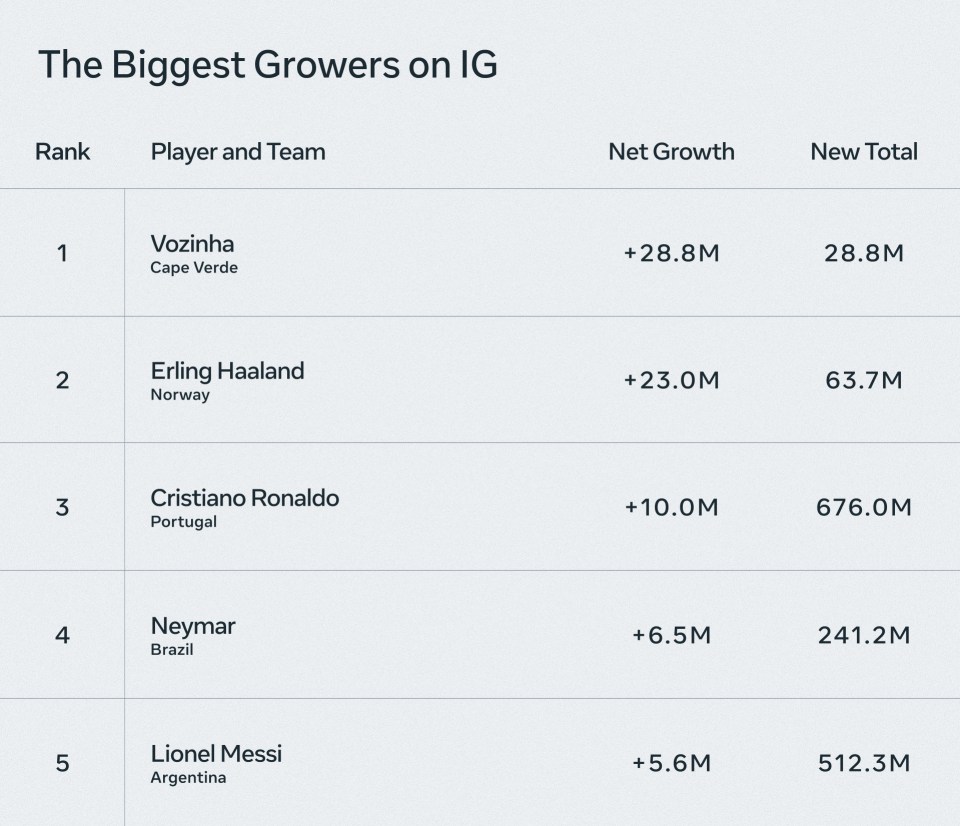
The most remarkable individual story of the tournament on social media was that of Vozinha, the Cape Verde goalkeeper. Entering the tournament with a modest following of 37,000, Vozinha’s electrifying performances against world-class opposition captivated a global audience. By the end of the tournament window, his Instagram following had skyrocketed to 28.8 million—an increase of more than 77,000%.
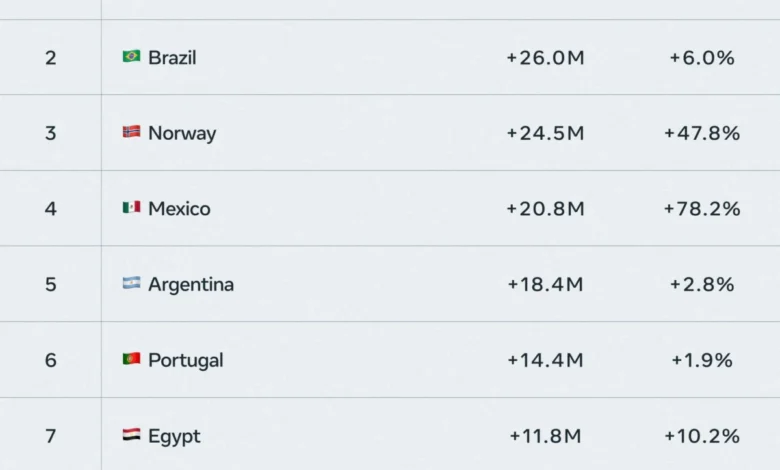
Vozinha’s meteoric rise is a case study in how the modern World Cup can turn a relatively unknown athlete into a global icon virtually overnight. His success also propelled the Cape Verde national team to the top of the country leaderboard for digital growth. The squad saw a net increase of 32.1 million followers, a team-level surge of 2,000%. This data underscores a shift in fan behavior, where neutral supporters are increasingly drawn to underdog narratives and standout individual performances, regardless of the player’s club or country of origin.
Growth Among Global Icons
Despite the emergence of new stars, established legends continued to consolidate their digital dominance. Cristiano Ronaldo, already the most-followed individual on Instagram, added another 10 million followers during the tournament, bringing his total to a record-breaking 676 million. Meanwhile, Erling Haaland, representing a Norway side that captured significant global attention, led the growth among established stars by adding 23 million new followers, nearly doubling his pre-tournament base.
Regional Engagement and Algorithmic Discovery
The 2026 World Cup saw specific regional surges that highlighted the growing intersection of football and digital culture in North America and Asia. In Mexico, the national team’s digital presence saw a 78% surge, fueled by breakout stars such as Gilberto Mora, who gained 5.6 million followers, and Julian Quiñones, who added 2.6 million. This growth is particularly significant given Mexico’s role as one of the host nations, suggesting that the "host effect" extends beyond physical attendance to digital engagement.
Japan also saw a substantial increase in digital footprint, with a 42% rise in followers across the squad. Rising talents like Keito Nakamura, who added 1.3 million followers, were central to this growth. The data suggests that the Asian market remains a critical frontier for football’s digital expansion, with fans increasingly using social media to follow the personal journeys of their domestic stars playing abroad.
The Role of "Your Algorithm" in the United States
In the United States, another host nation, Meta’s "Your Algorithm" feature played a pivotal role in how fans discovered tournament content. This feature, which allows users to control the interests reflected in their Home feed, Reels, and Explore pages, revealed the top players capturing the American imagination. Throughout the tournament, five specific names consistently appeared in the algorithms of U.S. users, reflecting a blend of domestic interest and global stardom. This algorithmic curation has become a key driver in how sports content is consumed, moving away from a one-size-fits-all broadcast model toward a personalized discovery experience.
Threads and Facebook: Community and Real-Time Discussion
The 2026 tournament also served as a major milestone for Threads, Meta’s text-based conversation app. The platform recorded 1.5 billion impressions on posts tagged with tournament-related keywords. Content from the football community reached an average of 15 million people daily, with a peak of 25 million on July 6, coinciding with the quarter-final matches. These figures suggest that Threads has successfully carved out a niche as a destination for real-time sports commentary and community-driven debate.
On Facebook, the scale of conversation remained massive, proving the platform’s enduring relevance for long-form community interaction. Since the start of the tournament, users published more than 80 million posts mentioning the World Cup. These posts often included detailed tactical analysis, historical comparisons, and fan-group discussions that go beyond the short-form nature of other platforms.
Chronology of a Digital Mega-Event
The digital lifecycle of the 2026 World Cup can be divided into three distinct phases:
- The Group Stage (June 11 – June 28): This period was characterized by a broad, horizontal growth in followers across all 48 participating nations. Engagement was driven by national pride and the novelty of the expanded tournament format.
- The Knockout Rounds (June 29 – July 11): This phase saw the "WhatsApp Spike," where message volumes peaked during high-tension matches like Argentina vs. Egypt. It was also the period where individual "breakout stars" like Vozinha began to trend globally.
- The Final and Post-Tournament Analysis (July 12 – July 13): The focus shifted to legacy and celebration. This period saw the final surge in followers for the tournament’s top performers and a high volume of recap content on Facebook and Threads.
Analysis: The Implications for Sports Media and Marketing
The data from Meta’s family of apps points to a fundamental shift in the sports ecosystem. Rob Pilgrim, Global Football Lead at Meta, noted that the company’s apps have become the "cultural epicenter" of the game. Pilgrim emphasized that while the 90 minutes of play are watched on television, the entire cultural experience surrounding the match—the memes, the behind-the-scenes footage, the coaching analysis, and the dressing room celebrations—happens on social media.
This "360-degree" engagement model has several implications for the future:
- Monetization of the "Second Screen": Rights holders and sponsors must now look beyond traditional broadcast slots to reach fans. The 29 million messages per second on WhatsApp and 1.5 billion impressions on Threads represent a massive, untapped inventory for contextual marketing.
- Athlete as Media Channel: With players like Vozinha and Haaland gaining tens of millions of followers in a month, athletes are no longer just participants; they are powerful media channels in their own right. This shifts the power balance between clubs, leagues, and individual players.
- Data-Driven Fan Engagement: The use of features like "Your Algorithm" allows platforms to provide highly personalized content, ensuring that even fans of smaller nations remain engaged throughout the tournament. This helps maintain high engagement levels even after a fan’s national team has been eliminated.
- Infrastructure Demands: The record-breaking traffic on WhatsApp highlights the need for continued investment in global digital infrastructure. As more regions gain high-speed internet access, the potential for even larger spikes in future tournaments is high.
Conclusion
The 2026 World Cup has proven that the "beautiful game" is now a digital-first experience. Meta’s report confirms that the tournament has moved beyond the confines of the stadium and the television screen, living and breathing within the pockets of billions of people. As fans shared 80 million posts on Facebook and followed their favorite stars in record numbers on Instagram, they didn’t just watch the World Cup—they participated in it. This synergy between live sport and social technology has set a new standard for global events, ensuring that the legacy of the 2026 tournament will be measured not just in goals and trophies, but in billions of digital connections.
Related posts: