NASA Psyche Mission Captures Stunning Mars Flyby Data and Time-Lapse Video During Critical Gravity Assist

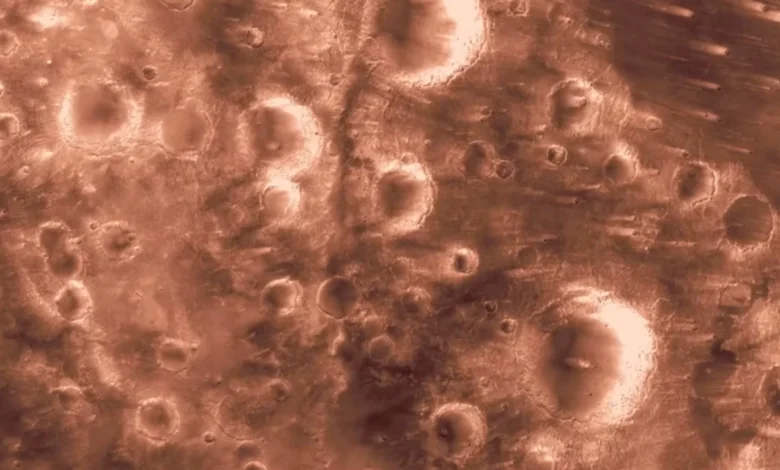
NASA’s Psyche spacecraft, currently on a multi-year journey to investigate a unique metal-rich asteroid, has successfully utilized the gravitational pull of Mars to catapult itself toward the outer reaches of the solar system. While the primary objective of the May 2026 flyby was to gain the necessary velocity for its long-term trajectory, the mission team took advantage of the proximity to the Red Planet to perform a comprehensive checkout of the spacecraft’s scientific payload. This maneuver resulted in a treasure trove of data, including a high-definition time-lapse video and intricate readings of the Martian magnetic and chemical environment, marking a significant milestone for the mission as it prepares for its 2029 arrival at the asteroid 16 Psyche.
The Mechanics of a Celestial Slingshot
The Psyche spacecraft was launched in October 2023 from NASA’s Kennedy Space Center atop a SpaceX Falcon Heavy rocket. To reach its destination in the main asteroid belt between Mars and Jupiter, the spacecraft requires more energy than even a heavy-lift rocket can provide directly. To solve this, mission navigators employed a gravity assist—a technique often referred to as a "celestial slingshot."
By flying within approximately 2,864 miles (4,600 kilometers) of the Martian surface, the spacecraft effectively "stole" a small amount of orbital momentum from the planet. This maneuver increased the spacecraft’s speed and altered its flight path without the need for excessive fuel consumption. This efficiency is critical for deep-space missions where every kilogram of propellant saved extends the potential for extended scientific operations later in the mission’s lifecycle.
During this month-long encounter in May, mission controllers at NASA’s Jet Propulsion Laboratory (JPL) in Southern California and the Arizona State University (ASU) mission headquarters monitored the spacecraft’s systems closely. The flyby served as a rigorous "stress test" for the instruments that will eventually be used to map and analyze the asteroid 16 Psyche, an object believed to be the exposed core of an early protoplanet.
Visualizing the Red Planet: The Imager’s Performance
One of the most visible successes of the flyby was the performance of the Psyche multi-spectral imager. The instrument consists of a pair of identical cameras equipped with filters that allow it to see in both visible and near-infrared wavelengths. As the spacecraft approached, passed, and departed Mars, it captured a series of images that have been compiled into a stunning time-lapse video.
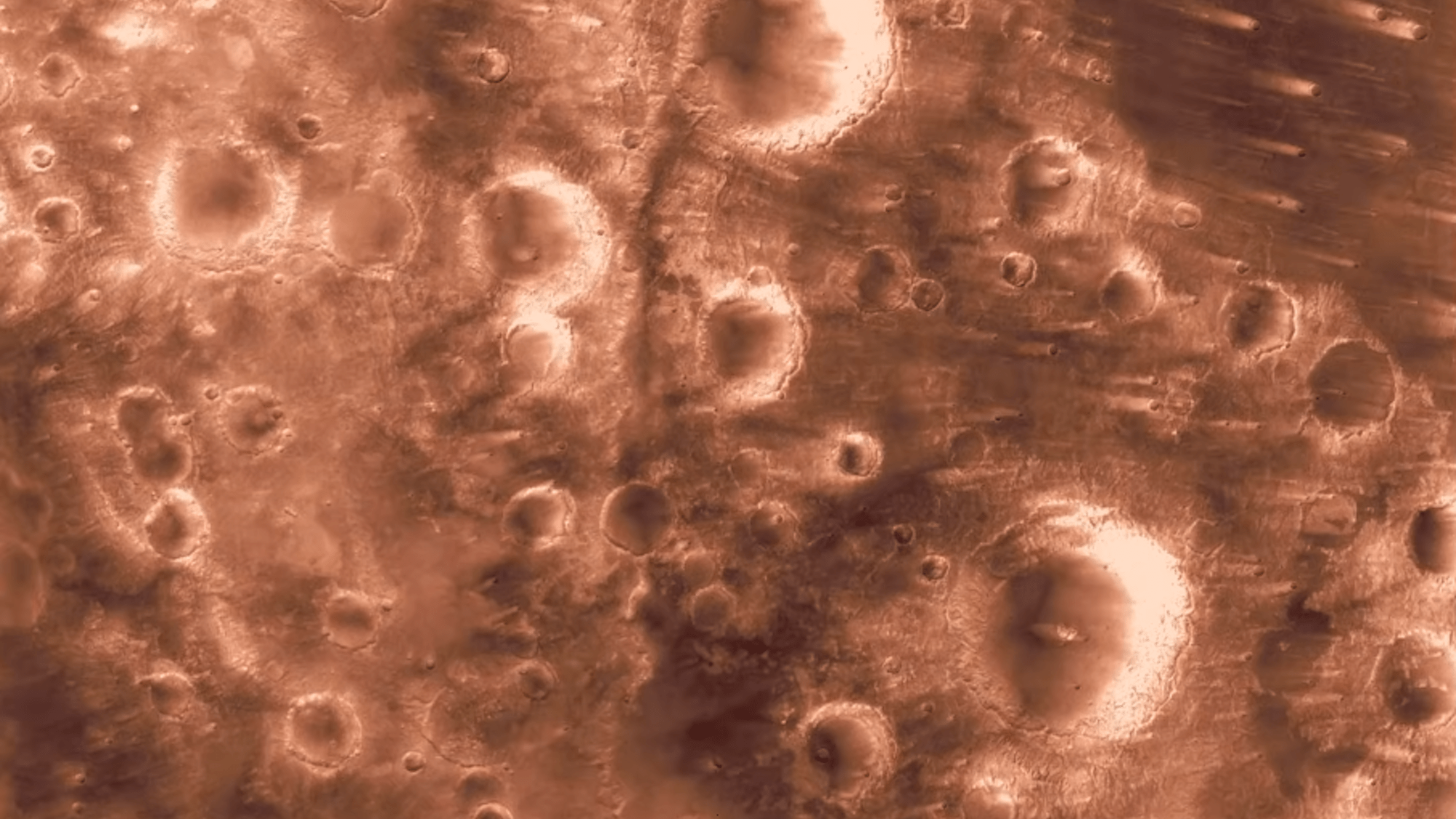
The footage provides a rare perspective of Mars, showcasing its windswept dusty plains, massive impact craters, and the distinct white of the southern polar ice cap. Beyond the aesthetic value, these images were vital for the calibration of the cameras. Jim Bell, the imager instrument lead at Arizona State University, noted that the cameras performed brilliantly, providing high-resolution views that confirm the hardware is ready for the complex imaging tasks required once the spacecraft reaches its target asteroid.
A key part of the imaging test involved tracking Phobos and Deimos, the two small, lumpy moons of Mars. This exercise was a direct rehearsal for the spacecraft’s arrival at 16 Psyche. Scientists suspect that the asteroid may have its own tiny "moonlets" or orbiting debris. By successfully identifying and tracking the Martian moons against the backdrop of deep space, the team proved that the imager is sensitive enough to detect small satellites that might be orbiting 16 Psyche, which would be a discovery of significant scientific importance.
Probing the Martian Atmosphere and Magnetic Field
While the cameras captured the public’s imagination, two other sophisticated instruments were hard at work gathering invisible data: the Gamma-Ray and Neutron Spectrometer (GRS/NS) and the Magnetometer.
The Gamma-Ray and Neutron Spectrometer is designed to identify the elemental composition of a planetary body. When cosmic rays strike a surface, they cause the emission of neutrons and gamma rays. By measuring these emissions, scientists can determine the abundance of elements like iron, nickel, silicon, and potassium. During the Mars flyby, the spacecraft remained at an altitude that was generally too high to detect Martian gamma rays, but it was perfectly positioned to pick up the "neutron leakage" from the planet.
David Lawrence, the spectrometer science lead from the Johns Hopkins Applied Physics Laboratory, confirmed that the instrument detected a count-rate enhancement in neutrons that aligned perfectly with pre-flyby predictions. This success validates the sensitivity of the sensors, ensuring they will be able to distinguish between the various metallic and rocky components of 16 Psyche.
Simultaneously, the spacecraft’s magnetometer was active. Unlike Earth, Mars does not have a global magnetic field generated by a core dynamo; however, it does have localized crustal magnetic fields and interacts heavily with solar winds. As Psyche neared the planet, the magnetometer recorded a significant spike in magnetic activity. This occurred as the spacecraft crossed the "bow shock" region—the area where the solar wind is deflected by the planet’s magnetosphere and atmosphere.

Lindy Elkins-Tanton, the mission’s principal investigator based at Arizona State University, emphasized that while Mars is a well-studied world, the data provided a unique perspective. The magnetometer has been running continuously since launch to monitor the solar wind, but the Mars encounter provided the first high-intensity field test of its ability to detect complex magnetic signatures.
Chronology of the Psyche Mission
The Mars flyby is a pivotal chapter in a timeline that spans over a decade of planning and execution:
- January 2017: NASA selects the Psyche mission as part of its Discovery Program, a series of lower-cost, highly focused robotic space missions.
- October 13, 2023: The spacecraft launches from Kennedy Space Center, beginning its 2.2-billion-mile (3.5-billion-kilometer) journey.
- Late 2023 – Early 2024: Initial checkouts of the Deep Space Optical Communications (DSOC) system, a revolutionary laser-based communication tool, are completed.
- May 2026: The Mars gravity assist occurs, providing the necessary velocity boost and an opportunity for instrument calibration.
- Late 2026 – 2028: The cruise phase continues, with the spacecraft utilizing its solar-electric propulsion (Hall thrusters) to maintain its trajectory.
- August 2029: The spacecraft is scheduled to enter orbit around the asteroid 16 Psyche.
- 2029 – 2031: The primary science mission takes place, involving mapping the asteroid from four different orbital altitudes.
Technical Innovation: The Power of Xenon
The Psyche mission is notable not just for its destination, but for its propulsion technology. The spacecraft utilizes Hall-effect thrusters, a form of solar-electric propulsion. These thrusters work by accelerating ions of xenon gas through an electric field to create thrust.
While the thrust produced is gentle—roughly equivalent to the weight of a few business cards—it is incredibly efficient and can operate continuously for years. Following the Mars flyby, the mission team is preparing to restart these thrusters for the next long-duration burn. This "quiet" propulsion is what allows the spacecraft to slowly spiral into the asteroid’s gravity well in 2029, rather than performing a high-risk, high-speed braking maneuver.
Broader Scientific Implications and Future Outlook
The ultimate goal of the mission is to study 16 Psyche, an asteroid that measures roughly 173 miles (280 kilometers) at its widest point. Unlike most asteroids, which are made of rock or ice, 16 Psyche appears to be composed largely of iron and nickel. This suggests it could be the "mummified" remains of a planetary embryo that lost its outer rocky layers due to violent collisions during the early formation of the solar system.
By studying 16 Psyche, scientists hope to gain a "look inside" terrestrial planets like Earth, whose own metallic cores are buried thousands of miles beneath the crust and mantle. The data collected at Mars reinforces the team’s confidence that they have the right tools to solve the mysteries of this metallic world.

As the spacecraft leaves Mars in its rearview mirror, it enters a quieter phase of its journey. However, the work for the scientists on Earth is just beginning. The data from the flyby will be used to refine the software algorithms that will process the data from the asteroid.
"We didn’t anticipate big discoveries at Mars, given how extensively the planet has been studied," Elkins-Tanton stated, "but the data we collected through Psyche’s unique perspective complements existing Mars science and, more importantly, proves our spacecraft is in peak condition for the challenges ahead."
With the gravity assist successfully executed and the instrument suite verified, NASA’s Psyche mission remains on track to uncover the secrets of the solar system’s origins, one billion miles at a time.