Beyond the Red Planet: Unveiling the Geological Complexity of the Martian South Pole

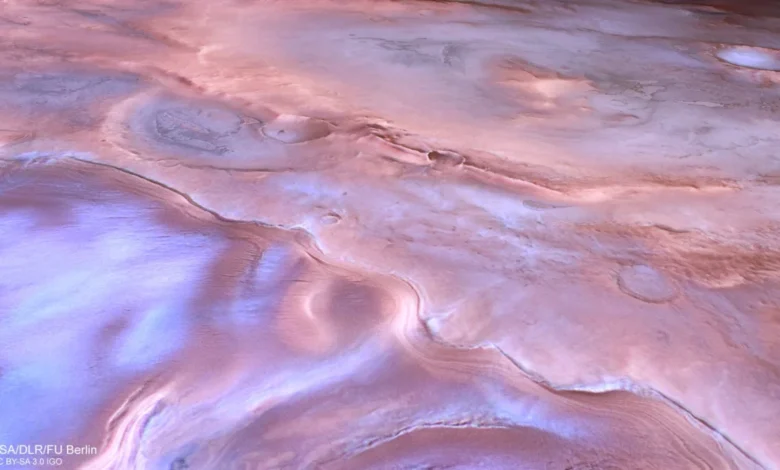
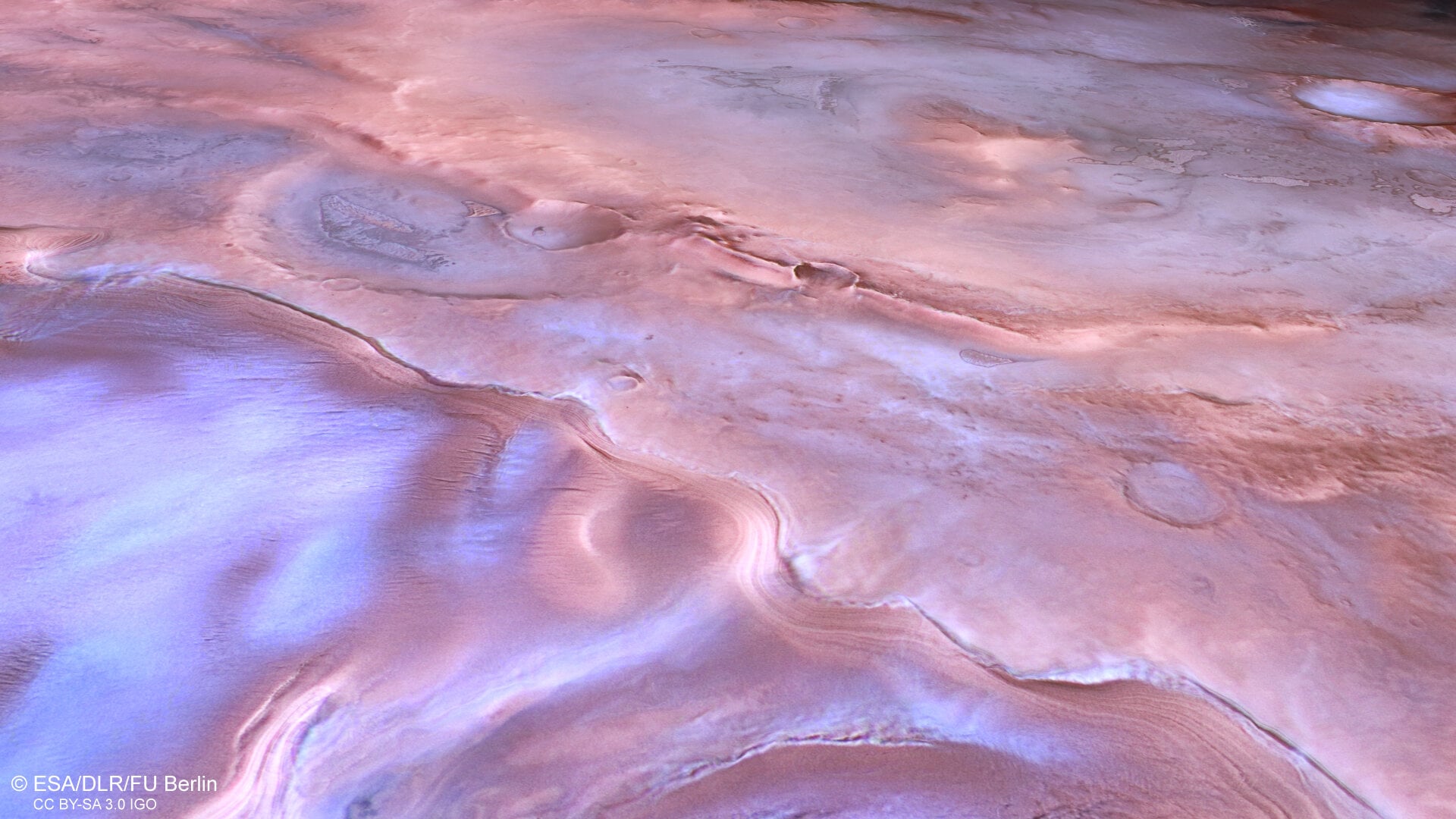
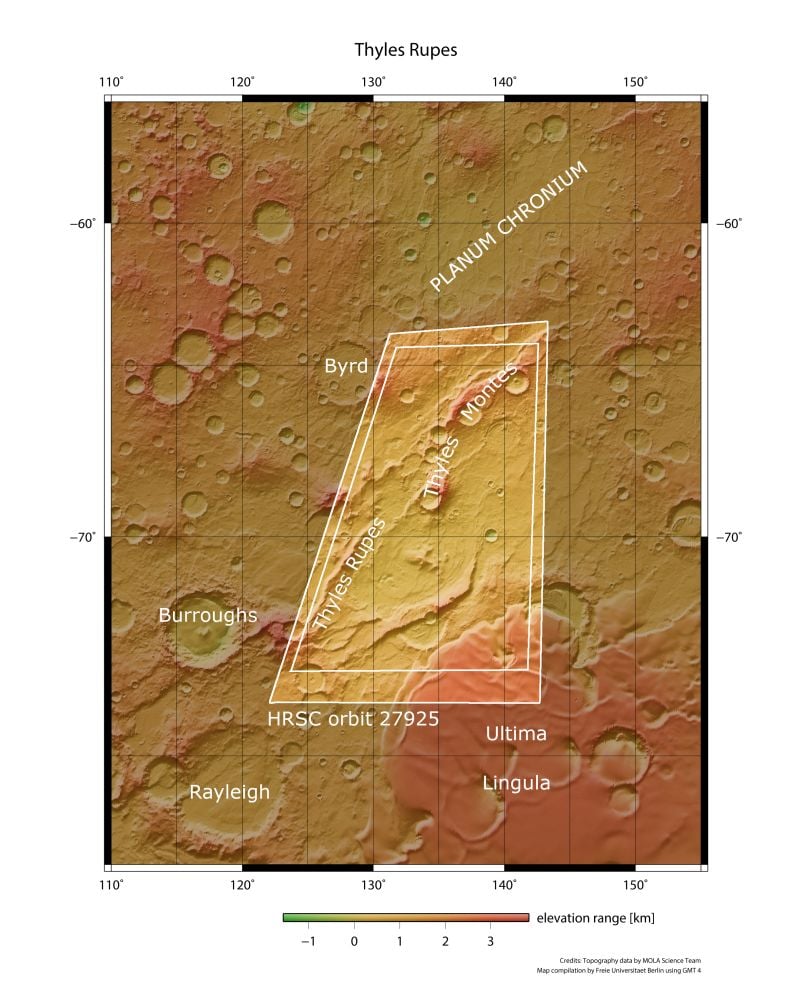
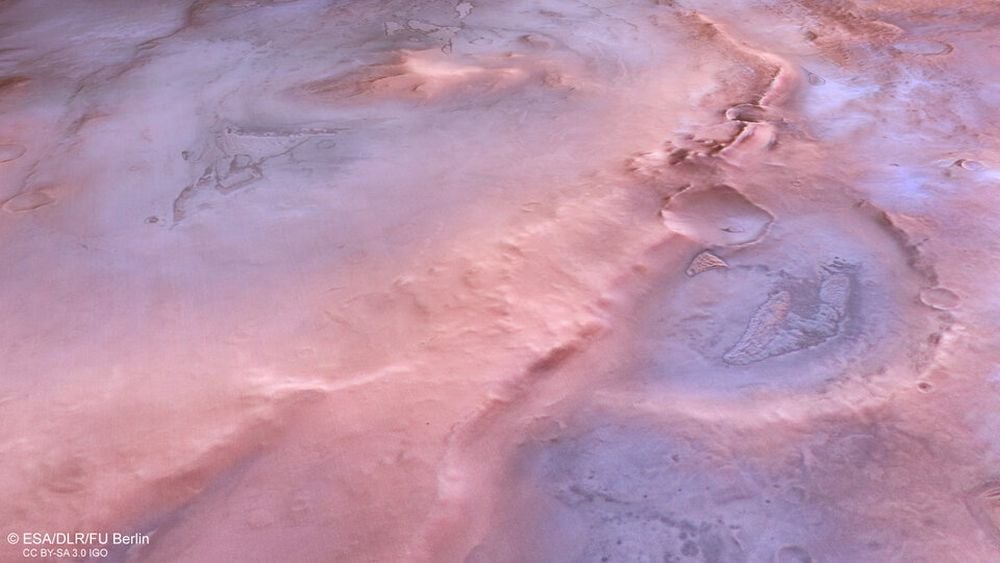
Oxidized iron dominates the Martian color palette, a pervasive dusting of iron oxide that bestows upon the fourth planet from the sun its iconic nickname: the Red Planet. Yet, recent high-resolution imagery captured by the European Space Agency’s (ESA) Mars Express orbiter reveals a region of the Martian south pole that defies this monochromatic expectation. Swirls of vibrant pinks, deep purples, and ethereal tans characterize the terrain surrounding Thyles Rupes, a formidable icy crag featuring cliffs that soar to heights exceeding 1,000 meters. This geological feature, named after the mythical "Thule" of ancient cartography—a land believed to exist at the northernmost edge of the world—serves as a stark reminder that beneath the ubiquitous rust-colored dust lies a complex, multi-layered history of volcanic activity, tectonic contraction, and seasonal atmospheric cycles.
A Geological Mosaic: Mineralogy and Volcanism
The kaleidoscopic hues observed at Thyles Rupes are not merely aesthetic curiosities; they are markers of diverse mineralogical origins. The darker material saturating the landscape is a byproduct of ancient, widespread volcanic activity. Spectroscopic analysis indicates this material is enriched in olivine and pyroxene—minerals common to the Earth’s own mantle. Olivine, a magnesium-iron silicate, and pyroxenes, essential silicate minerals composed of silicon and oxygen, suggest that the Martian subsurface shares a chemical kinship with the terrestrial mantle.
The presence of these minerals provides planetary scientists with a window into the thermal history of Mars. Their existence in surface deposits confirms that, billions of years ago, Mars possessed a sufficiently active interior to facilitate the transport of mantle-derived material to the surface through volcanism. In contrast, the pale, bluish regions—notably within impact craters—are composed of frozen carbon dioxide. Unlike the ephemeral frost that coats the landscape during the winter, this sequestered CO2 persists even as the Martian spring arrives, acting as a permanent geological feature within the south polar cap.
Chronology of a Shifting Landscape
The morphology of Thyles Rupes and its surroundings offers a clear stratigraphic timeline of the region. By examining the superimposition of craters, researchers can determine the relative age of the terrain. The largest crater in the immediate vicinity is bisected by the Rupes, indicating that the impact event predates the formation of the cliff itself. Conversely, smaller, pristine craters visible in the ESA imagery indicate more recent bombardment, suggesting that while the cliff represents a significant, ancient geological shift, the region has continued to evolve through minor impact events over the subsequent eons.
The "blueberry" or purplish cast of the region is a temporal phenomenon, shifting throughout the Martian day. It is the result of a delicate interaction between ambient dust suspended in the thin atmosphere, the angle of the sun during early morning hours, and the presence of localized ice. These conditions create an optical effect that renders the surface in shades far removed from the stereotypical ochre of the equatorial deserts.
Tectonic Evolution: The Stagnant Lid Hypothesis
Perhaps the most striking aspect of Thyles Rupes is its formation, which mimics the mountain-building processes observed on Earth. On our planet, mountain ranges are typically the result of plate tectonics, where the crustal lithosphere is broken into plates that collide, subduct, or slide past one another. Mars, however, lacks this dynamic plate activity.
Instead, Mars is categorized by geologists as a "stagnant lid" planet. Its crust is a singular, continuous shell. Under this model, the elevation of features like Thyles Rupes occurred as the planet’s internal heat engine began to wane. As the interior of Mars cooled over millions of years, the planet underwent thermal contraction. This reduction in volume placed immense stress on the crust, forcing sections of the surface to thrust upward. The resulting escarpments, such as the 1-km-high cliffs of Thyles Rupes, are the scars of a planet slowly losing its internal energy. This provides a critical contrast to Earth’s geological evolution, illustrating how rocky bodies can diverge significantly in their structural development.
Aeolian Processes and Surface Morphology
The landscape is further shaped by complex wind patterns. The region is notable for the absence of the perfectly sculpted, uniform dunes found elsewhere on the planet. Instead, the winds in the south polar region appear to be chaotic and multidirectional, resulting in the formation of barchanoid ridges. These arc-shaped dunes, which feature characteristic "horns" pointing downwind, are familiar to geologists who study the sandy deserts of Earth. Their presence in the Martian south polar region indicates a complex interaction between the prevailing winds, local topography, and the availability of granular surface materials, likely influenced by the seasonal expansion and contraction of the CO2 frost caps.
Scientific Context: Decades of Observation
The data providing these insights have been curated over two decades of dedicated orbital observation. The ESA’s Mars Express, launched in 2003, remains a workhorse of Martian exploration, utilizing its High Resolution Stereo Camera (HRSC) to map the planet in three dimensions. This mission, alongside NASA’s Mars Reconnaissance Orbiter (MRO), has fundamentally shifted our understanding of Mars from a static, dead world to a dynamic, if dormant, laboratory of planetary science.
According to statements from the ESA mission control, the continuous stream of imagery has allowed for the identification of specific regions like Ultima Lingula—a massive plateau-like structure spanning 550 km. In the lexicon of astrogeology, "Lingula" refers to "little tongue," a classification for lobed, rounded plateaus that terminate in distinctive shapes. The inclusion of Burroughs crater, named after the famed science fiction author Edgar Rice Burroughs, highlights the intersection of human cultural fascination and rigorous scientific exploration.
Broader Implications for Planetary Science
The study of Thyles Rupes holds significant implications for the broader field of comparative planetology. By studying why Mars ceased its tectonic activity while Earth continued to evolve, scientists can better model the conditions necessary for long-term geological and environmental stability on terrestrial worlds.
Furthermore, the study of the south polar regions—where CO2 ice acts as a seasonal, yet powerful, driver of surface change—informs our understanding of volatile cycling on other bodies. The fact that this material expands and contracts with the seasons, influencing everything from local albedo to the movement of sand dunes, demonstrates that even a "dead" planet possesses a functioning, albeit alien, climate system.
As space agencies continue to refine their orbital maps, the data obtained from regions like Thyles Rupes will prove essential for future exploration. Whether for robotic landing site selection or simply to satisfy the fundamental human drive to map the unknown, these images serve as a testament to the durability and complexity of the Martian surface. The transition from viewing Mars as a singular, dusty sphere to recognizing it as a multifaceted world of volcanic plains, thrust-fault mountains, and icy polar landscapes represents one of the most significant achievements of modern planetary science.
The analysis of these images, provided by institutions such as the German Aerospace Center (DLR) and the Free University of Berlin, continues to emphasize that the Martian surface is far from uniform. Each high-resolution frame returned to Earth acts as a data point in a grander puzzle, helping researchers piece together the narrative of a planet that once held the potential for vastly different environmental conditions. Through the cold, silent lens of the Mars Express, we are not merely looking at a landscape of rock and ice; we are witnessing the structural aftermath of a world that, like Earth, has a story of fire, cooling, and profound transformation to tell.
Related posts: