NASA Opens Media Accreditation for Critical 35th SpaceX Commercial Resupply Mission to the International Space Station

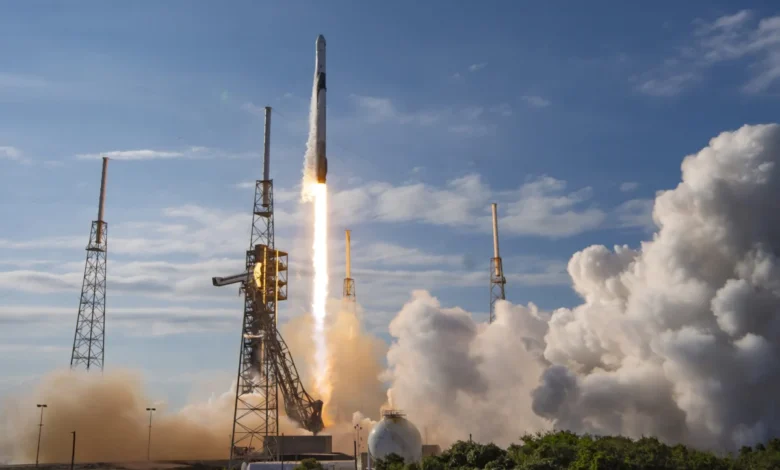
NASA has officially opened the media accreditation window for the upcoming 35th SpaceX Commercial Resupply Services (CRS-35) mission, a pivotal flight destined for the International Space Station (ISS). As the orbital laboratory continues to serve as a cornerstone of human space exploration, this mission represents another vital logistical link between Earth and the station. The agency is targeting a launch window no earlier than October, with the SpaceX Falcon 9 rocket and Dragon spacecraft scheduled to lift off from the historic Cape Canaveral Space Force Station in Florida.
This mission is part of an ongoing partnership between NASA and private industry, designed to maintain a consistent flow of scientific hardware, crew provisions, and critical upgrades to the station. For professional journalists based in the United States, the deadline to apply for onsite coverage is 11:59 p.m. EDT on Thursday, Oct. 1. Applications must be submitted via the official NASA media portal at https://media.ksc.nasa.gov. Following the submission, applicants will receive formal notification of their status, and those seeking specialized logistical assistance are encouraged to reach out to the Kennedy Space Center accreditation office directly.
The Technological Significance of CRS-35
While every resupply mission is essential for the daily operations of the ISS, the CRS-35 mission carries a particularly significant payload: the final installment of the International Space Station Roll-Out Solar Arrays (iROSA).
The iROSA project has been a multi-year effort to modernize the station’s aging power grid. Since the early 2000s, the station has relied on its original, large-scale solar wings. However, as these arrays have degraded due to the harsh space environment and natural wear, the need for enhanced power generation has become paramount. The iROSA arrays are smaller, more efficient, and easier to deploy, acting as an overlay to the existing power systems. Once the final sets are delivered via the Dragon spacecraft and subsequently installed by astronauts during planned extravehicular activities (spacewalks), the station will possess the increased electrical capacity required to sustain its scientific mission well into the future, as well as the power reserves necessary for its eventual, safe, and controlled deorbit.
Pioneering Research in Microgravity
The manifest for the Dragon spacecraft is dense with high-stakes scientific investigations. The ISS remains the only facility in existence where researchers can conduct long-term experiments in a sustained microgravity environment, shielding samples from the disruptive influence of Earth’s gravity.
Among the most anticipated cargo is the hardware required for the manufacturing of artificial retinas. By leveraging the unique fluid dynamics of microgravity, researchers aim to create thin-film artificial retinas that could potentially restore vision for individuals suffering from degenerative eye diseases. This represents a significant leap forward in bio-manufacturing, demonstrating how space-based platforms can address terrestrial medical challenges.
Additionally, the mission will deliver advanced 3D heart cell models. These models are designed to allow scientists to test drugs at scale in a controlled, non-terrestrial environment, potentially identifying therapeutic breakthroughs for cardiovascular health that would be impossible to replicate in traditional laboratory settings on the ground.
The mission also includes a study on the formation of specialized glass. In the absence of gravity-driven convection, glass materials can be formed with unprecedented purity and structural integrity. Understanding these processes at a molecular level could revolutionize the manufacturing of high-performance optics, telecommunications materials, and aerospace components. Finally, the inclusion of brain organoids—miniature, 3D biological models of human brain tissue—is set to advance the study of neurodegenerative diseases. By observing how these tissues behave and interact with various treatments in space, scientists hope to uncover new targets for addressing Alzheimer’s, Parkinson’s, and multiple sclerosis.
A Legacy of Continuous Human Presence
The ISS has hosted a continuous human presence for over 25 years. This milestone is not merely a record of endurance but a testament to the international cooperation and logistical precision required to maintain a laboratory in low Earth orbit.
The logistical backbone of this endeavor is the Commercial Resupply Services program. By contracting with private firms like SpaceX, NASA has shifted its focus toward serving as a customer and partner rather than the sole operator of transportation systems. This model has proven highly effective, driving down costs and fostering a robust private space economy.
The implications of this mission extend far beyond the immediate scientific objectives. The data gathered from the ISS is the primary fuel for the Artemis program, NASA’s ambitious initiative to return humans to the Moon and eventually establish a crewed presence on Mars. Every piece of equipment, every food ration, and every scientific sample delivered by a Dragon capsule is a building block for future long-duration human spaceflight. By studying how humans, biological systems, and hardware endure in the unforgiving vacuum of space, NASA is mitigating the risks associated with the deep-space voyages of tomorrow.
Official Coordination and Media Protocols
NASA’s media accreditation policy remains stringent, reflecting the security and safety requirements of operating at an active spaceport. Journalists are reminded that the accreditation window is strictly enforced to allow for security vetting and the coordination of base access.
For those covering the launch, the Kennedy Space Center (KSC) serves as the primary hub for media activities. The KSC newsroom is the central point of contact for inquiries regarding credentials, press site access, and logistical support. The agency has emphasized that all media personnel must adhere to the official guidelines, which can be reviewed on NASA’s website.
As the launch date approaches, NASA and SpaceX will coordinate a series of briefings to provide updates on the vehicle status, the integrity of the cargo, and the readiness of the station’s crew to receive the payload. These briefings are critical for journalists to understand the technical nuances of the mission and to gain insight into the broader strategic goals of the agency.
Future Implications for Low Earth Orbit
The success of CRS-35 will also serve as a benchmark for the transition of low Earth orbit (LEO) activities to the commercial sector. As NASA prepares for the eventual retirement of the International Space Station, the ability of private industry to provide reliable, high-frequency logistics is the foundation upon which future commercial space stations will be built.
The data from the iROSA installation, for example, provides a roadmap for future power management on private platforms. Similarly, the ongoing success of microgravity research proves that there is a viable market for space-based manufacturing and pharmaceutical testing. In the coming decade, the lessons learned from the current resupply missions will inform the architecture of the next generation of space infrastructure.
Conclusion: A Mission of Sustained Innovation
The launch of the 35th SpaceX commercial resupply mission is more than a routine delivery. It is a vital operation that ensures the continuity of the most complex engineering project in human history. With the arrival of new power systems, medical research capabilities, and advanced materials studies, the ISS will remain a beacon of scientific progress.
As the launch window approaches in October, the eyes of the scientific and aerospace communities will once again turn toward Cape Canaveral. The successful deployment of the Dragon spacecraft will underscore the enduring partnership between NASA and its commercial allies, demonstrating that even in the face of the immense challenges of space, human ingenuity continues to find ways to push the boundaries of the possible.
For further information regarding the mission’s progress, the scientific experiments being launched, or to track the mission timeline as it develops, interested parties and media representatives are encouraged to monitor the official NASA space station portal. The path to the Moon and Mars begins with the reliable, consistent, and innovative work performed every day aboard the International Space Station.
NASA Media Contacts:
For headquarters-level inquiries, please contact:
Josh Finch: [email protected] | 202-358-1100
Jimi Russell: [email protected] | 202-358-1100
For Kennedy Space Center media operations:
Steven Siceloff: [email protected] | 321-876-2468
For Johnson Space Center mission and crew inquiries:
Sandra Jones: [email protected] | 281-483-5111
Joseph Zakrzewski: [email protected] | 281-483-5111
Related posts: