Samsung Galaxy S26 FE Drops to $500 in Major Black Friday Deal, Outshining the Galaxy A57 and Red

efining Mid-Range Value
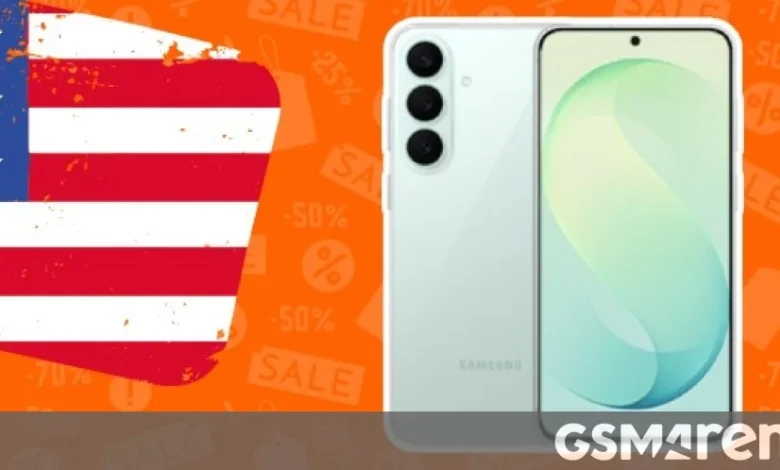
The intersection of smartphone pricing, seasonal retail promotions, and corporate hardware strategy has once again created an unexpected anomaly in the United States mobile market. Samsung’s carefully orchestrated product hierarchy for the mid-range and upper-mid-range segments has faced severe disruption following a wave of aggressive Black Friday discounts spearheaded by Amazon. Most notably, the newly released Samsung Galaxy S26 FE has seen its base 8GB RAM and 128GB storage configuration plummet to $500, placing it in direct price parity with the company’s own mid-tier Galaxy A57 and severely undercutting the conventional logic that separates "Fan Edition" flagship killers from traditional mid-range offerings.
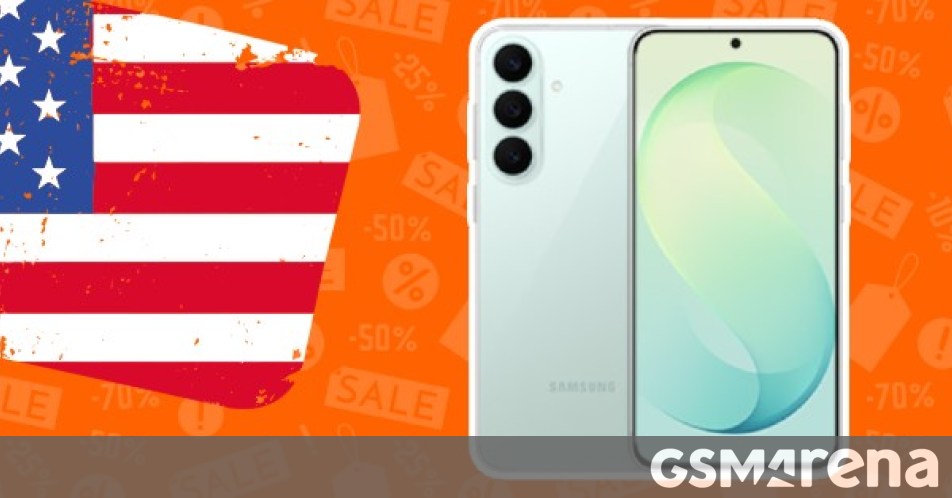
This unexpected convergence of pricing has forced consumers, industry analysts, and retail watchers to reevaluate the financial logic of Samsung’s smartphone lineup. When models separated by generational updates, target tiers, and component quality cost the exact same amount at checkout, the decision-making process shifts dramatically. For the United States market, where mid-range smartphone strategy has frequently drawn scrutiny due to creeping MSRPs, this Black Friday promotion serves as a fascinating case study in consumer electronics valuation.
The Mid-Range Pricing Puzzle and the Galaxy A57 Controversy
To understand the significance of the current $500 price point for the Galaxy S26 FE, one must examine the turbulent pricing history of Samsung’s mid-tier A-series devices in the United States throughout the year. Samsung’s initial deployment of the Galaxy A57 raised eyebrows across the technology sector. The device originally debuted at an MSRP of $550 for the 8GB/128GB baseline model. For many consumers and reviewers, a $550 mid-range device sat awkwardly close to the entry-level pricing of Samsung’s own flagship-adjacent FE line, inviting immediate comparisons regarding whether buyers wouldn’t be better served stretching their budgets slightly for a more premium experience.
Complicating matters further, Samsung subsequently implemented a round of price hikes that pushed the baseline Galaxy A57 up to $600. At a $600 price point, the justification for purchasing a mid-range device with plastic frames, mid-tier processors, and standard camera setups became increasingly difficult to defend, especially when compared to discounted previous-generation flagships or the standard Fan Edition devices. Furthermore, availability issues plaguing the 2025 Fan Edition models created a supply vacuum, leaving consumers with limited choices between overpriced mid-rangers and top-tier flagships costing upwards of $800 to $1,000.

However, current retail dynamics have completely upended this pricing structure. During Amazon’s major seasonal promotional window, the newly launched Samsung Galaxy S26 FE experienced a steep discount, bringing its entry-level cost down to $500. Simultaneously, a check of official direct-to-consumer channels on Samsung’s primary website reveals that the Galaxy A57 is also currently discounted to $500 for the identical 8GB/128GB memory configuration. With both devices occupying the exact same financial tier, the market context has transformed overnight.
Feature-by-Feature Analysis: S26 FE vs. Galaxy A57 and S25 FE
When consumers are confronted with two distinct Samsung handsets priced identically at $500, a rigorous performance and hardware comparison reveals a decisive victory for the Fan Edition ecosystem. The comparison between the Galaxy S26 FE and the Galaxy A57 is fundamentally asymmetrical, heavily favoring the former in almost every quantifiable metric of processing power, photographic capability, build quality, and long-term viability.
The Galaxy S26 FE bridges the gap between true flagship hardware and cost-effective manufacturing. It inherits the design philosophy, premium materials, and chipset architecture of Samsung’s primary S-series lineage. Conversely, the Galaxy A57 remains firmly anchored in the mid-range category, utilizing lesser silicon designed primarily for energy efficiency rather than raw computational muscle or high-end mobile gaming performance.

When evaluating the S26 FE against its direct predecessor, the S25 FE—which itself was spotted at the $500 threshold just one week prior—the generational improvements become apparent. The Galaxy S26 FE introduces measurable gains in overall battery efficiency and longevity, slightly enhanced processing performance through updated silicon, and, crucially, an extended software support lifecycle. Samsung has committed to providing long-term operating system updates for the S26 generation, ensuring that buyers of the S26 FE will receive software support for years to come.
Nevertheless, hardware compromises are a hallmark of the FE series, and the S26 FE is no exception. In a controversial design choice, Samsung omitted the USB-C 3.2 port found on the older S25 FE, downgrading the physical port to USB-C 2.0 standards. This hardware limitation means that users of the S26 FE cannot utilize wired video-out capabilities over a physical cable connection—precluding desktop-style experiences like Samsung DeX via a direct wired monitor hookup. Fortunately, wireless DeX functionality remains fully intact, mitigating the issue for users with compatible displays, but it remains a notable regression for power users accustomed to physical tethering.
The Software Longevity Dilemma: Why Storage Tier Upgrades Matter
While the base model of the Galaxy S26 FE at $500 represents exceptional immediate value, industry analysts and long-term tech observers are strongly advising consumers to look closely at the storage configurations before making a purchase. The entry-level model ships with 128GB of internal storage paired with 8GB of RAM. While this is adequate for average daily use in the short term, the software lifecycle of the device introduces a compelling counter-argument.

Samsung’s current update policy for the Galaxy S26 FE guarantees an impressive 7 generations of major Android operating system upgrades. Looking ahead over a multi-year ownership timeline, applications, operating system footprints, system caches, and high-resolution media files continue to grow exponentially in size. Industry projections strongly suggest that by the time future iterations of the Android operating system—such as the speculative Android 24—are deployed near the end of the device’s official support window, a 128GB storage partition will face severe constraints, struggling to accommodate system updates and user data efficiently.
Consequently, financial advisors and retail experts recommend spending an additional $100 to upgrade to the 256GB storage variant. For context, the 256GB configuration of the Galaxy A57 retails for approximately $580, meaning that stepping up to a higher-capacity S26 FE aligns closely with the upper-end pricing of Samsung’s mid-tier alternatives while offering exponentially superior hardware longevity, processing power, and software support.
Broader Market Implications and Consumer Guidance
The convergence of Samsung’s pricing models at the $500 watermark carries broader implications for the smartphone industry as a whole. Manufacturers typically rely on clear price stratification to guide consumers logically from budget devices to mid-rangers, and ultimately to flagships. When promotional discounting disrupts these tiers—allowing a premium Fan Edition device to match the price of a standard mid-range handset—the mid-range market experiences a temporary distortion where traditional value propositions are inverted.

For the discerning consumer shopping the current retail landscape, the guidance is straightforward. At a $500 price ceiling, purchasing the Galaxy A57 is rendered difficult to justify when the Galaxy S26 FE is available for the exact same monetary investment. The S26 FE delivers superior camera performance, robust flagship-tier build materials, better overall performance, and a vastly extended software update window.
Beyond the $500 price point, however, market analysts urge caution. If the price of the Galaxy S26 FE were to return to its standard MSRP or climb higher, consumers would cross a psychological threshold where alternative devices—such as discounted iterations of the Galaxy S-series plus models (such as the S25+ or S26+)—begin to offer superior overall value. At $500, the Galaxy S26 FE stands out as a compelling, highly capable alternative to standard mid-rangers, provided buyers carefully consider whether to invest in the 256GB storage tier to future-proof their hardware for the full duration of its unprecedented 7-year software lifecycle.