The Downfall of Jensen Huang: How Nvidia Co-Founder’s Geopolitical Scandals and Extramarital Affairs Upended the Global AI Leader

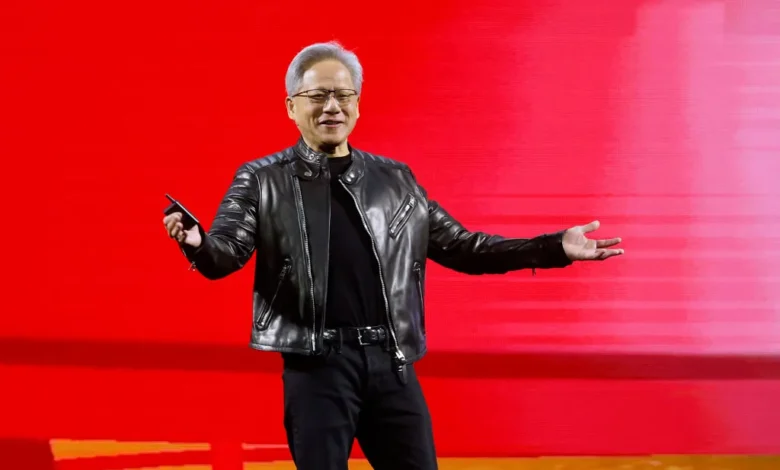
For over three decades, Jensen Huang stood as an unshakeable pillar of the global technology landscape. As the co-founder and longtime chief executive officer of Nvidia, Huang steered the company through the birth of the personal computer graphics era, the crypto-mining booms, and finally, the historic generative artificial intelligence gold rush. While contemporaries like OpenAI’s Sam Altman and SpaceX’s Elon Musk frequently courted public controversy, Huang maintained a reputation as an industry kingpin focused squarely on technological supremacy. However, a stunning convergence of national security investigations, corporate governance crises, and explosive personal revelations abruptly dismantled his legendary tenure. In November 2026, at the age of 63, Huang resigned from the company he built, leaving behind a power vacuum and plunging the world’s most valuable chipmaker into unprecedented turmoil.
The unfolding crisis, which triggered congressional subpoenas, internal investigations, and global geopolitical shockwaves, stems from allegations linking Huang’s personal life to international espionage and U.S. export control violations. What began as whispers regarding corporate overreach quickly expanded into a multi-front scandal involving illicit chip smuggling, direct conflicts of interest, and high-level government scrutiny that threatens to reshape the delicate technological balance between the United States and China.
The Nexus of Espionage and Corporate Influence
The foundation of the crisis lies in the intense technological arms race between Washington and Beijing to dominate advanced AI infrastructure—the bedrock of future economic dominance and military capability. As the premier designer of high-performance graphics processing units (GPUs) essential for training massive neural networks, Nvidia occupies a central role in this geopolitical contest. Consequently, the company has operated under stringent U.S. government export controls designed to restrict Beijing’s access to frontier computing hardware.
In late October 2026, investigative reporting from The New York Times revealed that Huang had developed a close personal relationship with Alice Huang, an executive at Megaspeed, a Singapore-based AI infrastructure firm (no relation to Jensen Huang). U.S. intelligence officials subsequently identified Alice Huang as an operative linked to China’s Ministry of State Security. According to federal assessments, her association with the Nvidia CEO served as an avenue to gather sensitive intelligence and facilitate the illicit diversion of billions of dollars worth of restricted Nvidia hardware to Chinese entities.
Megaspeed, which had reportedly purchased $4.8 billion in Nvidia chips over a two-year period, had already drawn the suspicion of American and Singaporean authorities. Investigators discovered that the neocloud provider had been funneling computing power to Chinese technology giants like Alibaba, bypassing federal embargoes through elaborate supply chain networks. Despite warnings circulating within the Trump administration as early as late 2025—including a secret memo supervised by Secretary of State Marco Rubio—the administration initially refrained from taking decisive punitive action against Nvidia, even as federal scrutiny mounted.
A Cascade of Personal Scandals and Corporate Ouster
As public pressure mounted in early November 2026, the scandal widened beyond the initial allegations involving foreign intelligence. On November 8, Huang issued a public apology to Nvidia employees and the corporate board, explicitly admitting to infidelity and acknowledging that his actions intersected with national security concerns.
The admission fractured the leadership structure at Nvidia. On November 11, additional reporting from The New York Times revealed that Huang had engaged in an extramarital affair with Kimberly Powell, Nvidia’s vice president of healthcare, who reported directly to him. The following day, Reuters published a further report alleging a third extramarital relationship between Huang and an additional, unnamed Nvidia employee.
Facing mounting scrutiny from lawmakers, a plummeting stock price, and an independent investigation initiated by the Nvidia Board of Directors, Huang tendered his resignation on November 12, concluding a 33-year run at the helm of the company. Chief Financial Officer Colette Kress was swiftly appointed as interim CEO, while Harvey C. Jones, a veteran board member and managing partner of Square Wave Ventures, was named the company’s first-ever independent board chair.
Chronology of a Crisis: Key Events (October 2025 – November 2026)
The escalation of events leading to Huang’s departure and the subsequent corporate
restructuring unfolded through a rapid sequence of regulatory, political, and corporate milestones:
- October 2025: U.S. and Singaporean authorities launch formal investigations into Nvidia client Megaspeed over suspected violations of American export controls and unauthorized chip diversion to China.
- Late 2025: President Donald Trump is briefed by intelligence officials regarding surveillance of Alice Huang and her relationship with Jensen Huang, though no immediate executive action is taken.
- Spring 2026: A classified memo, supervised by Secretary of State Marco Rubio, circulates among top U.S. policymakers, warning that Alice Huang is a Chinese intelligence asset utilizing her ties to the Nvidia CEO to compromise national security.
- October 29, 2026: The New York Times publicly breaks the story detailing the close relationship between Jensen Huang and Alice Huang, which Nvidia initially downplays as routine customer engagement.
- November 5, 2026: Three Republican committee chairmen—John Moolenaar (House Select Committee on China), Brian Mast (House Foreign Affairs Committee), and Rick Crawford (House Intelligence Committee)—jointly request a closed-door briefing with Huang.
- November 8, 2026: Huang publicly admits to extramarital affairs in a message to Nvidia employees, acknowledging potential national security implications. President Trump publicly defends Huang, calling him a "fine person."
- November 9, 2026: Huang cancels planned speaking appearances at the ElevenLabs Summit and the Anthropic CEO Forum. Details emerge regarding Megaspeed’s network of front companies, including Shanghai Century Litong, which allegedly facilitated the purchase of $7.5 billion in restricted chips.
- November 11, 2026: Reports surface detailing Huang’s affair with direct report Kimberly Powell. Lawmakers threaten congressional subpoenas if Huang fails to cooperate with national security inquiries.
- November 12, 2026: Huang officially resigns as CEO. CFO Colette Kress is named interim CEO, and Harvey C. Jones becomes board chair. Reuters reports a third extramarital affair with an unnamed employee. Congressional leaders schedule closed-door testimony, and Democratic lawmakers launch a broad probe into the administration’s handling of Nvidia chip exports.
- November 13, 2026: Financial media reports portray Huang as deeply depleted upon his exit, while details emerge of past friction between Huang and his successor, Colette Kress.
- November 17, 2026: Nvidia reports record quarterly earnings of $115.8 billion (a 103% year-over-year increase). Interim CEO Colette Kress announces the permanent termination of H200 chip sales to China. Concurrently, Jensen Huang releases a public statement expressing openness to returning as CEO if requested by the board, citing an outpouring of support from industry colleagues such as Elon Musk and Palmer Luckey. The Nvidia board firmly rejects the possibility of his reinstatement.
Congressional Inquiries and Policy Implications
The fallout from the scandal has transformed from a corporate governance issue into a major constitutional and regulatory flashpoint. On November 12, Democratic Representative Richard Neal and Senator Ron Wyden launched a formal congressional investigation into the Trump administration’s export policy, focusing on why Nvidia was granted permission to sell advanced H200 chips to China in December 2025 despite prior intelligence briefings regarding Huang’s compromises.
Commerce Secretary Howard Lutnick and Jensen Huang were summoned to testify before the Senate Banking Committee and the House Foreign Affairs Committee. Lawmakers are seeking to determine the exact degree to which foreign intelligence agents infiltrated American technology supply chains and whether corporate lobbying influenced national security exemptions.
Furthermore, the scandal has forced a strategic pivot within Nvidia itself. During the company’s November earnings call, interim CEO Colette Kress announced that Nvidia would completely cease the sale of H200 chips to China, effectively closing the controversial loopholes that had previously permitted limited market access under strict regulatory monitoring.
Business Continuity and Future Outlook
Despite the unprecedented leadership upheaval and the ongoing federal investigations, Nvidia’s underlying financial momentum remains robust. For the quarter ending in November 2026, the company posted $115.8 billion in revenue, shattering Wall Street projections and signaling that enterprise demand for artificial intelligence hardware remains insatiable.
Interim CEO Colette Kress sought to reassure investors, customers, and suppliers during corporate briefings, emphasizing that the company’s multi-year technological roadmap remains secure. "We have the best technologists on the planet," Kress stated. "From a business perspective, it’s business as usual."
While figures within the tech sector—including billionaire entrepreneur Elon Musk and Anduril founder Palmer Luckey—have publicly expressed sympathy for Huang and questioned the motivations behind his ouster, the Nvidia Board of Directors has remained resolute. Chairman Harvey C. Jones confirmed that the board has no intention of reappointing Huang, signaling a definitive end to an era defined by a single visionary leader.
As Congress presses forward with its investigations and federal prosecutors examine the full scope of Megaspeed’s procurement networks, the episode serves as a watershed moment for Silicon Valley. It highlights the profound geopolitical vulnerabilities inherent in the modern technology sector, where corporate ambition, global supply chains, and international espionage increasingly intersect at the highest levels of executive power.