NASA and Northrop Grumman Target November 29 for CRS-25 Resupply Mission to the International Space Station

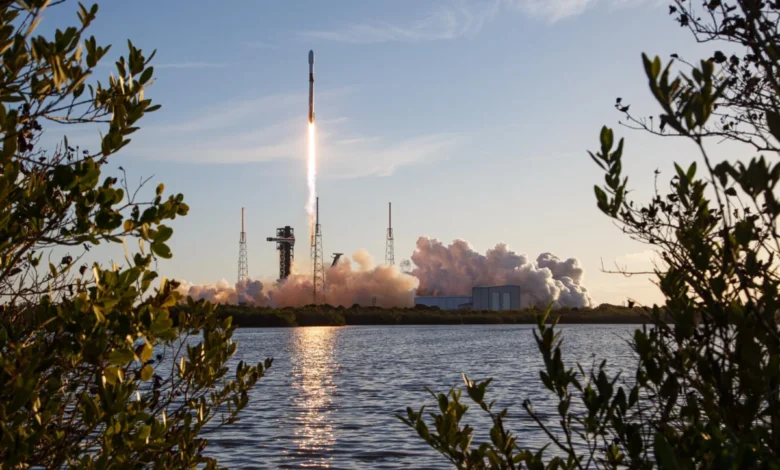
NASA, in partnership with Northrop Grumman and SpaceX, has finalized preparations for the upcoming Commercial Resupply Services (CRS-25) mission, a critical logistics operation aimed at delivering vital scientific equipment, sustenance, and hardware to the International Space Station (ISS). The mission is currently scheduled to lift off no earlier than 10:47 a.m. EST on Sunday, November 29, from Space Launch Complex 40 at Cape Canaveral Space Force Station in Florida. This flight represents a key component of the ongoing effort to maintain the station’s status as a premier microgravity research laboratory.
The mission will utilize a SpaceX Falcon 9 rocket to propel the Northrop Grumman Cygnus XL spacecraft into orbit. This specific vehicle, christened the S.S. James "Jim" A. Lovell, honors the legendary NASA astronaut whose storied career included the Gemini VII and XII missions, the historic Apollo 8 flight around the Moon, and the harrowing, yet heroic, Apollo 13 expedition. Carrying approximately 11,000 pounds of cargo, the S.S. Jim Lovell serves as a mobile laboratory and supply depot designed to sustain the crew and facilitate high-stakes scientific inquiry.
Mission Chronology and Operational Milestones
The operational sequence for CRS-25 is a meticulously choreographed event involving ground controllers, launch teams, and the current ISS Expedition crew. Following the launch on November 29, the Cygnus spacecraft will undergo a series of orbital maneuvers to reach the vicinity of the ISS. On Tuesday, December 1, NASA astronauts Jessica Watkins and Luke Delaney, currently stationed aboard the orbiting laboratory, are tasked with the capture of the cargo craft.
The capture procedure will utilize the Canadarm2, a 57.7-foot-long robotic arm that serves as the station’s primary tool for grappling incoming vehicles. Once the arm has successfully secured the Cygnus XL, ground controllers at NASA’s Johnson Space Center in Houston will remotely command the robotic arm to berth the vehicle at the Earth-facing port of the station’s Unity module. This docking marks the transition from a logistics transport phase to the unloading and integration phase, where crew members will begin the process of transferring the 11,000 pounds of research hardware and supplies into the station’s interior.
The spacecraft is slated to remain docked to the ISS until May 2027. During this tenure, the Cygnus will serve as an extension of the station’s habitable volume. When its mission eventually concludes, the vessel will be loaded with waste products and discarded equipment. Unlike reusable vehicles, the Cygnus is designed for a destructive atmospheric re-entry, ensuring that all disposal items are incinerated harmlessly upon return to Earth’s atmosphere.
Scientific Payloads and Research Objectives
The cargo manifest for CRS-25 is heavily weighted toward biological and technological research, reflecting NASA’s commitment to utilizing the ISS as a testbed for terrestrial advancements. Among the primary research objectives are experiments focused on pharmacological developments. Scientists are testing new drug delivery mechanisms designed to combat cancer and osteoarthritis. By studying how cells behave in a microgravity environment, researchers hope to gain insights into disease progression that are otherwise impossible to observe in Earth’s gravity, where cell structure is influenced by weight.
Furthermore, the mission includes a specialized study aimed at predicting the spread of cancer. This investigation seeks to understand the mechanisms of tumor growth and metastasis, potentially leading to earlier intervention strategies for patients on Earth. Coupled with these medical studies are experiments focused on counteracting muscle loss—a pervasive issue for both aging populations on Earth and astronauts experiencing long-duration spaceflight.
Technological demonstrations are equally represented in the manifest. The spacecraft carries equipment to enhance radiation sensing capabilities, which is critical for safeguarding future human missions to the Moon and Mars. Additionally, the mission supports ongoing work in space-based food production. As NASA looks toward long-duration missions where traditional resupply from Earth will be impossible, developing self-sustaining agricultural systems within a pressurized cabin becomes a logistical necessity.
The Evolution of Commercial Resupply
The CRS-25 mission highlights the maturation of the public-private partnership model in space exploration. By contracting launch services to SpaceX and utilizing the advanced manufacturing capabilities of Northrop Grumman, NASA has effectively outsourced the "heavy lifting" of logistics. This allows the agency to focus its budgetary and human resources on deep-space exploration, such as the Artemis program, while ensuring that the ISS remains fully stocked.
The decision to launch the Cygnus spacecraft aboard a Falcon 9—a vehicle typically associated with SpaceX’s own Dragon missions—underscores the flexibility of modern launch infrastructure. This interoperability ensures that if one launch system encounters delays, alternative launch vehicles can be utilized to keep the ISS supply chain intact. For the scientific community, this reliability is paramount, as the loss of a single resupply mission can result in months of lost research time.
Prelaunch Media and Public Engagement
Recognizing the public’s interest in these operations, NASA has scheduled a series of engagement opportunities leading up to the launch. A prelaunch teleconference is slated for Monday, November 23, at 12 p.m. EST, featuring key personnel from the mission management teams. This briefing will provide a forum for media representatives to discuss the technical readiness of the launch vehicle and the specific objectives of the scientific payloads.
For those interested in the broader impact of the mission, NASA provides extensive resources, including a virtual guest program. Participants who register for this program receive digital access to mission updates, educational resources, and a commemorative virtual stamp for the NASA guest passport. This outreach initiative is designed to bridge the gap between complex aerospace engineering and public education, fostering a greater understanding of why space-based research matters to the average citizen.
Strategic Implications and Long-Term Outlook
The inclusion of the S.S. Jim Lovell in the fleet of visiting vehicles is more than a symbolic nod to history; it is a testament to the longevity of the ISS program. With the station having been in orbit for over two decades, the focus has shifted from mere construction to high-intensity utilization. Every mission like CRS-25 provides the data points necessary to refine our understanding of human health, materials science, and environmental management.
Looking ahead, the successful integration of these payloads will provide data that could potentially rewrite treatment protocols for degenerative diseases. The radiation sensing equipment, in particular, will provide the telemetry needed to design more efficient shielding for future spacecraft, a prerequisite for any mission that intends to take humans beyond the protective magnetosphere of Earth.
As the countdown proceeds, the focus remains on safety and precision. The collaborative efforts between Northrop Grumman, SpaceX, and NASA continue to demonstrate that the commercialization of low-Earth orbit is not merely a theoretical goal, but a functional reality. By the time the S.S. Jim Lovell departs the station in 2027, the research conducted on this flight will likely have contributed to several peer-reviewed studies, further solidifying the ISS as a critical asset in the advancement of human knowledge.
For real-time updates, the public is encouraged to monitor the official NASA space station blog and social media channels. Through live streaming, high-definition photography, and detailed mission summaries, the agency ensures that the complexities of the launch and docking process are transparent and accessible, marking yet another chapter in the ongoing effort to explore the frontiers of science from the unique vantage point of orbit.
Related posts: