The Blue Economy: The World’s Quietest Economic Engine And Its Smartest Cities

The global blue economy—a sprawling, multifaceted industrial ecosystem encompassing everything from maritime logistics and deep-sea fisheries to offshore renewable energy and marine biotechnology—has quietly evolved into one of the most consequential sectors of the international landscape. Valued today at approximately $2.6 trillion, this sector, if classified as a sovereign state, would rank as the world’s fifth-largest economy. As nations grapple with the dual pressures of climate change and shifting geopolitical alliances, the ocean has transformed from a passive transit medium into a critical theater of innovation, security, and sustainable development.
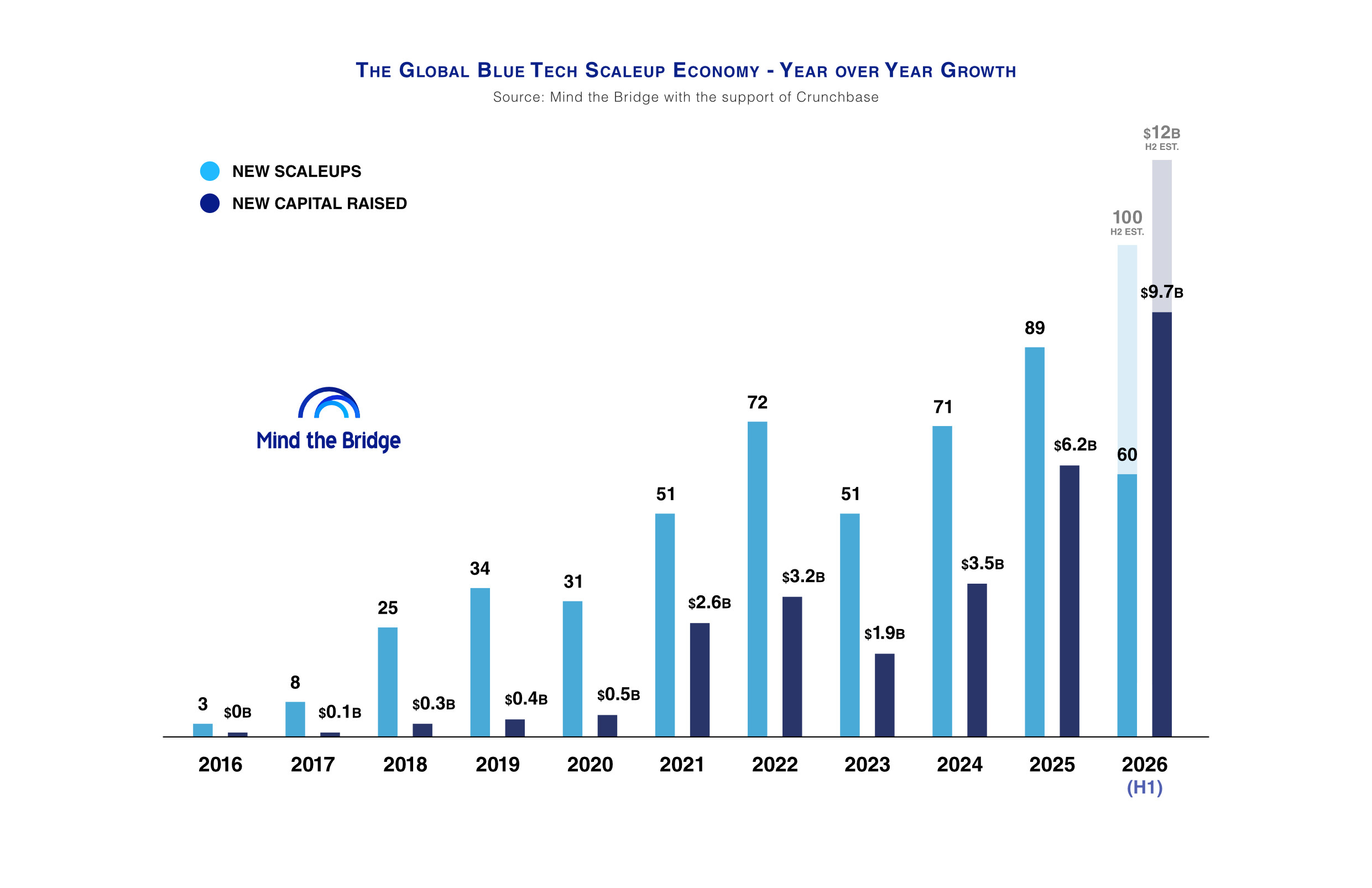
This transition is being driven by a surge in "blue technology," a category of disruption characterized by the integration of artificial intelligence, advanced robotics, and renewable energy into maritime operations. According to the "Rethinking the Blue Economy" report, produced by Mind the Bridge with support from Crunchbase, the sector is experiencing a period of unprecedented capital infusion. As of the third quarter of 2026, blue tech companies have secured nearly $10 billion in funding, already eclipsing the $6.2 billion raised during the entirety of 2025.
A Chronology of Maritime Disruption
The current momentum within the blue economy did not emerge in a vacuum; it is the culmination of a multi-year trend toward the digitization of the sea.

In 2021, the sector began a consistent upward trajectory, defying broader macroeconomic slowdowns that hampered other venture capital verticals. The industry has maintained a steady output of approximately 70 new scaleups annually over the past several years. By the close of 2025, the funding landscape had shifted dramatically, with the $6.2 billion in annual investment representing a twofold increase over the previous year.
The trajectory for 2026 suggests a new benchmark in capital maturity. With $10 billion already deployed by the end of Q3, projections indicate that the sector is on track to surpass $12 billion by year-end. This growth is marked by an increasing concentration of "mega-rounds," particularly in the defense and infrastructure segments, where companies like Anduril Industries—which secured $5 billion in 2026—and Helsing, which raised $1.8 billion in the same period, are redefining the scale of maritime technology investments.
The Forces Reshaping Marine Value Chains
Several primary drivers are currently reshaping how value is generated at sea. The first is the energy transition, which necessitates the electrification of shipping and the expansion of offshore wind and wave energy platforms. Second, environmental pressures have compelled the maritime industry to adopt circular economy practices, including sustainable aquaculture and marine-based carbon capture.
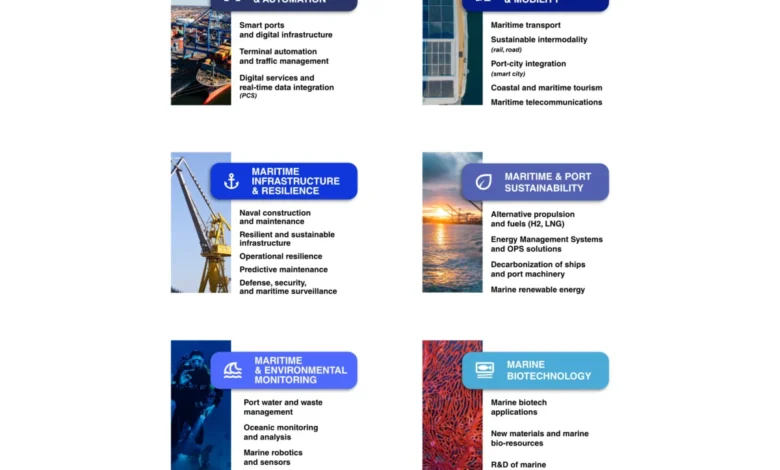
Finally, digitalization and automation have become the backbone of modern maritime efficiency. These technologies allow for autonomous navigation, real-time supply chain monitoring, and predictive maintenance of port infrastructure. The "Rethinking the Blue Economy" report classifies these advancements into 20 distinct technological clusters, evaluating each based on its industry-wide impact and market commitment. This granular approach reveals that while some segments, such as maritime cybersecurity, are reaching maturity, others—such as marine biotechnology—remain in the early stages of commercialization.

Ports as the New Urban Innovation Labs
Central to this industrial evolution are the world’s ports. Historically viewed as static nodes in a supply chain, ports are increasingly functioning as "smart cities" in their own right. They are dense, interconnected environments where energy grids, automated logistics, big data, and human mobility converge.
"Ports are where the dynamics reshaping maritime activities converge most visibly," says Alberto Onetti, chairman of Mind the Bridge. "They serve as the ultimate proving ground for innovation. In many ways, they are the smartest of all smart cities, providing a controlled environment where new technologies can be tested at scale before they are deployed to the wider global economy."
This transformation is not theoretical. Port authorities in major hubs—including Barcelona, Bergen, Seattle, Rotterdam, and Los Angeles—have begun implementing formal "open innovation" frameworks. These frameworks allow for the integration of startups into the port ecosystem, facilitating the rapid adoption of new digital tools.
For instance, the Port of Barcelona’s "BlueTechPort" initiative has emerged as a landmark model for international collaboration. By functioning as a hub that connects technology providers, researchers, and established maritime businesses, the initiative is actively exporting its operational playbook through the Lighthouse International Acceleration Program. This program, powered by Mind the Bridge, provides a bridge between regional port experiments and global commercial scalability.

Implications for Global Strategy
The rapid scaling of blue tech has significant implications for global trade and security. As supply chains become more complex and vulnerable to geopolitical shocks, the ability to secure maritime logistics through advanced surveillance and autonomous systems has become a national security priority for many G20 nations.
Furthermore, the shift toward sustainable maritime practices is no longer a matter of corporate social responsibility but a requirement for regulatory compliance. As international bodies tighten emissions standards for global shipping, companies that fail to adopt "green" maritime technologies face the prospect of stranded assets and exclusion from major shipping lanes.
From an investment perspective, the blue economy is transitioning from a niche category to a core component of institutional portfolios. Investors are increasingly recognizing that the sector offers long-term, inflation-resistant growth driven by the fundamental necessity of sea-based trade and resource management. The shift from "blue tech" as an experimental asset class to a foundational one is evidenced by the participation of tier-one venture firms in recent rounds, signaling a high level of market confidence in the long-term viability of maritime infrastructure.
A Call for Collaborative Governance
Despite the rapid influx of capital, experts argue that the blue economy remains fragmented. To sustain this momentum, a unified agenda among port authorities, private sector operators, startups, and policymakers is required. Without a shared vision, innovation risks being siloed within individual ports or regions, preventing the systemic change required to modernize global maritime operations.
The current challenge, as articulated by stakeholders in the industry, is to synchronize these efforts. The goal is to move beyond disparate pilots and toward an integrated, interoperable global maritime network. This requires not only capital but also a concerted effort to harmonize regulatory frameworks across international waters, ensuring that innovation in one jurisdiction can be seamlessly applied in another.
As the maritime sector moves toward a more automated, sustainable, and secure future, the "blue" in the blue economy is taking on a new meaning. It is no longer just a reference to the color of the oceans, but a shorthand for a highly advanced, tech-enabled industrial frontier. For investors, entrepreneurs, and policymakers, the message is clear: the course for the next decade of maritime development has been set. The focus now turns to the execution of this strategy, ensuring that the infrastructure of the seas is as capable and resilient as the global economy it supports.
As Alberto Onetti notes, the industry has reached a point of no return. The maritime sector is undergoing a radical, technology-led evolution that will define the efficiency and sustainability of global trade for the remainder of the century. Those who successfully "ride the wave" of this innovation will likely emerge as the architects of the next generation of global commerce.
Related posts: