Primate Labs Unveils Geekbench 7, Redefining Performance Benchmarking for the AI Era.

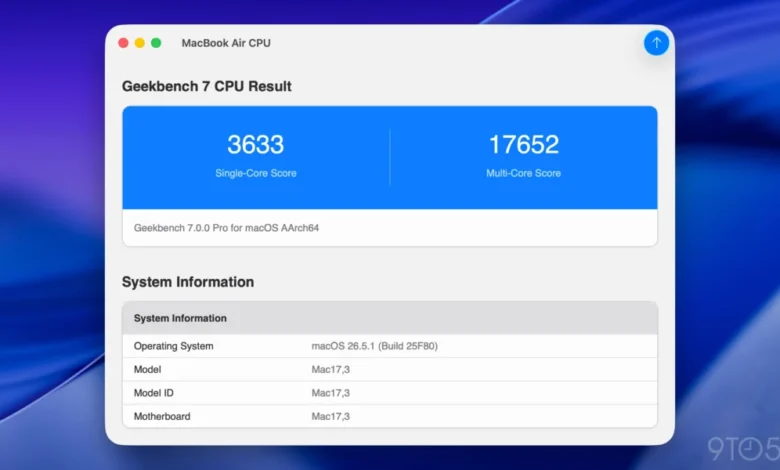
Primate Labs, a leading developer of cross-platform benchmark tools, today announced the immediate release of Geekbench 7, its latest iteration designed to provide more accurate and relevant performance metrics for contemporary computing devices. This new version promises benchmarks that more closely align with the real-world usage patterns of modern consumers and professionals, encompassing everyday tasks, demanding gaming scenarios, and the increasingly prevalent realm of artificial intelligence (AI) workloads. The launch signifies a pivotal evolution in how device performance is measured, moving beyond traditional metrics to embrace the complexities of current technological demands.
The landscape of personal computing has undergone a dramatic transformation in recent years, a shift that Primate Labs explicitly acknowledged with the release of Geekbench 6 in early 2023. At that time, the company noted that "a lot [had] changed in the tech world in the past three years," particularly highlighting the burgeoning ubiquity of AI and machine learning (ML) within general and mobile applications. Fast forward another three years to 2026, and this trend has not only continued but accelerated, profoundly reshaping user expectations and hardware requirements. The proliferation of on-device AI inference capabilities, sophisticated image processing algorithms, high-resolution video editing, and graphically intensive gaming environments means that CPU and GPU performance are now critical across an even wider spectrum of daily activities.
Geekbench 7 emerges as a direct response to these evolving demands, introducing both entirely new and significantly improved workloads engineered to meticulously measure the performance of CPUs and GPUs. The overarching goal is to offer a benchmark suite that provides a holistic view of a device’s capabilities under conditions that accurately mirror modern usage, thereby offering more meaningful insights to consumers, hardware manufacturers, and software developers alike.
A Deeper Dive into GPU Benchmarking for the AI Age
One of the most substantial advancements in Geekbench 7 lies in its revamped GPU Benchmark. Recognizing the exponential growth in graphical processing unit (GPU) importance for tasks beyond traditional rendering, Primate Labs has placed a much greater emphasis on machine learning and content creation workloads. The modern GPU is no longer solely a gaming or graphics card; it is a parallel processing powerhouse indispensable for accelerating AI model training, inference, and complex professional applications.
For machine learning, the GPU benchmark now incorporates a suite of workloads specifically designed to evaluate a device’s prowess in critical AI operations. These include:

- Convolutional Neural Network (CNN) Inference: Testing the efficiency of image recognition and classification tasks, a cornerstone of many AI applications from security to augmented reality.
- Recurrent Neural Network (RNN) Processing: Assessing performance in sequential data tasks like natural language processing (NLP) and predictive text, crucial for AI assistants and advanced communication tools.
- Tensor Processing Operations: Measuring the raw computational capability for tensor math, the fundamental building block of deep learning algorithms.
- Quantization Workloads: Evaluating how well a GPU handles lower-precision computations, which are vital for deploying efficient AI models on edge devices with limited resources.
Beyond AI, Geekbench 7 also introduces novel GPU image editing and synthesis workloads that reflect the demands of professional content creators and advanced hobbyists. These include:
- RAW Image Processing: Benchmarking the intensive computational requirements of manipulating high-fidelity RAW image files, a standard in professional photography. This involves complex demosaicing, noise reduction, and color correction algorithms.
- LUT-based Video Color Grading: Measuring the GPU’s ability to apply Look-Up Tables (LUTs) for real-time video color correction and stylistic grading, a common task in video production that benefits immensely from GPU acceleration.
- Path Tracing: Evaluating performance in advanced rendering techniques that simulate light physics for highly realistic imagery, a staple in computer-aided design (CAD), architectural visualization, and cinematic rendering.
- Fluid Simulation: Testing the GPU’s capacity to compute complex physics simulations, often used in visual effects for movies, game development, and scientific research.
The expanded scope of the GPU benchmark reflects a profound understanding of how GPUs are being utilized today. According to a recent industry report, the global market for AI-enabled hardware, heavily reliant on GPU acceleration, is projected to grow by an average of 25% annually over the next five years, reaching an estimated $150 billion by 2028. This growth underscores the necessity of benchmarks that accurately reflect a device’s capabilities in these critical areas.
Adding to its versatility, Geekbench 7 now includes Nvidia’s CUDA (Compute Unified Device Architecture) to its roster of supported GPU APIs. This is a significant inclusion, as CUDA is a proprietary parallel computing platform and API model developed by Nvidia, widely adopted in scientific computing, deep learning, and professional graphics. Its addition alongside existing support for OpenCL, Vulkan, and Metal ensures that Geekbench 7 offers comprehensive GPU testing across a broader range of hardware and software ecosystems, particularly benefiting systems equipped with Nvidia GPUs which dominate much of the high-performance computing and AI markets.
Refined Multi-Core Performance and Real-World Relevance
Another key improvement introduced in Geekbench 7 is its more nuanced approach to handling multi-core performance measurement. In previous iterations, multi-core tests sometimes ran workloads across multiple threads even if the real-world application typically didn’t utilize all available cores efficiently. Primate Labs explains that Geekbench 7 now intelligently runs workloads across multiple threads only when the actual task being tested is known to typically leverage multi-core processing in a similar fashion.
This philosophical shift is crucial for providing more accurate and less misleading multi-core scores. For instance, the HTML5 Browser test, a staple in previous versions, has been removed from the multi-core suite. This decision was made because modern web browsers, while appearing complex, are often single-threaded or only lightly threaded for core rendering tasks. Benchmarking such an application with a heavy multi-core workload would artificially inflate scores for tasks that don’t genuinely benefit from high core counts, leading to a disconnect between benchmark results and user experience. This refinement ensures that multi-core scores are more indicative of performance in genuinely parallelizable tasks like video rendering, complex data analysis, or certain types of scientific simulations, rather than simply measuring theoretical maximums that rarely materialize in daily use.
Enhanced Media Performance Workloads
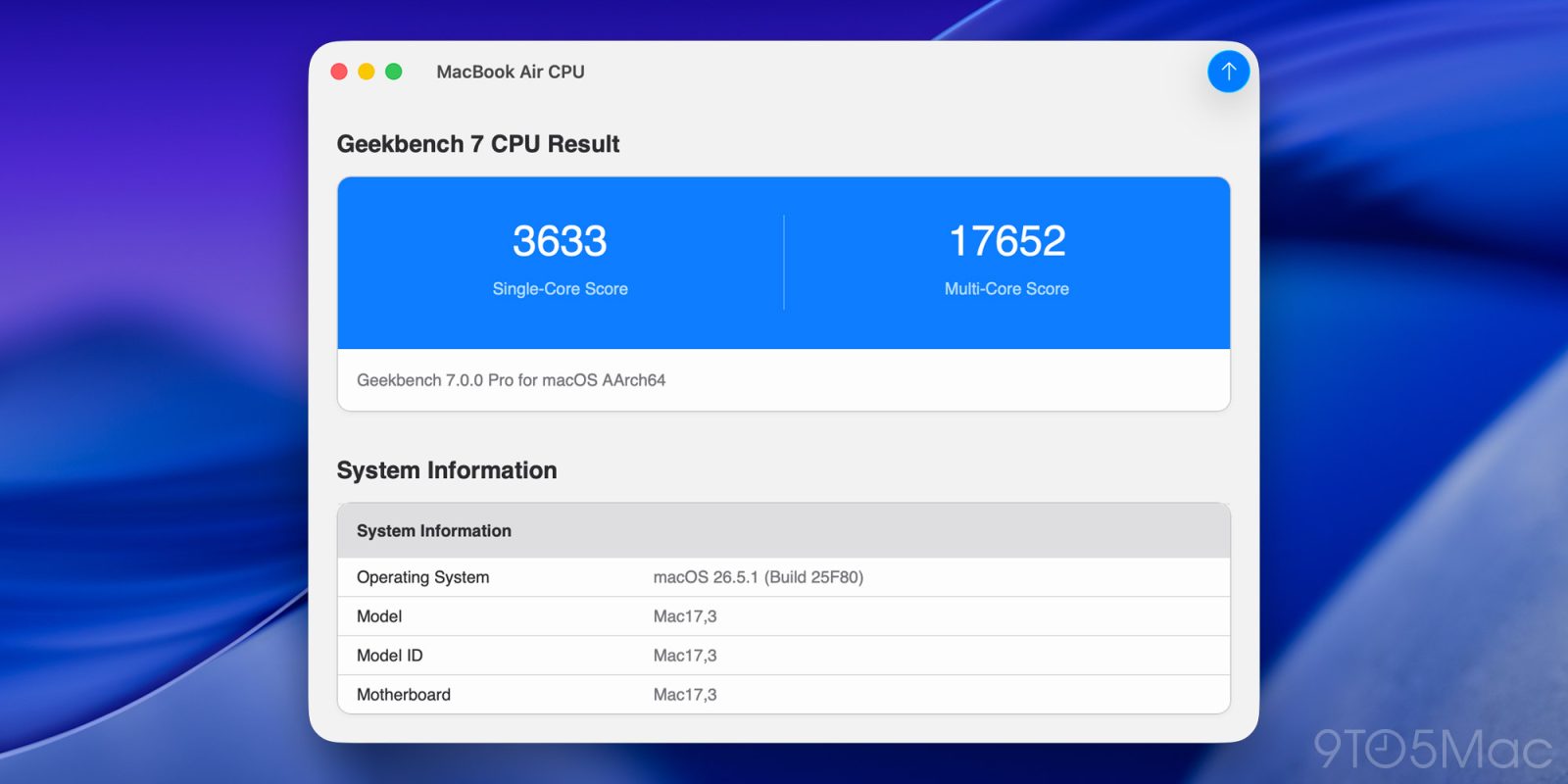
Recognizing the increasing prevalence of rich media consumption and creation, Geekbench 7 introduces new workloads specifically designed to measure how CPUs handle various audio and video encoding, decoding, and processing tasks. The demand for seamless high-definition and ultra-high-definition (4K/8K) video playback, real-time video conferencing, and rapid media file manipulation has surged, making these CPU capabilities more important than ever.
The new media performance benchmarks include:
- Audio Encoding/Decoding: Testing the CPU’s efficiency in converting audio formats, crucial for streaming services, podcast production, and high-fidelity audio playback.
- Video Encoding/Decoding: Evaluating the CPU’s ability to compress and decompress video streams, fundamental for video conferencing, streaming platforms, and content creation workflows that involve rendering and exporting.
- Image Manipulation Algorithms: Beyond the GPU tests, CPU-based image processing for tasks like resizing, filtering, and format conversion are also assessed, reflecting a broad range of everyday photo editing needs.
- Speech Recognition and Synthesis: Benchmarking CPU performance in handling local speech processing tasks, vital for voice assistants and accessibility features, especially as privacy concerns drive more AI tasks to the device edge.
These additions reflect an industry trend where media processing capabilities are increasingly critical for a wide range of devices, from smartphones to high-end workstations. With the proliferation of user-generated content and the demand for instant communication, efficient media handling is a key differentiator for modern hardware.
Expanded and Diversified Data Sets
To further enhance the realism and robustness of its benchmarks, Geekbench 7 significantly increases the size and variety of the data sets utilized throughout its tests. This is a critical, yet often overlooked, aspect of benchmark design. Using larger and more diverse data ensures that the tests are not susceptible to optimization for a narrow set of inputs, thereby providing more generalized and reliable performance metrics.
For example, the File Compression workload now includes a richer assortment of archives. Instead of generic data, it incorporates a mix of source code files (which have highly repetitive patterns), object code (binary data with different compression characteristics), and diverse text documents (ranging from plain prose to structured data). This variety better simulates real-world archival tasks where users compress a wide array of file types.
Similarly, the PDF Viewer test has been updated to cover a broader range of files. This includes complex documents like park maps (with intricate vector graphics and diverse fonts), technical documents (featuring detailed diagrams, formulas, and mixed content), and academic papers (often containing high-resolution images, mathematical equations, and extensive text). This ensures the test evaluates rendering performance across a spectrum of PDF complexities, rather than just simple text documents.

Developer and image-processing workloads have also received substantial updates, incorporating more assets and additional image formats. This includes testing with newer, more efficient formats like HEIF/HEIC, as well as traditional JPEG, PNG, and TIFF, ensuring comprehensive evaluation of image handling capabilities. The larger datasets also challenge memory hierarchies and caching mechanisms more effectively, revealing potential bottlenecks that smaller datasets might miss.
Industry Implications and Future Outlook
The release of Geekbench 7 is poised to have significant implications across the technology ecosystem. For consumers, these new benchmarks offer a more transparent and relevant measure of device performance, especially in the context of emerging AI-centric applications. Instead of relying on abstract numbers, users can now better understand how a device will perform in tasks they actually care about – from processing photos with AI filters to running the latest demanding games or editing 4K video. This could lead to more informed purchasing decisions, shifting focus from raw clock speeds to practical, workload-specific efficiency.
Hardware manufacturers will find Geekbench 7 to be an indispensable tool for guiding future chip design and optimization. The explicit focus on AI, machine learning, and specific content creation workloads will undoubtedly spur innovation in neural processing units (NPUs), GPU architectures, and heterogeneous computing designs. Companies striving for top-tier scores in these new benchmarks will be compelled to invest more heavily in hardware accelerators and software optimizations tailored for these demanding tasks. An industry analyst, commenting on the trend, stated, "Benchmarks like Geekbench 7 are not just measurement tools; they are design drivers. They set the bar for what consumers expect, and in turn, dictate where manufacturers will allocate their R&D budgets. We anticipate a renewed focus on integrated AI acceleration and media processing capabilities in upcoming silicon generations."
Software developers will also benefit from the more realistic testing scenarios. By understanding how their applications perform under the new benchmarks, they can better optimize their code to leverage the specific strengths of modern hardware, whether it’s multi-core efficiency, GPU acceleration via various APIs, or dedicated AI silicon. This iterative feedback loop between benchmarks, hardware, and software is crucial for continuous innovation.
The timing of Geekbench 7’s release, three years after its predecessor, underscores the rapid pace of technological advancement, particularly in AI. While Geekbench 6 was prescient in acknowledging AI’s growing importance, Geekbench 7 goes further by integrating deeply specific AI workloads, reflecting the technology’s maturation from a niche area to a foundational element of modern computing. This evolution positions Geekbench 7 as a critical standard for evaluating devices in an era where AI is not just an add-on, but an integral part of the user experience.
To commemorate the launch of this significant update, Primate Labs is offering a special promotion: 20% off Geekbench 7 Pro through August 6. This professional version provides additional features and licensing options for businesses and enthusiasts. For individual users and personal evaluation, the standard version of Geekbench 7 remains freely available, ensuring broad accessibility to these updated performance metrics. For more detailed information on the technical specifications and new workloads, interested parties can visit the official Primate Labs blog. The journey of benchmarking continues, adapting and evolving to keep pace with the relentless march of technological progress.