Google’s Gboard Reportedly Developing Groundbreaking "Sign-to-text" Accessibility Feature

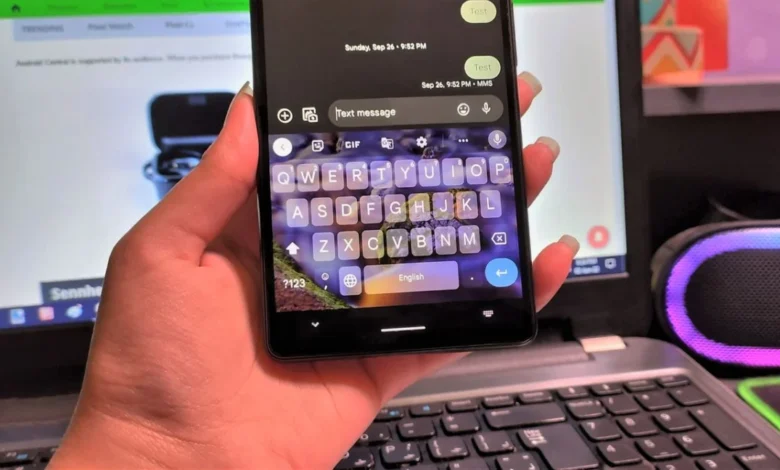
A recent report indicates that Google is actively developing a potentially transformative accessibility feature for its widely used Gboard keyboard application, aimed at bridging communication gaps for individuals who rely on sign language. This rumored innovation, dubbed "Sign-to-text," represents a significant stride in digital inclusion, leveraging advanced artificial intelligence and mobile camera technology to translate sign language gestures into written text across various digital platforms.
The Unveiling of "Sign-to-text": A Deep Dive into the Rumored Feature
The initial revelation of this feature comes from an investigation by Android Authority, which claims to have uncovered traces of "Sign-to-text" within the code of a recent Gboard app version. Collaborating with tipster AssembleDebug, the publication found evidence suggesting an upcoming welcome pop-up for the feature, accompanied by a preliminary description outlining its capabilities. According to this early insight, "Sign-to-text" is designed to "translate your signing into text messages, web searches, emails, and more," effectively enabling seamless written communication for sign language users.
The operational mechanics of this feature, as inferred from the code, involve the use of a smartphone’s camera to capture a user’s sign language movements. This visual data would then be processed by Google’s artificial intelligence algorithms. A crucial aspect highlighted in the report addresses privacy concerns: while the video footage itself is stated to "never leave your device," the system will reportedly send "points representing the movement of your body" to Google for translation, after which these "points" would be deleted. This approach aims to balance the need for cloud-based AI processing with user data privacy, a common challenge in developing sophisticated AI applications.
Despite the excitement surrounding this potential development, many details remain speculative. The tipster’s findings were limited to the splash screen and a brief description, leaving a significant void in understanding the feature’s full scope. Key questions revolve around the breadth of sign language support. As Android Authority rightly points out, sign language is not monolithic; there are numerous distinct sign languages worldwide, such as American Sign Language (ASL), British Sign Language (BSL), French Sign Language (LSF), and many others, each with its own grammar, syntax, and lexicon. The effectiveness and inclusivity of Google’s "Sign-to-text" will heavily depend on its ability to accurately recognize and translate a diverse range of these languages.
Google’s Enduring Commitment to Accessibility: A Historical Context
This rumored "Sign-to-text" feature aligns with Google’s long-standing and evolving commitment to making technology accessible to a broader user base. Over the years, the Android operating system and Google’s suite of applications have progressively integrated various accessibility options, reflecting a growing industry focus on inclusive design. This isn’t merely a philanthropic endeavor; it also represents a recognition of the vast market segment comprising individuals with disabilities, estimated by the World Health Organization (WHO) to be over one billion people globally.
Android’s journey in accessibility has seen significant advancements. For instance, Android 16 introduced substantial improvements for users relying on hearing aids. These enhancements allowed users with Bluetooth LE earbuds to seamlessly switch to their phone’s microphone for clearer call audio and provided direct control over hearing aid volume settings from their smartphone. Further refinements continued into late 2025, demonstrating a sustained effort to perfect the hearing aid experience. A particularly notable update in Google’s year-end accessibility rollout included Fast Pair support for hearing aids, simplifying the pairing process to a single tap. This feature initially rolled out for Demant hearing aids and was slated for expansion to Starkey devices.
Beyond auditory assistance, Android offers a spectrum of accessibility features, including customizable color correction, adjustable text sizes, screen readers like TalkBack, and switch access for motor impairments. These tools collectively aim to provide a more tailored and functional experience for users with diverse needs. However, sign language recognition represents a distinct and more complex challenge than many existing accessibility features, pushing the boundaries of what mobile technology can achieve in real-time communication.
The Global Landscape of Sign Languages: Diversity and the Need for Comprehensive Support
The challenge of developing a universal "Sign-to-text" translator is profoundly complex due to the inherent diversity of sign languages. Unlike spoken languages, which often share common linguistic roots, sign languages have evolved independently within different deaf communities across the globe. Estimates suggest there are hundreds of distinct sign languages worldwide, each with its unique phonology (handshapes, movements, locations, orientations, non-manual markers), morphology, and syntax.
For example, American Sign Language (ASL) and British Sign Language (BSL), despite both being used in English-speaking countries, are mutually unintelligible, differing significantly in vocabulary, grammar, and even finger spelling alphabets. Similarly, French Sign Language (LSF) and German Sign Language (DGS) are entirely separate linguistic systems. This linguistic heterogeneity means that a "one-size-fits-all" approach to sign language recognition is impractical. Google would need to invest heavily in training its AI models on vast datasets for each distinct sign language it intends to support, a monumental undertaking. The initial success of "Sign-to-text" might hinge on its ability to accurately translate at least one major sign language, such as ASL, before gradually expanding its linguistic repertoire. The absence of comprehensive support for multiple sign languages could limit its impact and perpetuate communication barriers for many deaf individuals globally.
Technological Underpinnings: AI, Computer Vision, and Machine Learning
The proposed "Sign-to-text" feature relies heavily on cutting-edge artificial intelligence, particularly in the fields of computer vision and machine learning. Computer vision would be tasked with analyzing the video feed from the phone’s camera, identifying key anatomical points and tracking their movement in real-time. This involves segmenting the user’s hands, arms, and facial expressions from the background, and then extracting features such as handshape, orientation, location, movement path, and non-manual cues (e.g., facial expressions, head tilts) that are integral to sign language grammar.
Once these visual features are extracted, machine learning models, likely deep neural networks, would come into play. These models would be trained on extensive datasets of signed gestures paired with their corresponding textual translations. The process would involve recognizing patterns in the "points representing the movement of your body" and mapping them to specific words, phrases, or grammatical structures in the target spoken language. The reported detail that "points" are sent to Google for translation suggests a powerful, cloud-based AI infrastructure is at work, capable of processing these complex visual patterns efficiently. This approach allows Google to leverage its immense computational resources and regularly update its AI models without requiring massive local processing power on individual devices. The real-time nature of communication demands incredibly low latency and high accuracy from these AI systems.
Potential Impact and Transformative Power of "Sign-to-text"
Should "Sign-to-text" successfully materialize and achieve high levels of accuracy and comprehensive language support, its impact on the deaf and hard-of-hearing community could be profound and far-reaching. The ability to seamlessly convert sign language into written text on a ubiquitous platform like Gboard would unlock unprecedented levels of independent communication.
Imagine a deaf individual being able to participate more fully in everyday digital interactions: typing out a quick message to a hearing colleague during a video call, searching the web by signing their query, or composing an email without needing an intermediary. This technology could significantly reduce reliance on human interpreters, especially for informal or spontaneous communication, thereby enhancing autonomy and spontaneity. In educational settings, it could empower deaf students to interact more directly with learning materials and peers. In professional environments, it could foster greater inclusion, allowing deaf employees to contribute more effectively in text-based communications.
Beyond practical applications, "Sign-to-text" could also serve as an educational tool, raising awareness and understanding of sign languages among the hearing population. It could normalize sign language as a valid and efficient form of communication, breaking down societal barriers and fostering a more inclusive digital landscape. The sheer ubiquity of Gboard, pre-installed on countless Android devices, positions this feature to reach a massive audience, potentially revolutionizing how millions interact with the digital world.
Addressing Privacy and Data Security Concerns
The report’s mention of how user data would be handled immediately raises crucial questions regarding privacy and security. The statement that "the video is said to ‘never leave your device’" is a significant assurance, indicating that the raw visual data of a user signing remains local. This local processing of sensitive visual information is paramount for user trust. However, the subsequent detail that "Sign-to-text will send ‘points representing the movement of your body’ to Google for translation before deletion" warrants careful consideration.
While "points" are not raw video, they are still a representation of a user’s unique physical movements and gestures, which could potentially be re-identified or misused if not handled with the utmost care. Google would need to provide transparent and robust privacy policies, clearly outlining how these "points" are anonymized, secured, and used solely for the purpose of translation. Regular audits, clear user consent mechanisms, and adherence to global data protection regulations (like GDPR and CCPA) would be essential to build and maintain user trust. The deletion of these "points" after translation is a positive step, but the specific protocols for transmission and processing would need to be thoroughly detailed to ensure privacy remains paramount in such a sensitive application.
Challenges and Future Outlook: A Road Paved with Innovation and Hurdles
While the prospect of "Sign-to-text" is exciting, the development and widespread deployment of such a feature will undoubtedly face numerous challenges. The primary hurdle remains accuracy. Sign language, with its nuanced movements, facial expressions, and spatial grammar, is inherently difficult for machines to interpret flawlessly. Misinterpretations could lead to significant communication breakdowns, eroding user confidence. Achieving consistently high accuracy across varying lighting conditions, user demographics (e.g., different signing styles, ages), and background clutter will be a continuous battle.
Scalability is another major concern. As mentioned, supporting multiple sign languages requires vast amounts of training data and sophisticated models for each. Google would need to establish partnerships with deaf communities and linguistic experts globally to gather authentic, diverse datasets and ensure culturally appropriate translations. The computational resources required for real-time processing of complex visual data for potentially hundreds of millions of users would also be immense.
User adoption will also be critical. The interface must be intuitive, easy to activate, and seamlessly integrated into the Gboard experience. Users would need to feel confident in its reliability and privacy safeguards. Furthermore, the feature would likely require continuous updates and refinements based on user feedback and evolving sign language patterns.
Looking ahead, if Google successfully navigates these challenges, "Sign-to-text" could inspire a new wave of innovation in human-computer interaction. It could pave the way for real-time, bidirectional sign language translation, potentially integrating spoken language to sign language capabilities. Other tech giants are also exploring similar avenues, with research ongoing in various academic and corporate labs to develop more effective sign language recognition and generation technologies. Google’s rumored initiative, if realized, would firmly place Gboard at the forefront of inclusive communication tools, reaffirming the tech industry’s responsibility to create a more accessible digital world for everyone.