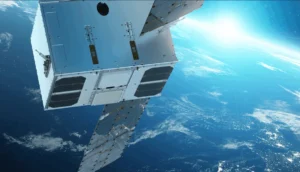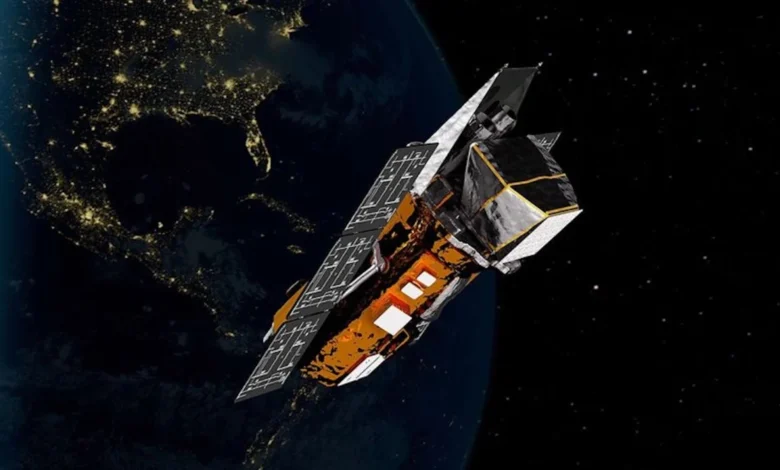
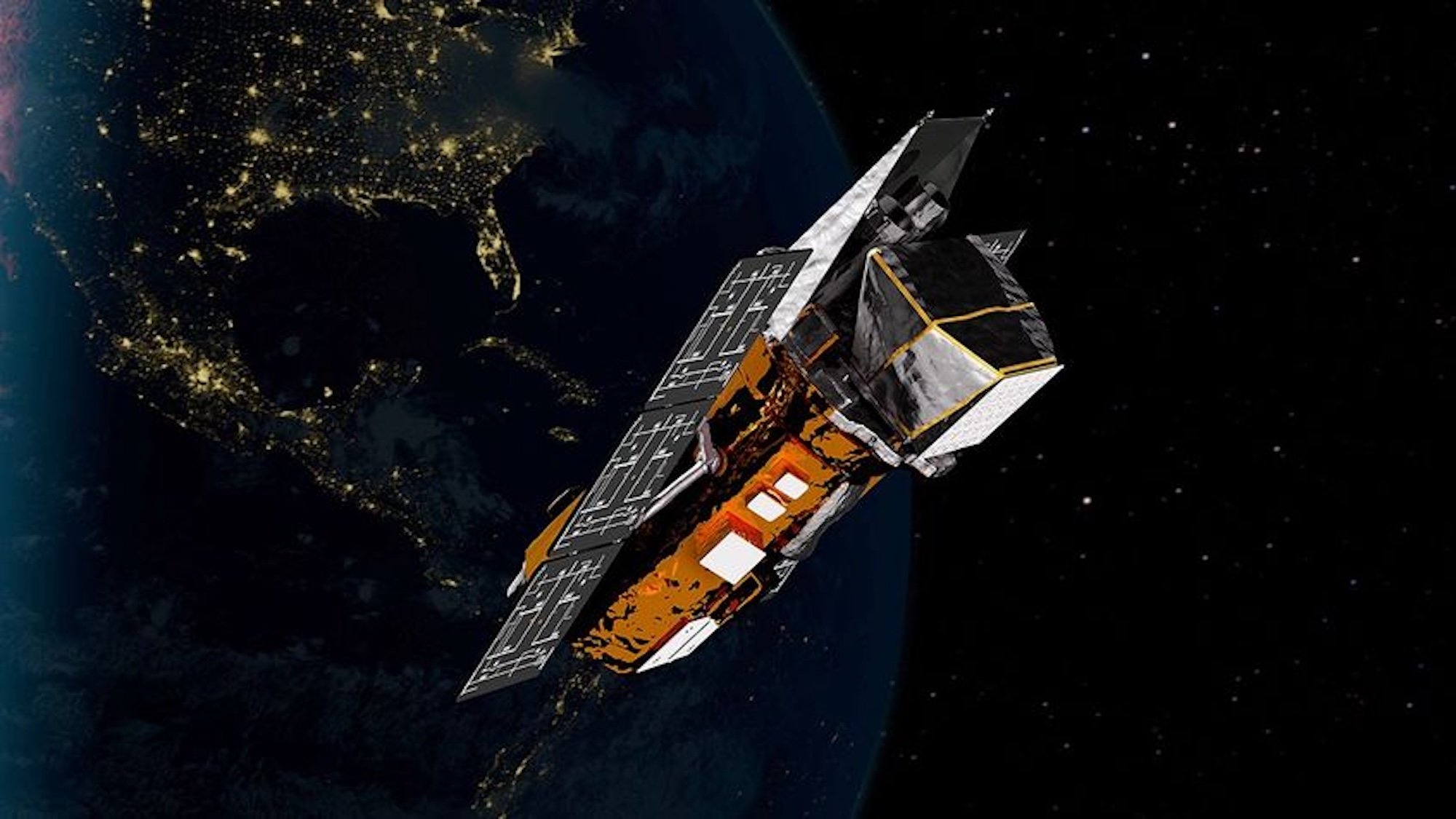
The Neil Gehrels Swift Observatory, a cornerstone of high-energy astrophysics for over two decades, has concluded its storied journey, successfully re-entering Earth’s atmosphere on the morning of November 4, 2026. The United States Space Force confirmed that the 2,500-pound spacecraft made its final descent at 7:39 a.m. EST, passing over the North Sumatra region of Indonesia at approximately 3.4 degrees north latitude and 98.6 degrees east longitude. While NASA officials noted that the majority of the satellite’s structure disintegrated due to intense frictional heat, the event marks the definitive end of one of the most productive missions in the history of space-based astronomy.
The conclusion of the Swift mission represents more than just the end of a satellite’s operational life; it signifies the closing of a chapter that fundamentally altered humanity’s understanding of the violent, transient universe. Launched in November 2004, the observatory was initially intended to function for only two years. However, its robust design and the adaptability of its mission control team allowed it to persist for nearly 22 years, far exceeding its original engineering specifications and providing a continuous stream of data that shaped modern astrophysics.
A Chronology of Exploration: From Launch to Re-entry
The history of the Swift Observatory is defined by its resilience and its specific design as a "rapid-response" instrument. Unlike larger, stationary telescopes, Swift was engineered to autonomously detect, localize, and point its instruments at transient phenomena within seconds.
- November 20, 2004: Swift is successfully launched from Cape Canaveral Air Force Station aboard a Delta II rocket, beginning its primary mission to study gamma-ray bursts (GRBs).
- 2005–2010: The observatory hits its stride, providing the first comprehensive multi-wavelength observations of GRB afterglows, effectively solving the long-standing mystery regarding the origins of these massive cosmic explosions.
- 2018: NASA officially renames the satellite the Neil Gehrels Swift Observatory in honor of its lead scientist, who played a pivotal role in the mission’s success.
- July 2026: A final, ambitious attempt to extend the mission by docking a robotic satellite from the private company Katalyst to boost the observatory into a higher orbit fails due to a technical malfunction during the rendezvous.
- October 2026: NASA formally retires the observatory from active service, preparing for the final phase of orbital decay.
- November 4, 2026: The observatory completes its atmospheric re-entry over Indonesia, finalizing its transition from an active scientific asset to a historical legacy.
Scientific Contributions: Mapping the Violent Cosmos
The scientific output of the Swift Observatory is nothing short of monumental. During its 22-year tenure, the telescope acted as a cosmic sentinel, observing over 2,000 gamma-ray bursts. These bursts are the most powerful explosions in the universe, occurring when massive stars collapse into black holes or when neutron stars collide. Swift’s ability to detect these flashes in gamma-ray light and immediately swivel its X-ray and ultraviolet telescopes toward the source allowed astronomers to witness the "afterglow" of these events in unprecedented detail.
Beyond GRBs, Swift’s portfolio includes the documentation of more than 1,400 supernovae. By capturing the light curves of these dying stars, researchers were able to better understand the chemical enrichment of the galaxy and the life cycles of stars. Furthermore, the telescope gained fame for its observations of "tidal disruption events," where a star wanders too close to a supermassive black hole and is shredded by tidal forces.
Most recently, Swift demonstrated its versatility by tracking interstellar objects, including 3I/ATLAS. By providing crucial data on the trajectory and composition of such objects, the observatory helped researchers distinguish between solar system residents and rare visitors from deep space. The resulting archive consists of data that has fueled the publication of over 7,000 scientific papers—an average of six peer-reviewed studies per week for over two decades.
The Failed Rescue Attempt and Mission Finality
The decision to allow Swift to re-enter the atmosphere was not made without a struggle. By the summer of 2026, the satellite’s orbital altitude had decayed to a point where a "re-boost" was necessary to keep it operational for further study. NASA engaged in a partnership with Katalyst, a private enterprise, to attempt a first-of-its-kind robotic docking mission.
The goal was to extend the life of the observatory by years, potentially allowing it to continue its role in the era of multi-messenger astronomy. Unfortunately, the robotic vehicle encountered a hardware failure during the approach, rendering the rescue impossible. The mission team, led by experts at Pennsylvania State University, had to pivot from maintenance to "end-of-life" procedures. John Nousek, the mission’s control lead, noted that while the team was saddened, they were prepared for this outcome. "What goes up must come down," Nousek stated, acknowledging the reality of low-Earth orbit operations.
Implications for Future Astrophysics
The end of the Swift mission leaves a void in the field of high-energy, rapid-response astronomy. While newer observatories and ground-based arrays exist, Swift was unique in its capability to act as a "first responder" to cosmic alerts. The data collected by the satellite is now being curated in a long-term archive, which NASA’s Astrophysics Division director, Shawn Domagal-Goldman, believes will provide the foundation for new discoveries for decades to come.
The primary implication of Swift’s career is the shift in how scientists approach transient events. Before Swift, gamma-ray bursts were fleeting, mysterious, and poorly understood. Today, they are categorized and analyzed with precision, serving as "standard candles" for understanding the distant, early universe. The mission proved that small, highly focused satellites could produce data of equal importance to large-scale observatories like Hubble or James Webb, provided they are designed for agility.
Official Statements and Legacy
NASA’s official response emphasized the "extraordinary" nature of the mission’s archive. The collaboration between international partners, universities, and private industry that supported Swift for 22 years is now being held up as a model for future SmallSat and Explorer-class missions.
From an orbital safety perspective, the re-entry was managed with caution. The U.S. Space Force and NASA monitored the orbital decay closely to ensure that the risk to populated areas remained well within established safety protocols. With the observatory now largely incinerated, the scientific community is shifting its focus to analyzing the final data packets transmitted just before the craft entered the upper atmosphere.
The legacy of the Neil Gehrels Swift Observatory is written in the 7,000 papers it facilitated and the thousands of cosmic events it witnessed. As the scientific world bids farewell to the telescope, it does so with the understanding that the "Swift Era" has permanently expanded the boundaries of human knowledge regarding the most energetic processes in the universe. The mission stands as a testament to the longevity of well-engineered hardware and the enduring curiosity of those who seek to understand the origins and mechanisms of the stars.