DIY Raspberry Pi Train Departure Board Brings High Tech Transit Aesthetics to the Modern Home

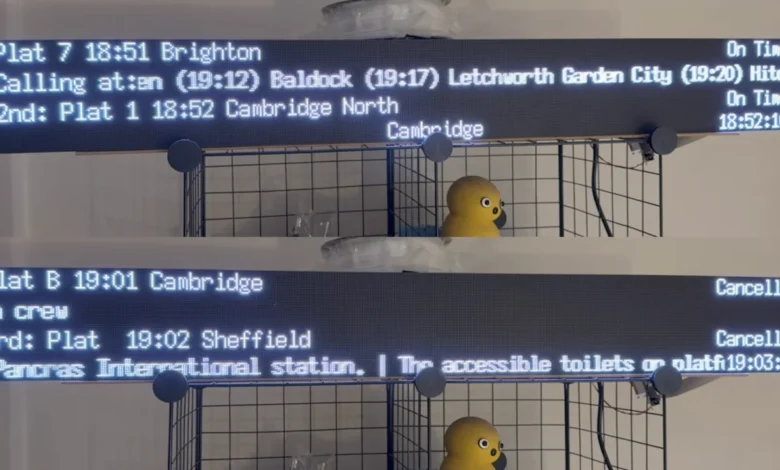
The intersection of transit nostalgia and modern computing has found a new centerpiece in a project recently unveiled by DIY enthusiast and YouTuber Jon Morris Smith. By leveraging the versatility of the Raspberry Pi ecosystem and the availability of real-time transit data, Smith has successfully transitioned the iconic aesthetic of the train station departure board from the platform to the living room. This "homebrew" version of a transit display is not merely a static replica but a fully functional, data-driven device that provides live updates on rail schedules, offering a unique blend of utility and retro-industrial design.
The project, documented on Smith’s website, Another Partial Success, and his YouTube channel, highlights a growing trend among "makers" to create bespoke smart home devices that bypass the high costs and restrictive subscription models of commercial alternatives. For many commuters and transit enthusiasts, the departure board represents a specific type of "calm technology"—a term coined by researchers at Xerox PARC to describe tech that informs without demanding constant, frantic attention.
The Genesis of the Project: From Commute to Creation
The inspiration for the project stemmed from Smith’s own experiences as a regular commuter and a lifelong fan of rail travel. In many major metropolitan areas, the departure board is the central nervous system of the station, providing a rhythmic, revolving stream of information that signals both the start of a journey and the transition between professional and personal life. Smith sought to replicate this experience at home, specifically to monitor his usual commuting route without needing to check a smartphone or a computer.
Initially, Smith explored purchasing a pre-made LED dot-matrix screen. However, he encountered a common hurdle in the high-end smart home market: price and proprietary software. Many commercial displays designed for this purpose are marketed as luxury items, often costing hundreds or even thousands of dollars. Furthermore, many of these devices require ongoing monthly subscriptions to access the very data feeds that power them. Driven by the DIY ethos—famously summarized by his question, "How hard can it be?"—Smith set out to build a custom solution using off-the-shelf components.
Technical Architecture and Hardware Specifications
The technical core of the departure board is the Raspberry Pi 4, specifically the 1GB RAM model. While the Raspberry Pi 5 has recently entered the market, the Pi 4 remains a stalwart for projects of this nature due to its balance of processing power, low energy consumption, and extensive library of community-developed drivers for peripheral hardware.
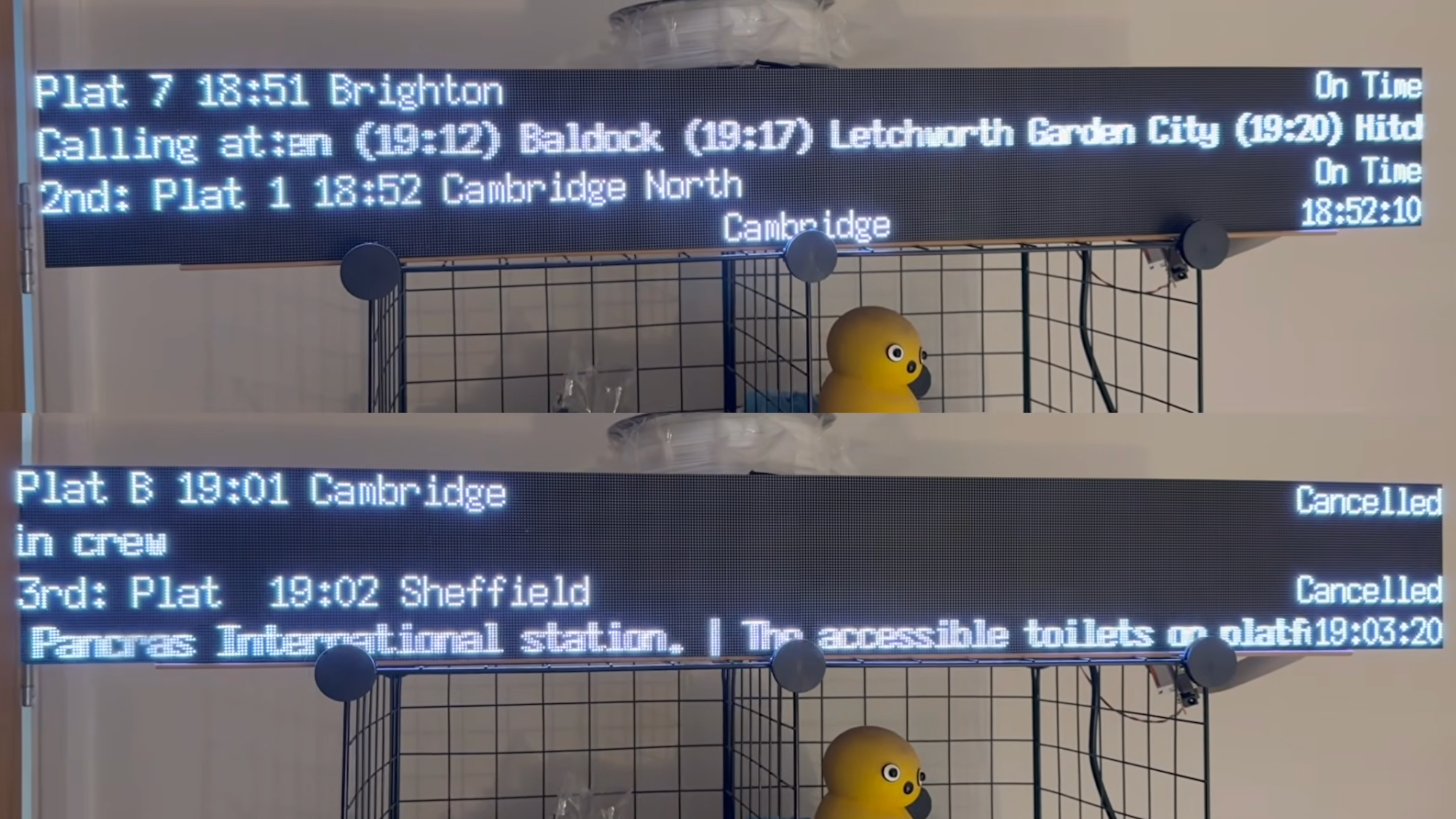
To achieve the "split-flap" or pixelated LED look characteristic of modern rail stations, Smith utilized four 128-by-64 pixel LED matrices. These matrices are connected to a dedicated matrix board, which acts as an intermediary to handle the complex task of "multiplexing"—the process of rapidly switching LEDs on and off to create the illusion of a steady image.
One of the most critical components of the build is the power supply. LED matrices are notoriously power-hungry; when many pixels are illuminated simultaneously, the current draw can exceed the capabilities of standard USB power adapters. Smith employed a 5-volt, 5-amp power supply to ensure that the display remains bright and stable without the risk of brownouts or damage to the Raspberry Pi.
On the software side, the project utilizes a custom Python-based application designed to fetch, parse, and display transit data. The visual output is carefully calibrated to mimic the font and spacing used by major rail networks, ensuring that the final product feels authentic to the user.
Data Integration: The Role of the Rail Data Marketplace
A departure board is only as useful as the data it displays. To power the real-time updates, Smith’s device connects to the Rail Data Marketplace (RDM), a centralized platform in the United Kingdom that provides developers and businesses with access to the country’s rail data. The RDM offers several APIs (Application Programming Interfaces) that provide "Darwin" data—the rail industry’s standard for real-time arrival and departure information.
By subscribing to these data feeds, the Raspberry Pi can pull information regarding train times, platform numbers, delays, and cancellations. The software then filters this data to show only the stations and routes relevant to the user.
However, the reliance on the UK-based Rail Data Marketplace presents a geographical limitation for the current iteration of Smith’s code. For users in the United States, the project requires adaptation to domestic data sources. Most major US transit agencies, including Amtrak and regional bodies like the MTA in New York or the CTA in Chicago, utilize the General Transit Feed Specification (GTFS). GTFS Realtime is an extension that allows for the same level of live tracking seen in the UK. Integrating these feeds would involve modifying the data-parsing logic of the software to recognize different API structures, a task that remains well within the capabilities of intermediate coders.
The Evolution of Transit Displays: A Historical Context
The project serves as a digital homage to the history of transit information systems. For decades, the gold standard for departure boards was the Solari board, or split-flap display. These mechanical marvels used rotating flaps with printed characters to announce departures with a distinctive clicking sound. While aesthetically pleasing and highly legible, they were maintenance-intensive and lacked the flexibility of digital systems.
In the late 20th and early 21st centuries, these were largely replaced by LED (Light Emitting Diode) and LCD (Liquid Crystal Display) screens. While some lamented the loss of the mechanical "clack," the new digital boards allowed for instant updates, multi-language support, and the integration of accessibility features. Smith’s project specifically emulates the "amber-on-black" LED boards that became the standard in the 1990s and 2000s, a look that has now acquired its own sense of vintage charm.

Broader Implications for the Smart Home and "Maker" Movement
Beyond its utility for a single commuter, Smith’s DIY departure board reflects broader shifts in how individuals interact with information in their homes. As screens become ubiquitous, there is a growing movement toward "single-purpose displays." Rather than a tablet that can do everything but often distracts the user, devices like the departure board provide one specific set of information at a glance.
This project also highlights the democratizing power of the Raspberry Pi. By providing an affordable, high-performance computing platform, the Raspberry Pi Foundation has enabled hobbyists to recreate complex industrial systems for a fraction of the cost. The "Maker" movement, which emphasizes open-source sharing and iterative design, ensures that when one person solves a technical challenge—such as interfacing a specific LED matrix with a Pi—that knowledge is documented and shared globally.
Analysis of Potential Challenges and Future Iterations
While the project is a success, potential builders should be aware of the inherent challenges in DIY electronics. Thermal management is a primary consideration; four LED matrices and a Raspberry Pi generating constant data requests can produce significant heat if enclosed in a tight frame. Proper ventilation or the inclusion of a small cooling fan is often necessary for long-term stability.
Furthermore, the longevity of such a project depends on the stability of the external APIs. If a transit authority changes its data format or moves its API behind a significant paywall, the device may require a software overhaul. This is where the DIY approach has an advantage over commercial products: whereas a commercial company might go out of business and "brick" its devices, a DIY user can simply point their code toward a new data source.
Future iterations of the project could include:
- Audio Integration: Using the Raspberry Pi’s audio output to announce departures or play a chime, further mimicking the station environment.
- Multi-Modal Tracking: Expanding the software to display bus, subway, and even flight information on the same screen.
- Physical Aesthetics: Utilizing 3D printing or custom woodworking to create a housing that matches the industrial design of a specific era of rail travel.
Conclusion
Jon Morris Smith’s DIY train departure board is more than a clever gadget; it is a testament to the creative potential of modern hobbyist electronics. By combining the Raspberry Pi with real-time rail data, Smith has created a piece of functional art that serves as a bridge between the physical world of heavy infrastructure and the digital world of real-time information.
As the "smart home" continues to evolve, projects like this suggest that the future of the home environment may not be defined by all-in-one screens, but by a collection of beautiful, specialized objects that keep us connected to the rhythms of the world around us. Whether it is a commuter checking their morning train or a rail enthusiast enjoying the glow of the LED matrix, the DIY departure board brings a piece of the grand tradition of rail travel into the private sphere.
Related posts: