The Jeep Gladiator has long occupied a unique niche in the midsize truck market, blending the open-air utility of the Wrangler with the functional cargo bed of a pickup. However, since its inception, the platform has been tethered to a singular powertrain: the 3.6-liter Pentastar V6. While this engine provides a respectable 285 horsepower and 260 pound-feet of torque—sufficient for most trail-ready applications—a vocal segment of the enthusiast community has consistently demanded greater output. Recent developments from Stellantis, coupled with the thriving industry of high-performance aftermarket conversions, suggest that the landscape for the high-performance Gladiator is on the verge of a significant transformation.
The Current State of the Jeep Gladiator Powertrain
In current factory configurations, the 2025 Jeep Gladiator Rubicon remains a highly capable off-roader, praised for its articulation, locking differentials, and rugged suspension geometry. Despite its technical prowess, critics have frequently cited the lack of powertrain diversity as a primary drawback. In an era where competing midsize trucks and performance-oriented off-roaders are pushing into higher horsepower brackets, the Pentastar V6 is increasingly viewed as the bottleneck for those seeking sustained high-speed desert running or heavy-duty towing performance.
The reliance on a naturally aspirated V6 places the Gladiator at a disadvantage when compared to turbocharged or supercharged competitors. For the consumer, this has necessitated a choice: accept the factory-backed reliability of the V6 or turn to the secondary market for radical modifications that Jeep itself has not yet provided at the assembly line level.
A Shift in Corporate Strategy: The Hemi Promise
The prospect of a factory-produced V8 Gladiator has transitioned from a rumor to a distinct possibility following statements from Jeep leadership. During a 2025 product briefing, Jeep CEO Bob Broderdorf signaled a major shift in the brand’s engine architecture strategy. Addressing the concerns of loyalists, Broderdorf explicitly stated, "We will extend the availability of the 392 on Wrangler, and in fact, we will tap the power and performance of the Hemi across Jeep products."
This confirmation suggests that the storied Hemi V8—a cornerstone of Chrysler’s performance identity—will find its way into the Gladiator lineup. This move is largely interpreted as a strategic response to market pressure and the successful integration of the 392 cubic-inch V8 into the Wrangler 392, which has proven that the midsize platform can handle the weight and torque of a large-displacement engine. While official specifications for a factory V8 Gladiator have yet to be finalized, the move serves as a direct acknowledgement that Jeep recognizes the demand for a more visceral, high-torque driving experience.
The Rise of the Hellcat Aftermarket Ecosystem
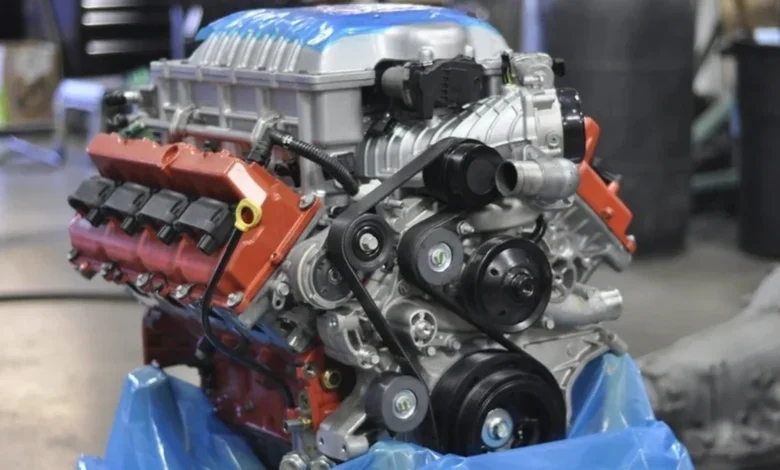
While Jeep prepares its factory solution, a specialized industry has emerged to bridge the gap between stock performance and extreme output. Leading this charge is America’s Most Wanted 4×4 (AMW4x4), a shop that has pioneered the integration of the supercharged 6.2-liter Hellcat Hemi into the Gladiator chassis. These conversions are not merely engine swaps; they are comprehensive re-engineerings of the vehicle’s mechanical infrastructure.
The AMW conversion process is a testament to the complexity of mating a 700+ horsepower engine to a chassis originally designed for a V6. The primary offerings include the AMW 707 and the AMW 717, both of which deliver massive performance increases. The standard Hellcat engine produces 707 horsepower, while specific tuning packages can push that output to 717 horsepower. In both iterations, the torque output hits a staggering 650 pound-feet. This represents an increase of more than 400 horsepower over the stock V6, fundamentally altering the vehicle’s power-to-weight ratio and off-road capability.
Technical Requirements of the Hellcat Conversion
The integration of a Hellcat engine into a Jeep Gladiator is an undertaking that requires substantial structural and mechanical modifications. According to AMW4x4 technical documentation, the conversion process involves roughly 65 man-hours of labor. This timeline is necessary to accommodate the extensive hardware upgrades required to manage the increased thermal load and rotational torque.
Key technical requirements for a successful swap include:
- Drivetrain Reinforcement: The standard transmission is replaced with a heavy-duty ZF 8-speed automatic, capable of handling the instantaneous torque of the supercharged engine without failing under load.
- Thermal Management: To prevent overheating in demanding environments, the system requires a high-capacity oil cooler kit and a 940-watt cooling fan, ensuring the engine operates within safe parameters during low-speed rock crawling or high-speed desert transit.
- Structural Support: The engine mounting system must be entirely redesigned to accommodate the larger footprint and heavier weight of the iron-block Hemi compared to the aluminum-block Pentastar.
- Peripheral Systems: The vehicle requires an upgraded fuel pump system to ensure consistent delivery under high-boost conditions, as well as a high-output alternator to support the increased electrical demands of the vehicle’s updated sensor array and cooling components.
Cost Analysis and Market Positioning
The cost of entering the "Hellcat Gladiator" tier is significant. Turnkey models, such as the 2025 AMW 707 8LUG, are priced in excess of $210,000. These vehicles are curated to be the pinnacle of off-road performance, often including 17-inch forged beadlock wheels, 8-piston brake calipers, and professional-grade suspension tuning.
For those who already own a Gladiator, the "Hellcat Conversion Package" starts at just under $60,000. This price point accounts for the crate engine itself—which typically retails for upwards of $16,000—along with the proprietary components and labor hours required for installation. While this is a premium investment, it offers a level of performance that is currently unavailable from any OEM manufacturer.
Implications for the Jeep Brand
The existence of these high-performance aftermarket conversions provides Jeep with valuable data regarding customer intent. By observing which modifications are most popular, the manufacturer can gauge the appetite for specific performance tiers. The decision to eventually bring Hemi power to the Gladiator lineup suggests that Jeep is moving to recapture the market share currently lost to independent custom shops.
However, a factory-built V8 will likely focus on reliability, emissions compliance, and warranty coverage, whereas aftermarket shops like AMW4x4 prioritize raw output and specialized off-road tuning. This creates a bifurcated market: the factory V8 will serve the enthusiast who wants a reliable, warranty-backed performance truck, while the Hellcat conversion will continue to appeal to the ultra-niche buyer who demands a "super-truck" experience that exceeds standard production limits.
Broader Industry Context and Future Outlook
The shift toward more powerful midsize trucks is not occurring in a vacuum. As the automotive industry transitions toward electrification, the window for large-displacement internal combustion engines is narrowing. The "Hemi" brand carries significant sentimental and performance weight, and Jeep’s commitment to the platform is a clear signal that they intend to capitalize on this legacy before regulatory and environmental mandates necessitate a pivot to electric propulsion.
As the industry moves forward, the Jeep Gladiator stands at a crossroads. Whether through factory-sponsored Hemi integration or continued aftermarket innovation, the trajectory is clear: the era of the high-performance Gladiator has only just begun. Enthusiasts can expect that within the next 24 to 36 months, the gap between the showroom-floor Gladiator and the extreme-performance custom builds will narrow, providing consumers with more options than at any point in the model’s history. For now, the aftermarket remains the only venue for those who demand the raw, supercharged power of a Hellcat, serving as the benchmark for what is possible when engineering constraints are removed.