NASA Artemis III SLS core stage integration at Kennedy Space Center marks a critical milestone for lunar exploration

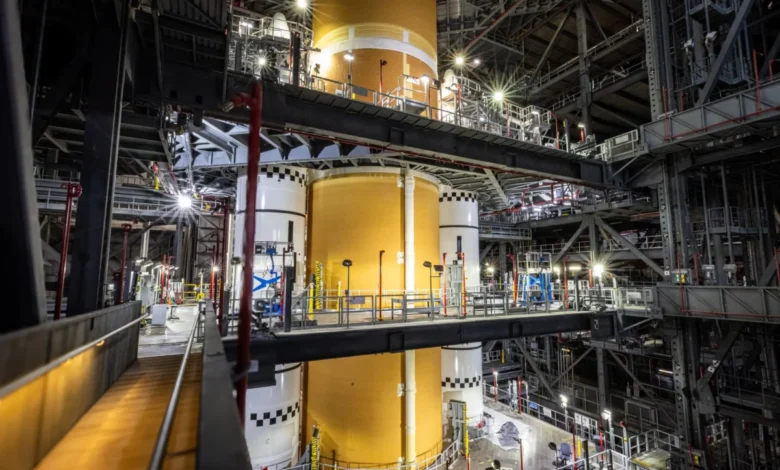
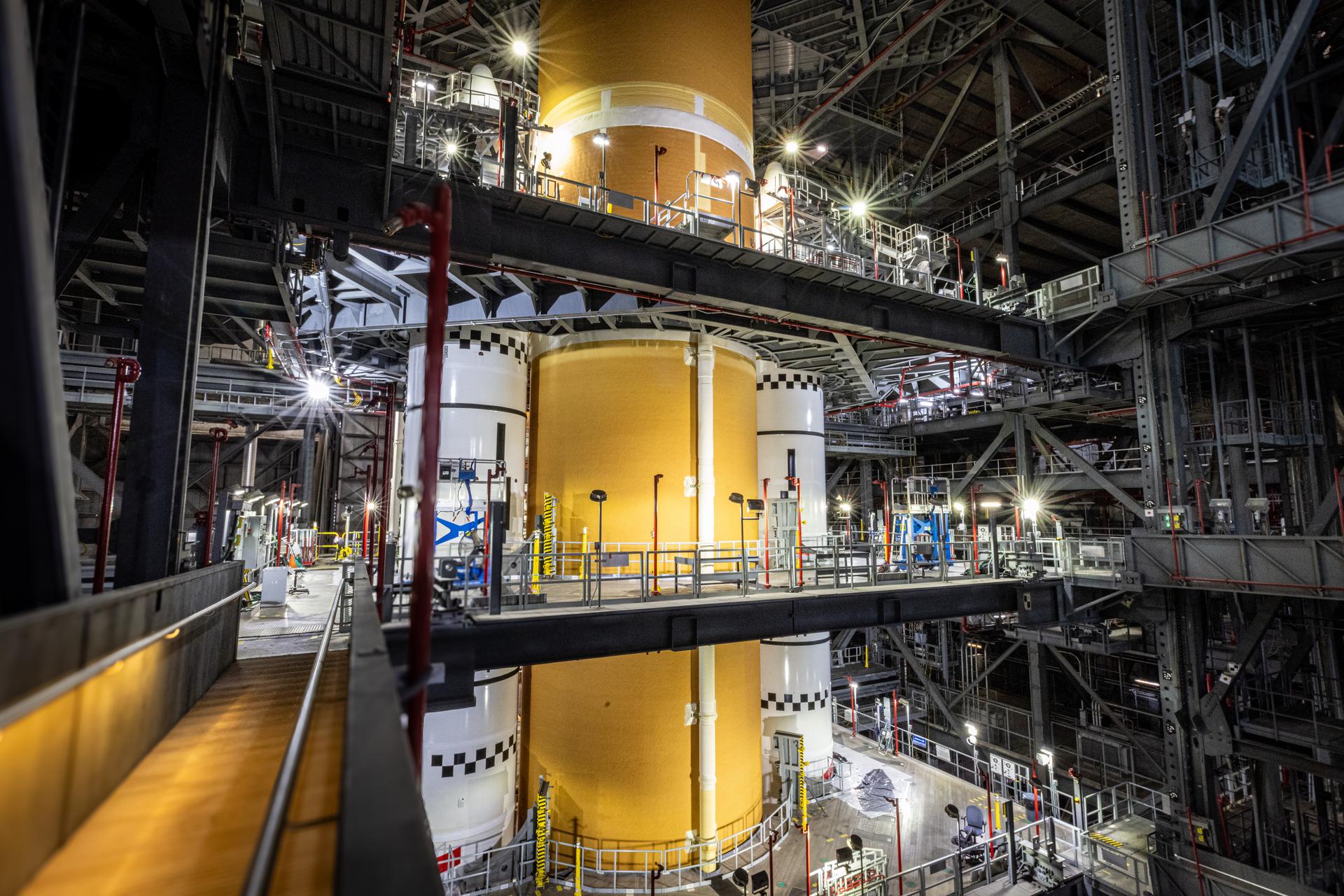
The integration of the Space Launch System (SLS) core stage for the Artemis III mission at NASA’s Kennedy Space Center in Florida represents a foundational step in the agency’s long-term objective to establish a sustainable human presence on the Moon. On October 28, 2026, technicians successfully maneuvered the 212-foot-tall core stage from High Bay 2 to High Bay 3 of the Vehicle Assembly Building (VAB), securing it alongside the twin solid rocket boosters already positioned on the mobile launcher. This intricate logistical operation, facilitated by a specialized lifting beam designed for heavy-lift aerospace hardware, underscores the precision required to assemble the most powerful rocket currently in the NASA inventory.
The Engineering Logistics of Artemis III Assembly
The transition of the SLS core stage—the central engine section of the vehicle—is a process that demands near-zero margin for error. The core stage serves as the backbone of the SLS, housing massive propellant tanks for liquid hydrogen and liquid oxygen, which feed the four RS-25 engines at the base of the vehicle. By integrating this stage with the twin solid rocket boosters, which provide the vast majority of thrust during the initial two minutes of flight, NASA is effectively finalizing the primary propulsion structure of the rocket.
The lifting beam used in the VAB is a bespoke piece of ground support equipment, engineered specifically to handle the structural loads of the core stage while ensuring it remains perfectly vertical during the transit between bays. Once the core stage was successfully mated with the boosters, the vehicle began undergoing a series of integrated tests. These checkouts are designed to ensure that the avionics, electrical systems, and fluid interfaces between the core stage and the mobile launcher are fully synchronized. This phase of the assembly is vital for identifying any potential connectivity issues before the rocket is rolled out to Launch Pad 39B for high-stakes fueling demonstrations.
Chronology of the Artemis Program
To understand the gravity of this milestone, it is necessary to contextualize the timeline of the Artemis program. Following the successful uncrewed Artemis I flight in 2022 and the subsequent crewed Artemis II mission—which performed a lunar flyby to validate life support systems—Artemis III represents the most complex technical hurdle to date.
- November 2022: Artemis I successfully completes its maiden flight, proving the viability of the SLS and the Orion spacecraft.
- Late 2025: Artemis II achieves a crewed lunar orbit, confirming the reliability of the Orion life support systems with astronauts on board.
- October 2026: Integration of the Artemis III core stage occurs, signaling the final assembly phase for the mission.
- Early 2027 (Projected): Scheduled tanking tests at Launch Pad 39B to simulate countdown and fuel loading procedures.
- Late 2027 (Projected): Launch of Artemis III, marking the first time humans will test critical docking maneuvers with commercial lunar landers in deep space.
Supporting Data and Technical Specifications
The SLS is a marvel of heavy-lift engineering. The core stage alone stands taller than a 15-story building and weighs approximately 188,000 pounds when empty. When fueled with 733,000 gallons of cryogenic propellants, the weight increases exponentially, requiring the massive thrust generated by the RS-25 engines and the boosters.
The twin solid rocket boosters are the largest and most powerful boosters ever built for spaceflight. Each provides 3.6 million pounds of thrust at liftoff, totaling over 7 million pounds of combined thrust alongside the core stage engines. This immense power is necessary to overcome Earth’s gravity and propel the Orion spacecraft, which carries a crew of four, into a trans-lunar injection trajectory. The integration of these components at Kennedy Space Center involves thousands of individual electrical, hydraulic, and pneumatic connections, all of which must function in unison to ensure mission success.
Crew Composition and Mission Objectives
The Artemis III mission carries a unique international profile. The crew includes NASA astronauts Randy Bresnik, Frank Rubio, and Andre Douglas, along with European Space Agency (ESA) astronaut Luca Parmitano. The inclusion of an ESA astronaut reinforces the international cooperation that is central to the Artemis Accords, a framework established by NASA to guide the civil exploration and use of the Moon, Mars, and other celestial bodies.
The primary objective of Artemis III is not merely to reach the lunar vicinity but to conduct a sophisticated series of rendezvous and docking maneuvers. The Orion spacecraft will interface with commercial lunar landers developed by Blue Origin and SpaceX. This approach marks a paradigm shift in space exploration: NASA is transitioning from a traditional contractor model to a commercial partnership model, where private industry provides the landing architecture while NASA provides the heavy-lift transportation and mission oversight. By practicing these docking procedures in the harsh environment of deep space, the crew will validate the hardware and software protocols necessary for the eventual landing of humans on the lunar surface in subsequent missions.
Official Perspectives and Operational Readiness
While NASA leadership has maintained a focus on safety and methodical testing, the sentiment within the agency is one of measured optimism. The VAB integration team, having learned lessons from the previous Artemis builds, has streamlined the movement process.
"The successful integration of the core stage is a testament to the rigorous planning and technical expertise of our ground operations team," noted a senior project manager at Kennedy Space Center. "Each move within the VAB is a symphony of engineering, and seeing the SLS come together in High Bay 3 reminds us that we are closer than ever to our goal of sustained lunar exploration."
Industry analysts observe that the tanking test at Launch Pad 39B will be the most significant test of the integrated stack to date. During this simulation, the rocket will be fully loaded with liquid hydrogen and liquid oxygen. This is a "wet dress rehearsal" that subjects the rocket to the thermal stresses and pressure environments it will encounter on the day of launch. Success during this phase is widely considered the final "go/no-go" indicator for the mission’s launch window.
Broader Implications for Deep Space Exploration
The successful assembly of the Artemis III SLS stack carries profound implications for the future of space exploration. First, it validates the multi-billion-dollar investment in the SLS infrastructure. Critics of the SLS have often pointed to its high cost and long development cycle, but proponents argue that its unique heavy-lift capacity is the only viable way to send large-scale payloads—including the Orion spacecraft and its crew—to deep space.
Second, the mission’s reliance on commercial partnerships—specifically with Blue Origin and SpaceX—represents a transition in how space exploration is funded and executed. If Artemis III successfully demonstrates docking with commercial vehicles, it will confirm the viability of the "lunar gateway" and commercial landing infrastructure concepts. This would open the door for more frequent, cost-effective missions to the lunar surface.
Finally, the mission serves as a geopolitical signal. As various international space agencies and private corporations ramp up their lunar ambitions, the United States’ ability to maintain a consistent cadence of crewed lunar missions is vital to establishing standards for lunar operations. By integrating international partners like the ESA into the crew, NASA is ensuring that the Artemis program remains a global effort, strengthening alliances and fostering international scientific cooperation.
As the team at Kennedy Space Center moves forward with checkouts, the focus remains on the meticulous verification of every system. The transition from the VAB to the launch pad will be the next major visual and technical milestone, serving as a reminder that the path back to the Moon is being paved with both historic engineering and modern, collaborative innovation. The coming months will be defined by the rigorous, often invisible, work of testing, but the sight of the assembled SLS in the VAB remains a powerful symbol of humanity’s enduring push toward the stars.