Zodiacal Light Observed at Hanle Dark Sky Reserve Highlights the Interplanetary Dust Connection

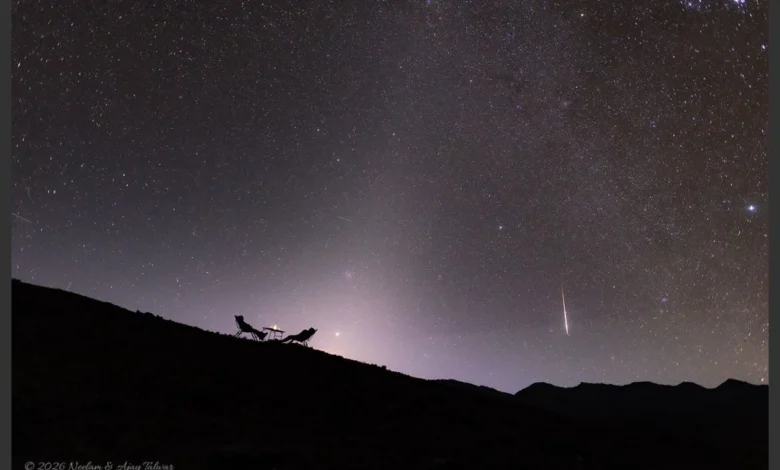
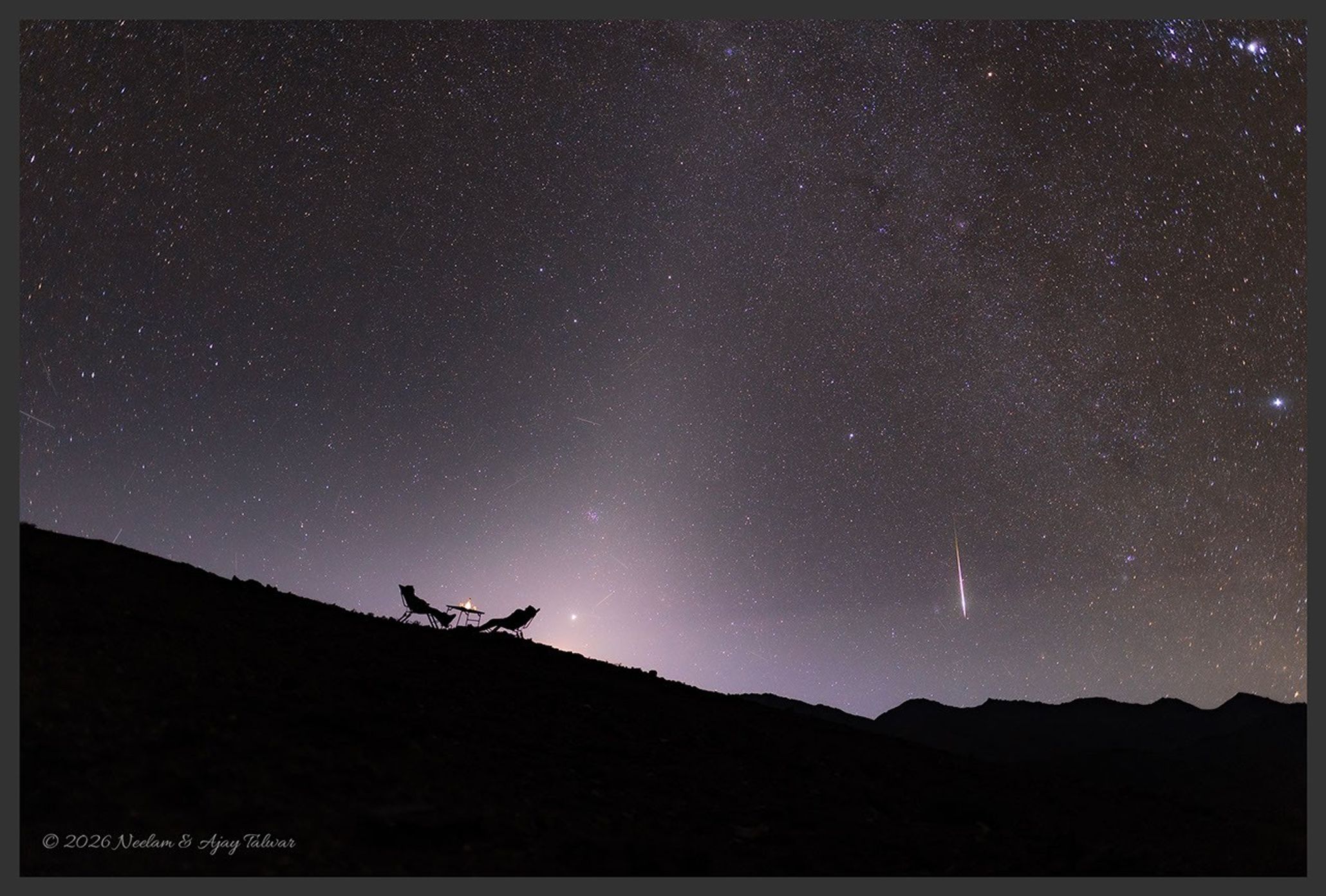
The recent capture of the ethereal zodiacal light at the Hanle Dark Sky Reserve in Ladakh, India, provides a compelling visual record of one of the solar system’s most elusive phenomena. This faint, triangular glow, often referred to by astronomers as the "false dawn," was documented during a September star party held at an altitude of approximately 4,500 meters. The imagery, featured as NASA’s Astronomy Picture of the Day, showcases the celestial band rising above the horizon, with prominent planetary landmarks including Jupiter and Mars, as well as the open star cluster M44, serving as navigational beacons within the frame.
The Phenomenon of Zodiacal Light
Zodiacal light is a soft, pyramid-shaped glow that appears along the ecliptic—the plane of the Earth’s orbit around the Sun. It is caused by sunlight scattering off interplanetary dust particles that populate the inner solar system. While these dust grains are infinitesimally small, their cumulative effect creates a diffuse, luminous pathway that is most visible in the absence of light pollution and during specific times of the year when the ecliptic intersects the horizon at a steep angle.
For observers in the Northern Hemisphere, the best opportunities to witness this phenomenon occur in the spring after sunset or in the autumn before sunrise. The recent observations from the Hanle site underscore why this location has become a premier destination for global astrophotography. By operating at such a significant altitude, the reserve minimizes atmospheric interference and moisture, which typically obscures the subtle contrast required to distinguish the zodiacal band from the surrounding dark sky.
Chronology of the Observation
The documentation of the September zodiacal light was not merely a chance occurrence but the result of coordinated efforts during a peak astronomical window at the Hanle facility. As astronomical twilight approached, the observers captured a series of exposures that traced the zodiacal glow as it climbed toward the zenith.
The sequence of the night’s events followed a strict observational timeline:
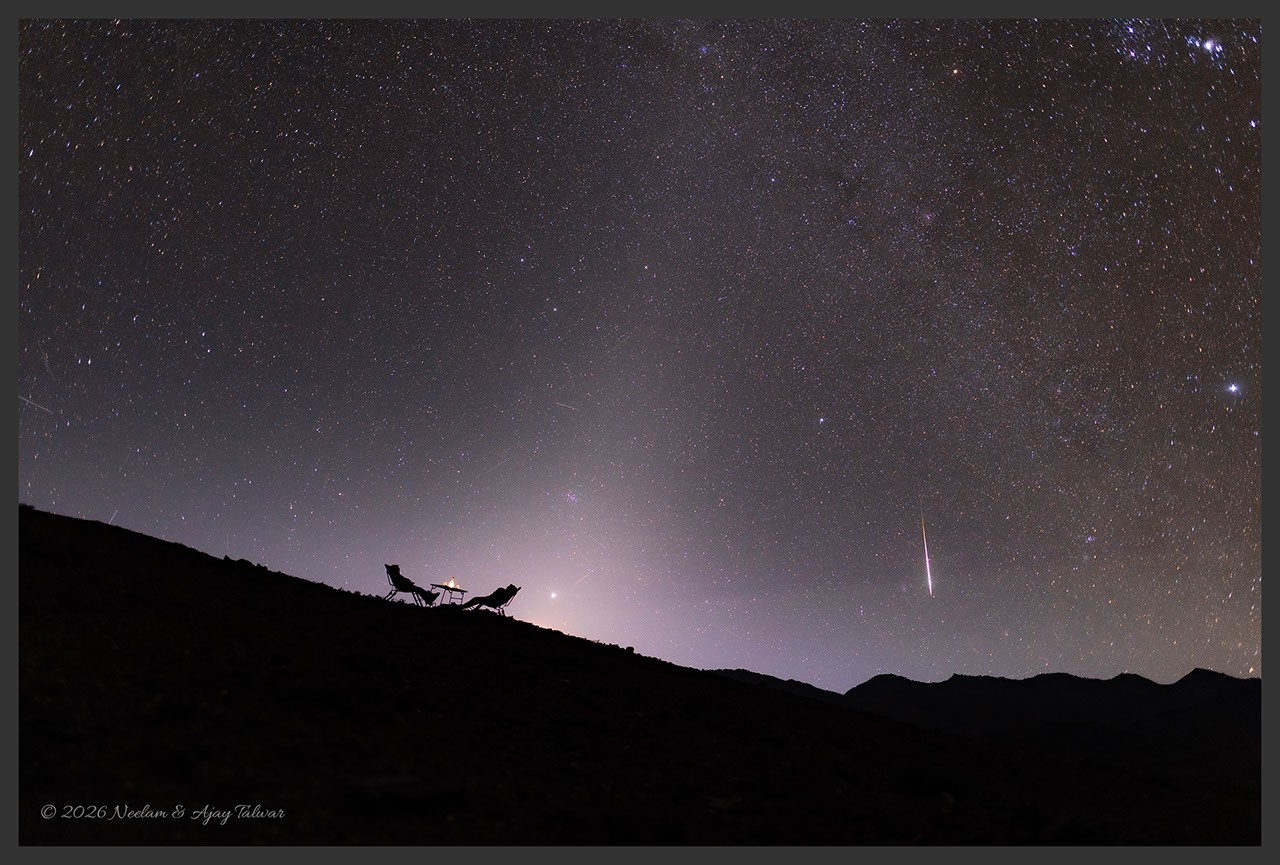
- Pre-Twilight Conditions: The initial light gathered was free from solar interference, allowing for the deep-field capture of the zodiacal band.
- Planetary Alignment: The bright presence of Jupiter provided a focal point near the eastern horizon, anchored within the dust-scattered light.
- Zenith Transition: As the observers tracked the band upward, they successfully resolved the open star cluster M44 (the Beehive Cluster) and the yellowish hue of Mars.
- Data Acquisition: High-resolution sensors were utilized to differentiate the spectral signature of the zodiacal light from the background starlight, ensuring the final imagery could be used for both aesthetic and scientific study.
The Martian Connection: Scientific Implications
Perhaps the most significant scientific context provided by this recent imagery involves the origin of the interplanetary dust responsible for the phenomenon. For decades, the consensus among planetary scientists was that the dust originated primarily from comet tails or the debris of asteroid collisions. However, recent findings have shifted the focus toward a more singular source.
Data transmitted from NASA’s Juno spacecraft—which was never originally intended to measure interplanetary dust—revealed unexpected impacts as it traveled through the solar system. These "serendipitous" detections, when modeled by researchers, suggest that the dust clouds creating the zodiacal light are predominantly supplied by Mars. The theory proposes that the red planet’s thin atmosphere and lack of global magnetic field protection allow for a continuous "saltation" of dust from its surface into space, which then migrates into the inner solar system.
This discovery represents a paradigm shift in how astronomers understand the distribution of mass in the solar system. If Mars is indeed the primary architect of the zodiacal light, it implies that the solar system is far more dynamic and interconnected than previously documented. The implications of this are twofold: it clarifies the composition of the interplanetary medium and demonstrates how planetary processes can influence the appearance of the night sky across vast distances.
The Role of Hanle Dark Sky Reserve
The Hanle Dark Sky Reserve in Ladakh is not merely a scenic location for enthusiasts; it is a critical piece of global astronomical infrastructure. As light pollution continues to grow exponentially in urban centers, sites like Hanle—designated as India’s first dark sky sanctuary—are becoming essential for long-term monitoring of the cosmos.
The reserve operates under the aegis of the Indian Institute of Astrophysics (IIA) and provides a unique vantage point due to the arid, high-altitude desert climate of the Himalayas. The lack of water vapor in the atmosphere allows for infrared and optical clarity that is rarely found elsewhere. For researchers, this means that even subtle phenomena, like the faint zodiacal light, can be captured with enough resolution to perform photometric analysis.
Expert Reaction and Future Research
Professional astronomers have noted that the clarity of the Hanle imagery serves as an ideal baseline for comparing ground-based observations with space-based telemetry. By analyzing the brightness profile of the zodiacal light captured at Hanle and comparing it to the dust density models derived from the Juno mission, scientists are refining their understanding of the dust-trapping mechanisms within the solar system.
"The alignment of these events—the clear skies at Hanle and the ongoing analysis of Juno’s dust impact data—provides a rare opportunity for cross-validation," stated an observational astronomer familiar with the project. "It bridges the gap between theoretical models of interplanetary debris and the actual, observable phenomena that have fascinated humanity for millennia."
Broader Impact on Stargazing and Education
Beyond the technical data, the successful documentation of the zodiacal light at such a high-profile location serves to reinvigorate public interest in astronomy. The movement of the main NASA Astronomy Picture of the Day (APOD) site to the official science.nasa.gov portal marks an ongoing effort to consolidate space science resources for a global audience.
By highlighting the "false dawn," the scientific community emphasizes that the night sky is not a static backdrop but a shifting, complex environment. Education initiatives centered around the Hanle site aim to encourage both amateur and professional astronomers to treat the dark sky as a protected resource, similar to terrestrial nature preserves. The ability to witness the zodiacal light is a testament to the preservation of dark-sky habitats, which are increasingly threatened by the rise of satellite constellations and expanding terrestrial artificial lighting.
Conclusion: The Future of Zodiacal Studies
As the research into interplanetary dust continues to evolve, the documentation of phenomena like the zodiacal light will remain a priority. Future missions are expected to further analyze the chemical composition of the dust that causes these light bands, potentially confirming the Martian origin theory with more precise isotopic data.
For the residents of Earth, the sight of the zodiacal light remains a humbling reminder of our position within a bustling, dust-filled solar system. Whether viewed from the remote heights of the Himalayas or via the high-resolution imagery provided by modern space agencies, the "false dawn" continues to challenge our understanding of planetary interaction and the subtle, often invisible, mechanics of the space surrounding our own planet. As the scientific community continues to move its digital archives and data sets to more accessible, unified platforms, the public will be better equipped to interpret these celestial events, ensuring that the study of the cosmos remains a vital and inclusive endeavor for years to come.
Related posts: