Muse Introduces Spaces to Transform Personal Digital Environments Through AI-Driven Customization

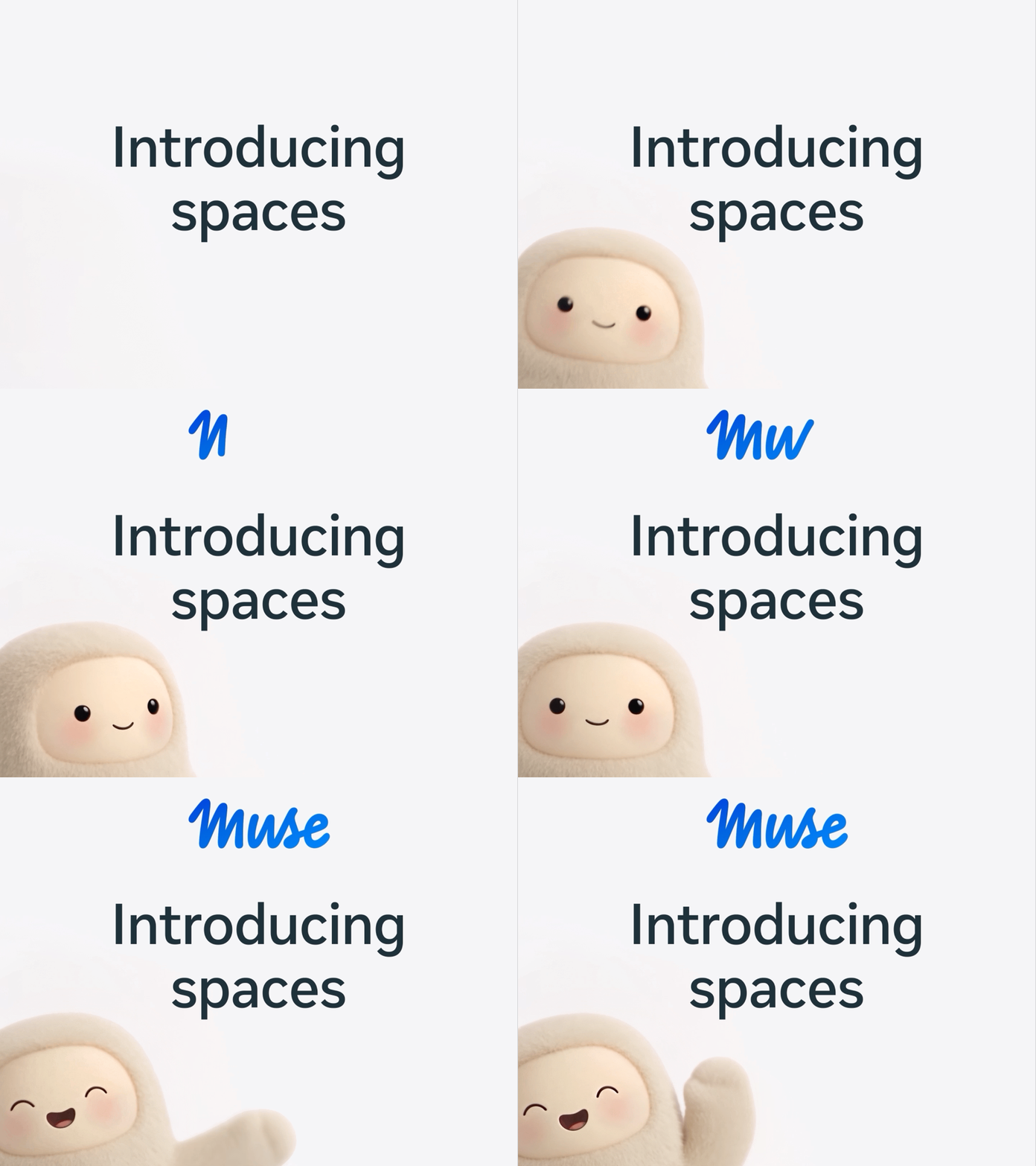
The digital landscape is undergoing a significant shift as Muse officially launches "Spaces," a new feature designed to evolve the platform from a static interface into a dynamic, personalized environment. By allowing users to generate custom-built experiences through natural language prompts, Muse is signaling a departure from traditional "one-size-fits-all" software design toward a future of adaptive, modular AI interfaces. This release marks a pivotal moment in the ongoing competition between major tech developers to create more intuitive, assistant-based operating systems.
The Evolution of Muse: From Static Tools to Adaptive Spaces
For years, users have relied on compartmentalized applications—notes apps for brainstorming, spreadsheets for tracking, and calendars for scheduling—often leading to fragmented workflows. The introduction of Spaces attempts to consolidate these functions by allowing users to describe a specific need, such as a "holiday gift tracker" or a "DIY project planner," and having the AI construct a bespoke interface to manage that task.
The concept rests on the premise that software should mold itself to the user’s cognitive flow rather than forcing the user to adapt to rigid application layouts. By integrating these custom-built modules directly into the user’s primary interface, Muse aims to reduce the "context switching" that often hampers productivity. A user can now move a project-specific Space into their sidebar or main dashboard, effectively treating an AI-generated tool as a permanent, high-priority fixture of their workspace.
Chronology of Development and Integration
The path to the release of Spaces has been defined by a series of iterative updates to the Muse ecosystem.
- Early 2023: Muse began experimenting with generative AI integration, moving beyond simple chatbot responses to assist in document drafting and data organization.
- Late 2023: The announcement of "Muse Wonder," a project focused on advanced model training, set the foundation for the current AI capabilities. Engineers began testing how specialized models could manage real-time data updates.
- Mid-2024: Internal beta testing for Spaces commenced, focusing on the ability of the AI to connect with third-party APIs, allowing for dynamic, automated content updates within a user’s space.
- Today: The global rollout of Spaces, accompanied by the implementation of specialized AI models designed to optimize the responsiveness and utility of these custom interfaces.
Technical Foundations and Specialized Model Integration
A critical component of this release is the deployment of specialized models, which draw upon the architectural learnings of Muse Wonder. Unlike generalized large language models that are trained on vast, indiscriminate datasets, these specialized versions are fine-tuned to understand the nuances of personal productivity.
These models are optimized to handle structured data, ensuring that when a user creates a tracker, the AI accurately maps inputs—such as dates, currency values, or task status—without requiring manual configuration. This background automation allows for a "set it and forget it" experience. For instance, when a user creates a space to track concert dates or savings progress, the AI periodically queries connected apps or web sources to pull in new information. This capability moves the needle from passive note-taking to active digital management.
Market Context and Industry Implications
The introduction of Spaces places Muse in direct competition with other productivity giants, such as Notion, Microsoft’s Copilot-integrated Office suite, and Apple’s intelligence-focused ecosystem updates. The industry is currently witnessing a trend toward "agentic" software—AI that does not just talk, but performs tasks and manages environments.
Data from recent industry reports suggests that the demand for "personal operating systems" is rising. According to recent market analysis, productivity software that integrates AI-driven automation is expected to see a compound annual growth rate (CAGR) of over 20% through 2028. Users are increasingly fatigued by "app sprawl," where they must juggle dozens of disparate accounts to maintain a single project. By allowing users to build a space that acts as a "single source of truth," Muse is attempting to capture the segment of the market that prioritizes consolidation over feature abundance.
User Control and Strategic Flexibility
One of the most notable features of the update is the granular control users maintain over their workspace architecture. The ability to swap, hide, or schedule the appearance of a space acknowledges that a user’s needs are transient. A professional might require a client-tracking space during the workweek but prefer it to be replaced by a personal fitness or hobby-related space on the weekend.
This temporal flexibility addresses a common critique of AI interfaces: that they become cluttered and overwhelming over time. By allowing users to treat these spaces as "ephemeral" or "persistent" modules, Muse is attempting to balance the power of AI-generated complexity with the necessity of a clean, focused user experience.
Statements and Expert Analysis
Industry observers suggest that the move is a logical progression for a company looking to deepen user retention. "The battleground for the next decade of AI isn’t just about who has the smartest chatbot," says a lead technology analyst at a major consultancy. "It is about who can create an interface that feels like a natural extension of the user’s thought process. Muse is betting that by giving users the agency to build their own tools, they will remain in the ecosystem longer because the environment they are working in is uniquely their own."
While the company has not yet provided specific usage metrics, early feedback from developers highlights the ease of the integration process. Because the underlying infrastructure is modular, users do not need to possess coding skills to implement complex logic. The natural language layer acts as a bridge between intent and execution, effectively democratizing software development for the average user.
Future Trajectory: Collaborative Environments
While the current iteration of Spaces focuses on individual utility, the company has indicated that the roadmap includes future collaborative features. The prospect of sharing a custom-built Space with colleagues, family members, or project teams could transition Muse from a solo productivity tool into a collaborative platform. If a user can build a project-tracking space and share it with a team—allowing the AI to sync updates across multiple participants’ dashboards—it would represent a significant expansion of the product’s addressable market.
Potential Challenges and Considerations
Despite the technological advancements, the reliance on AI-generated interfaces presents certain risks. Data privacy remains a primary concern for users who connect third-party applications to their spaces. Muse has emphasized that the specialized models are designed with security frameworks in mind, but the broader integration of AI into personal workflows necessitates a high level of trust from the user base.
Furthermore, there is the question of "AI hallucination" or error rates. If an AI incorrectly configures a tracking space, the user might rely on faulty data. The company is mitigating this by providing manual edit capabilities within every space, ensuring that the human-in-the-loop remains the ultimate arbiter of the space’s accuracy.
Conclusion: A New Paradigm for Digital Productivity
The launch of Spaces is more than a feature update; it is a fundamental shift in how digital environments are conceived. By empowering users to act as architects of their own software, Muse is addressing the limitations of static, pre-packaged applications.
As these specialized models continue to learn from user interactions, the platform will likely become more predictive, eventually suggesting spaces based on a user’s historical behavior before they even ask. For now, however, the focus remains on giving users the tools to bring their ideas into a concrete, interactive format. As the digital world continues to accelerate, the ability to curate one’s own software environment may prove to be the defining advantage for productivity platforms in the years to come. With this rollout, Muse has effectively signaled that the era of the static app is rapidly coming to an end, replaced by the era of the fluid, generative workspace.