Meta Reports Record Breaking Digital Engagement Across Global Platforms During the 2026 World Cup Tournament

The 2026 summer of football has concluded not only as a landmark event for the sport but as a historic milestone for Meta, with the company reporting unprecedented levels of engagement across its family of applications including WhatsApp, Instagram, Facebook, and Threads. As the first World Cup to feature an expanded format of 48 teams playing across three host nations—the United States, Canada, and Mexico—the tournament provided a massive canvas for digital interaction, resulting in record-shattering message volumes and a fundamental shift in how fans consume sports media. Meta’s data reveals that while the 90 minutes of play occurred on the pitch, the cultural life of the tournament thrived within its digital ecosystem, turning individual players into global icons and transforming the "second screen" experience into the primary hub for community and conversation.
WhatsApp Sets New Benchmark for Global Communication
The scale of the tournament’s digital footprint was most visible on WhatsApp, which serves as the primary communication tool for billions of football fans worldwide. During the highly anticipated Round of 16 match between Argentina and Egypt, the platform recorded a staggering 29 million messages per second. This figure represents a new all-time record for WhatsApp, eclipsing the previous high-water mark set during the 2022 World Cup Final in Qatar. The surge in traffic during the Argentina-Egypt match underscores the intense global interest in the knockout stages, particularly as traditional powerhouses faced off against rising contenders from the African continent.
Technical analysts suggest that the 29 million messages per second threshold indicates a massive shift in real-time sports engagement. Unlike traditional broadcasting, which is a one-way flow of information, the record-breaking WhatsApp volume demonstrates a "massive synchronous global conversation." Fans are no longer just watching the game; they are narrating it in real-time, sharing instant reactions to goals, VAR decisions, and penalty shootouts within private groups and community chats.
Instagram and the Explosion of Athlete Brands
While WhatsApp handled the real-time dialogue, Instagram served as the engine for athlete brand growth and visual storytelling. Over the course of the tournament’s first month, from June 11 to July 11, players in the final squads collectively added more than 213.6 million new followers. This represents a 6.6% increase in the total combined following of all participating athletes, which rose from 3.26 billion to 3.47 billion.
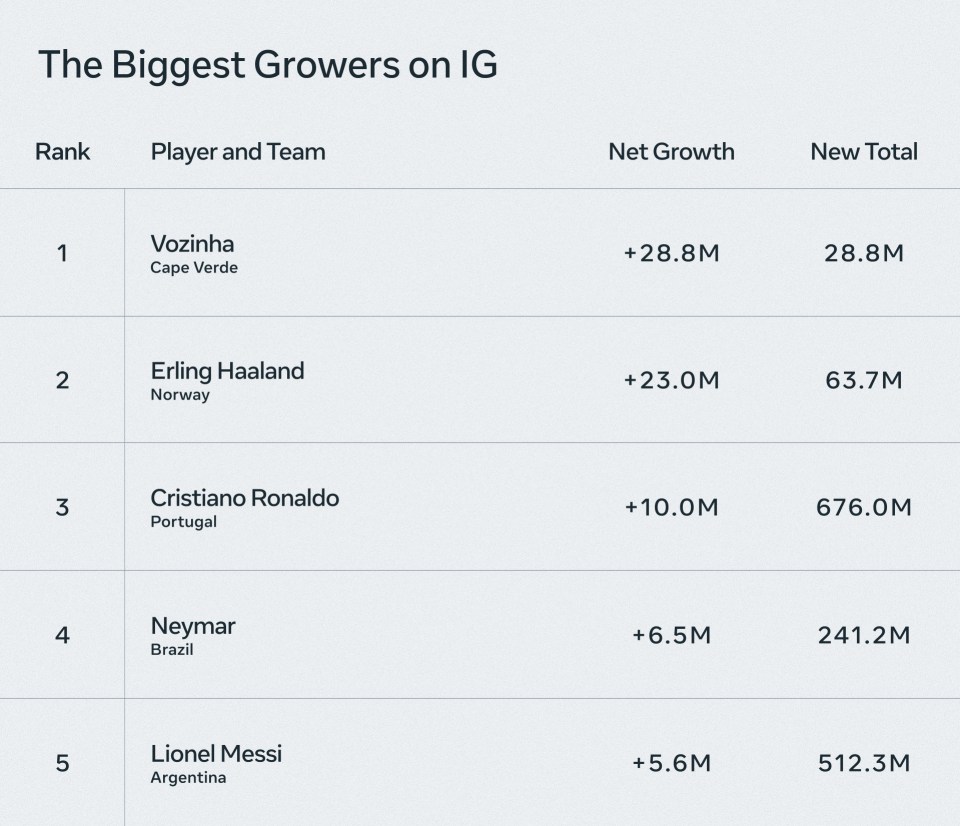
The data highlights a significant trend: the World Cup remains the single most powerful vehicle for an athlete to increase their global marketability. Established superstars continued to see growth, but the tournament also acted as a launchpad for previously niche players to achieve mainstream celebrity status. Cristiano Ronaldo, already the most-followed individual on the platform, defied expectations of saturation by adding another 10 million followers to reach a record-breaking total of 676 million. Similarly, Erling Haaland, representing a resurgent Norway, added 23 million new followers, nearly doubling his pre-tournament base and cementing his status as the face of the next generation of football icons.
The Vozinha Phenomenon: A Digital Cinderella Story
Perhaps the most remarkable story of the 2026 tournament was the meteoric rise of Cape Verde’s goalkeeper, Vozinha. In what Meta describes as an "almost incomprehensible" surge, Vozinha’s Instagram following grew from a modest 37,000 to over 28.8 million. This represents a growth rate of more than 77,000%, a figure rarely seen in the history of social media.
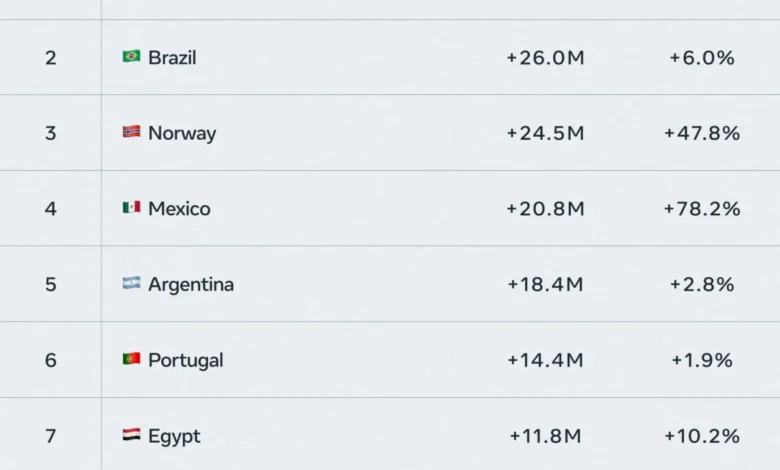
Vozinha’s rise was fueled by a series of electrifying performances that captured the imagination of the global football community. As a representative of a small island nation, his success became a viral sensation, propelled by Reels and shared clips of his acrobatic saves. This "Vozinha effect" had a halo effect on the entire Cape Verde squad, which led the country leaderboard with a net gain of 32.1 million followers—a 2,000% increase at the team level. This data illustrates how the 2026 format, which allowed more teams from smaller confederations to compete, directly translated into digital growth for emerging football markets.
Regional Growth and the Impact of Discovery Algorithms
The 2026 tournament also highlighted the effectiveness of Instagram’s "Your Algorithm" feature, particularly in the United States. This tool, which allows users to curate and control their interests across Home, Reels, and Explore feeds, played a critical role in surfacing tournament content to new audiences. In the U.S. market, five specific players dominated the algorithmic recommendations, reflecting a mix of domestic interest and global stardom.
In North America, the host nations saw significant spikes in engagement. Mexico, in particular, experienced a 78% surge in digital interest, driven by breakout stars such as Gilberto Mora, who gained 5.6 million followers, and Julian Quiñones, who added 2.6 million. This regional enthusiasm suggests that the tournament successfully leveraged the local passion of the host nations to drive platform-wide metrics. Similarly, Japan saw a 42% increase in following, led by rising talents like Keito Nakamura, indicating that the tournament’s reach was truly global, spanning from the Americas to Asia.
Threads and Facebook: The Evolution of Fandom
Meta’s newer platform, Threads, also emerged as a significant player in the sports landscape. During the tournament, posts tagged with World Cup-related keywords garnered 1.5 billion impressions. The community on Threads reached an average of 15 million people daily, with engagement peaking at 25 million on July 6, coinciding with the quarter-final matches. This suggests that Threads has become a preferred destination for long-form analysis, debate, and text-based commentary that complements the visual nature of Instagram.
On Facebook, the scale of the conversation remained immense. Since the opening whistle, users published over 80 million posts mentioning the tournament. Facebook continues to serve as the "town square" for football fandom, where older demographics and established fan clubs organize viewing parties, share historical context, and engage in the cultural traditions of the game.
Official Responses and Strategic Vision
Rob Pilgrim, Meta’s Global Football Lead, emphasized that the company’s goal for the summer was to position its suite of apps as the "cultural epicenter" of the sport. In an official statement, Pilgrim noted that while fans watch the live 90-minute matches on television, they turn to Meta’s platforms for everything else: the behind-the-scenes footage, the dressing room celebrations, coaching analysis, and the memes that define the tournament’s cultural legacy.
"Our apps were the home of everything outside the live game," Pilgrim stated. "The highlights, the behind-the-scenes, the dressing room celebrations, the coaching analysis, the Vozinha phenomenon. While fans watch the 90 minutes on TV, they come to our apps for everything around it—the community, the conversation, the clips and memes they love to share and debate."
Pilgrim also credited the success of the digital tournament to the collaboration with rights holders, teams, and creators who utilized Meta’s features to document their journeys. This partnership model allowed for a more intimate look at the tournament than traditional broadcasting could provide, offering fans a "player’s-eye view" of the world’s biggest sporting event.
Analysis of Implications for the Future of Sports Media
The data from the 2026 World Cup points to several long-term implications for the sports and technology industries. First, the record-breaking WhatsApp volumes suggest that the infrastructure of global communication must continue to evolve to handle the "spikes" created by live events. As more of the world comes online, the demand for instantaneous, reliable messaging during shared cultural moments will only grow.
Second, the "Vozinha phenomenon" proves that the path to global stardom has been decentralized. A player from a small nation can now bypass traditional media gatekeepers and build a massive, direct-to-consumer audience through viral performance and algorithmic discovery. This shift will likely influence how clubs scout talent and how sponsors evaluate the value of athlete endorsements, placing a higher premium on "digital footprint" alongside on-field performance.
Finally, the 2026 tournament confirms that the "Second Screen" is no longer secondary. For the younger demographic of fans, the digital interaction occurring on Instagram, Threads, and WhatsApp is as integral to the experience as the match itself. As Meta continues to integrate AI-driven discovery and immersive video features, the boundary between the physical stadium and the digital stadium will continue to blur, creating a 24/7 cycle of engagement that lasts long after the final trophy is lifted.
The 2026 World Cup has set a new standard for digital sports engagement, proving that when the world’s biggest game meets the world’s most connected platforms, the result is a global event of unprecedented scale and influence. As Meta looks toward future tournaments, the lessons learned from this summer of football will undoubtedly shape the next generation of social and interactive technologies.
Related posts: