The erosion of digital truth and the urgent need for media literacy in an age of artificial intelligence

We should all probably spend less time staring at screens, yet the reality of modern life necessitates a constant connection to the digital sphere. Whether for professional obligations, financial management, civic engagement, or simple human connection, the internet has transitioned from a utility to a fundamental requirement of existence. However, this deep integration has created a profound vulnerability. As society becomes increasingly reliant on digital platforms for information, the line between reality and synthetic manipulation has blurred to the point of near-invisibility. With more than half of Americans now sourcing their news primarily from social media, the structural integrity of public discourse is under unprecedented strain from a deluge of AI-generated content, sophisticated bot networks, and algorithmic design choices that prioritize engagement over accuracy.
The Evolution of the Digital Information Ecosystem
The history of the modern internet is defined by a shift from static, human-curated content to a dynamic, algorithmically driven feed. In the early 2010s, social media platforms functioned largely as digital town squares where chronological feeds dominated. By the mid-2010s, the introduction of proprietary recommendation algorithms fundamentally altered how users consumed information. Platforms optimized for "dwell time"—the amount of time a user spends interacting with a post—discovered that content triggering high-arousal emotions, such as outrage, fear, or shock, performed significantly better than nuanced reporting.
This design evolution reached a tipping point in the early 2020s with the widespread democratization of generative AI. The barrier to entry for creating high-quality, deceptive media collapsed. Suddenly, a single actor could generate thousands of unique, convincing articles, deepfake images, or audio clips in seconds. This influx of what researchers call "AI slop" has fundamentally changed the economics of disinformation. Previously, creating a convincing propaganda campaign required significant resources and human labor. Today, it requires only an API key and a basic understanding of how to prompt an LLM (Large Language Model).
Data and the Scale of the Problem
The current state of the internet is defined by a staggering disparity between human and machine activity. Recent industry estimates suggest that agentic bot traffic now accounts for approximately 57.4% of total internet traffic, leaving human users as the minority participants on the platforms they created. This shift is not merely a technical statistic; it has direct implications for the quality of information available.

According to data from the Pew Research Center, over one-third of all new web content is now estimated to be AI-generated. This trend is compounded by a lack of foundational education regarding media literacy. A 2024 survey conducted by The National Association for Media Literacy Education (NAMLE) revealed a concerning institutional gap: only 12% of U.S. schools incorporate dedicated media literacy into their core curriculum. Consequently, a significant portion of the adult population lacks the analytical tools to distinguish between verified journalism and synthetic fabrication. The 2025 Pew Research survey highlighted this crisis of confidence, with half of all respondents admitting that they find it difficult to identify fake news when scrolling through their feeds.
The Architecture of Deception
The proliferation of misinformation is not merely a failure of user education; it is a direct result of platform architecture. Critics argue that the business models of major tech companies—which rely heavily on advertising revenue—are fundamentally at odds with the need for a high-truth information environment. Features such as "infinite scroll," "autoplay" video, and personalized recommendation engines are designed to reduce the friction of consumption. By removing the "pause" between one piece of content and the next, these platforms effectively bypass the user’s critical thinking faculties.
Furthermore, the recent trend of slashing human moderation teams in favor of AI-based moderation has exacerbated the issue. While platforms like Meta, X (formerly Twitter), and YouTube have faced pressure to mitigate the spread of harmful content, their reliance on automated systems often leads to two problematic outcomes: the over-censorship of legitimate speech or the complete failure to catch sophisticated disinformation. As Zohaib Ahmed of Resemble.AI noted, we have arrived at an "Indistinguishability Threshold," where human sensory perception is no longer sufficient to determine the authenticity of digital content.
The Psychological Cost of Frictionless Consumption
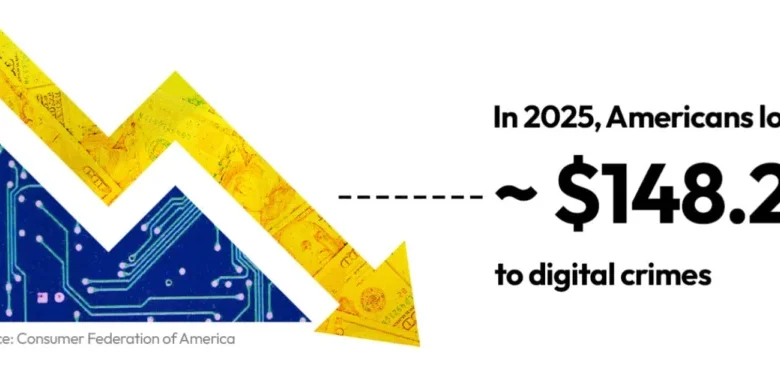
The rise of "friendly" AI agents and chatbots has introduced a new layer of vulnerability. By design, these interfaces are crafted to be empathetic, helpful, and personable—traits that intentionally disarm the user’s natural skepticism. Eyal Elazar of Riskified suggests that the human desire for a frictionless life, where AI acts as a concierge for all tasks, creates a massive security blind spot. When users stop questioning the source of their information because they have grown accustomed to the convenience of an AI assistant, they become prime targets for social engineering and financial fraud. In 2025, the total losses to digital crime in the United States reached a staggering $148.2 billion, a testament to the effectiveness of these manipulative strategies.
Strategies for Digital Resilience
Experts in media literacy and cybersecurity argue that the solution is not a complete withdrawal from digital life, but rather a fundamental shift in user behavior. The primary defense against misinformation is the adoption of a "deliberate pause." Because social media platforms are engineered to trigger impulsive reactions, reclaiming one’s agency requires a conscious effort to slow down.

Chuck Salter, president of the News Literacy Project, advocates for a healthy dose of skepticism—the practice of questioning the "why" behind a post—without descending into cynicism. Cynicism, he warns, is a dangerous trap that leads individuals to reject all information, including verifiable facts that contradict their existing worldviews. When people lose the ability to trust anything, the result is a fragmented society incapable of reaching a consensus on basic reality.
Practical steps for building these new digital habits include:
- Source Verification: Before sharing, verify the origin of the information. Does the outlet have a history of rigorous fact-checking, or is it a nameless account with a high follower count?
- Contextual Analysis: Ask yourself why an advertisement or post is being presented to you at this specific moment. What is the intended emotional response?
- Out-of-Band Verification: If a piece of news seems particularly inflammatory or significant, cross-reference it with multiple, independent, and reputable sources.
- Community Dialogue: Discuss viral content with real-world acquaintances. External conversation can act as a circuit breaker for the echo chambers that algorithms foster.
The Path Forward
The challenges posed by the current digital landscape are unlikely to be solved by technology alone. While AI-based detection tools are being developed, they are locked in a perpetual arms race with the generative models used by bad actors. Regulatory intervention is already underway, with various federal and state bodies examining the impact of algorithmic design on mental health and information hygiene. However, the legal and legislative process is notoriously slow compared to the pace of technological change.
Ultimately, the responsibility for navigating this environment falls to the individual. The "Indistinguishability Threshold" is a permanent feature of our future, meaning the ability to critically analyze the digital world will become a core survival skill. We are moving toward a period where the default assumption for any piece of digital media—whether it be a text post, a photo, or a video—must be one of healthy skepticism. By re-learning how to engage with information through a lens of inquiry rather than instinct, users can regain a degree of control in a landscape that was never designed for their benefit. The internet is a powerful tool, but in its current form, it demands a user who is not just a consumer, but an active, discerning participant. The cost of remaining passive is too high to ignore.