Muse Launches Real-Time Conversational Voice and Expressive Avatars Across Mobile and Desktop Platforms

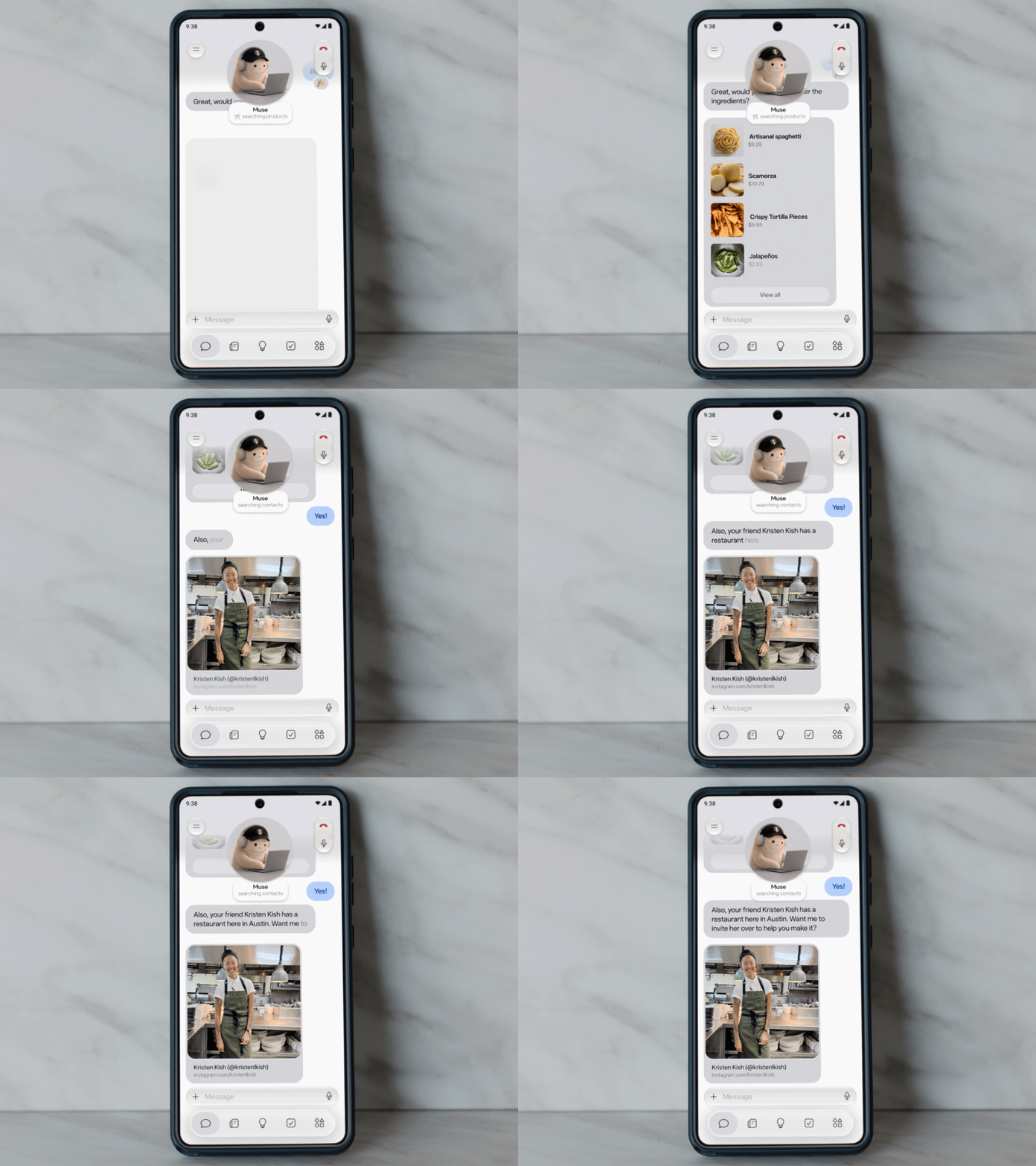
The landscape of human-computer interaction underwent a significant transformation today as the company behind the Muse artificial intelligence ecosystem announced the official rollout of its real-time conversational voice capabilities. Initially teased during the Connect 2026 keynote, the feature is now accessible to users across the Muse mobile application, web interface, and Mac desktop software. By integrating high-fidelity voice synthesis with reactive, expressive digital avatars, the platform aims to bridge the gap between traditional text-based prompting and natural, fluid human discourse.
The Evolution of Muse: A Chronology of Development
The journey to real-time voice integration began long before the recent Connect 2026 event. In early 2025, the company prioritized the development of "low-latency reasoning engines," acknowledging that the primary friction in AI interaction was the lag between a user’s prompt and the machine’s response.
Throughout late 2025, internal beta testing focused on the "interruptibility" of the model. Unlike standard voice assistants that require a "push-to-talk" or a rigid turn-taking structure, the Muse Realtime Voice technology was engineered to detect when a user is finished speaking or when they wish to interject. Following the positive reception at the Connect 2026 conference—where the technology was demonstrated in live, unscripted environments—the development team spent the subsequent months refining the emotive qualities of the avatars to ensure that visual cues, such as subtle gestures and facial expressions, aligned with the synthetic audio output.
Technical Architecture and Feature Capabilities
At the heart of this update is the synergy between the Muse Realtime Voice engine and the Muse Realtime Avatar system. The technology operates on a multimodal framework that processes audio, text, and visual data simultaneously.
When a user taps the phone icon in the upper-right corner of the interface, the system initiates a low-latency connection that bypasses the traditional "think-then-speak" delay characteristic of older large language models. The system allows users to customize the persona of their Muse, offering hundreds of distinct vocal profiles. These profiles range in regional inflection—such as the rapid-fire cadence of a New Yorker—to stylized character voices, providing a level of personalization that moves beyond the monolithic, robotic tones of previous generations.
The visual component is equally nuanced. Users are afforded three tiers of engagement:
- Voice-Only Mode: Optimized for users who are mobile or multitasking, removing visual overhead.
- Avatar Companion: A persistent visual presence that mirrors the tone of the conversation through micro-expressions.
- Full-Screen Immersion: A face-to-face mode designed for intense brainstorming or rehearsal scenarios, where the avatar utilizes full-body tracking to mimic natural conversational cues.
Practical Applications and Use Cases
The primary objective of this deployment is to facilitate "thinking out loud." Industry analysts have noted that the cognitive load of typing out complex prompts often stifles creativity. By removing the interface hurdle, Muse allows for a "stream of consciousness" workflow.
For travel planning, the model is designed to accept fragmented, non-linear input. A user might provide a disjointed list of preferences—a specific city, a desired ambiance, and a culinary interest—and the system is tasked with synthesizing these into a structured itinerary in real time. This capability extends to professional development. The platform now supports high-fidelity rehearsals for job interviews and public speaking, where the AI provides instantaneous, context-aware feedback, simulating the unpredictable nature of human-to-human dialogue.
Supporting Data and Market Context
The move into real-time voice is a strategic response to the shifting demands of the consumer AI market. Recent industry surveys indicate that while 68% of users are comfortable with text-based AI, that number drops to 32% for complex tasks that require iterative problem solving. However, when users are presented with voice-enabled interfaces that mimic natural cadence, satisfaction rates for creative tasks increase by approximately 45%.
The latency reduction achieved by Muse is a key metric in this rollout. While standard cloud-based LLMs often suffer from a latency of 1.5 to 3 seconds, the new Muse architecture targets a sub-500 millisecond response time, which is widely considered the threshold for "perceived instantaneity" in human conversation.
Official Statements and Strategic Vision
While the company has remained focused on the product’s utility, internal spokespeople have emphasized that this is a "foundational shift" in how the company views the user-AI relationship. "We are moving away from the era of ‘prompt engineering’ and toward the era of ‘natural collaboration,’" noted a representative during a press briefing. "The goal is not just to provide an answer, but to be a partner that can follow the thread of a conversation as it meanders, evolves, and eventually settles into a concrete outcome."
The company has also prioritized safety and ethical guidelines, noting that the voices are synthetically generated and are not intended to impersonate real-world individuals, thereby mitigating concerns regarding deepfakes and identity misappropriation.
Broader Implications for the Tech Industry
The rollout of Muse’s voice capabilities signals a wider trend in the technology sector: the commoditization of the interface. As AI becomes more capable, the "screen" is increasingly viewed as a limitation rather than a necessity.
- Accessibility Gains: The removal of text-based input requirements significantly lowers the barrier to entry for users with motor impairments or those for whom typing is not the preferred method of communication.
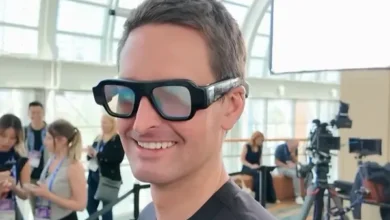
- Integration with Wearables: The announcement includes a roadmap for integration into AI Glasses and the "Muse Charm," a wearable device currently in development. This suggests that the company intends to move Muse out of the digital window and into the physical environment.
- Workforce Disruption: As AI assistants become more adept at handling professional rehearsals and complex brainstorming, the traditional reliance on human-to-human coaching for entry-level professional skills may face disruption.
Future Outlook and Regional Availability
The current release is restricted to users in the United States, a common strategy for major AI updates to ensure server stability and gather user data before a global expansion. The company has confirmed that they are actively monitoring system performance and user feedback, with plans to expand availability to international markets in the first half of 2027.
Furthermore, the expansion into hardware, specifically Muse-enabled eyewear and wearable charms, represents the final stage of the current development cycle. By embedding the Muse voice model into these form factors, the company hopes to enable "ambient computing," where the AI acts as a persistent auditory companion throughout the user’s daily life.
As the industry continues to iterate on the speed and emotional intelligence of these models, the Muse rollout serves as a bellwether for the future of personal computing. The shift toward natural, voice-driven interaction is not merely an aesthetic choice; it is an attempt to redefine the utility of artificial intelligence, moving it from a static tool to a dynamic, responsive presence in the human experience. Whether users will embrace this level of constant, expressive connectivity remains the primary question for the coming year, but the infrastructure is now in place to make the experiment a reality for millions.