Meta One: Meta Launches Comprehensive Subscription Service to Enhance User Experience and Creator Productivity

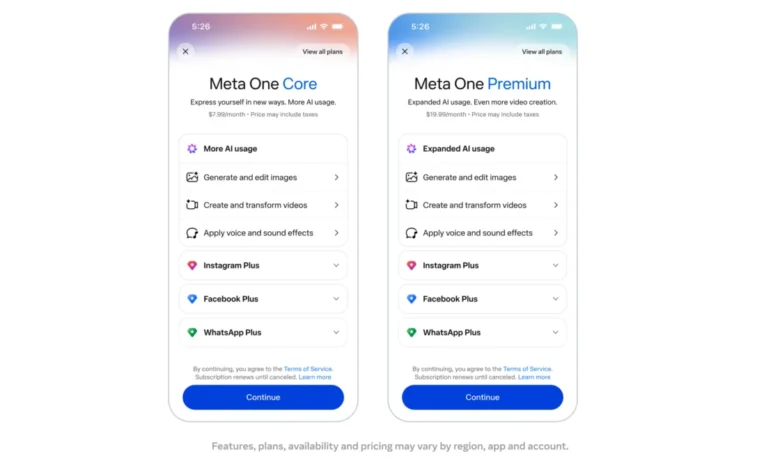
Meta has officially unveiled Meta One, a new tiered subscription service designed to provide advanced functionalities and AI-driven capabilities across its ecosystem of platforms, including Instagram, Facebook, and WhatsApp. This strategic rollout represents a significant shift in Meta’s business model, moving toward a hybrid framework that balances its traditional free-to-use services with a suite of premium, high-performance features. The move marks an attempt to unlock additional value for billions of users while providing specialized tools for professional creators and businesses seeking to optimize their digital presence.
The core experience of Meta’s platforms, including the standard version of Meta AI, remains free of charge. Meta One is positioned as a layer of "power-user" functionality, offering access to high-compute AI models, deeper data analytics, and enhanced personalization options that go beyond the requirements of the average casual user.
A Chronology of Meta’s Subscription Strategy
The introduction of Meta One follows a deliberate, multi-year evolution of the company’s monetization strategy. Historically, Meta relied almost exclusively on digital advertising revenue. However, the shifting regulatory landscape, privacy-focused changes in mobile operating systems, and the explosive rise of generative AI have forced the company to diversify its revenue streams.
The foundation for this rollout was laid earlier this year with the introduction of individual product subscriptions: Instagram Plus, Facebook Plus, and WhatsApp Plus. These services provided early testing grounds for user interest in premium features. Instagram Plus introduced custom fonts and exclusive Story notifications, while Facebook Plus offered enhanced Messenger customization and deeper insights into content performance.
Following the successful retention metrics observed in these initial pilots, Meta decided to integrate these individual offerings into a unified subscription architecture. By grouping these services, Meta aims to create a more cohesive ecosystem where users can transition seamlessly between platforms while maintaining a consistent set of premium benefits.
Strategic Tiers and Feature Sets
Meta One is structured into three primary tiers, catering to distinct user segments: individual users, AI power users, and professional entities.
For individual consumers, the "Core" and "Premium" bundles serve as the centerpiece. These packages integrate the specialized features of the individual apps with significantly expanded access to Meta’s generative AI capabilities. Specifically, subscribers gain access to high-compute power for the Muse family of models. This enables advanced content creation, such as high-fidelity image editing and video generation, which requires infrastructure beyond the capacity of free-tier services.
For creators and businesses, the offering is fundamentally different. It focuses on efficiency and conversion. The professional tier includes the integration of the Meta Business Agent, which provides round-the-clock automated customer engagement. Furthermore, these users gain access to enhanced profile tools that allow for better link management and automated lead generation, such as auto-invites for users who interact with specific Reels or posts.
A forthcoming addition to the platform is Edits Plus, which will provide cloud-based project synchronization and an AI-driven assistant designed to analyze engagement metrics and suggest content strategies, directly tackling the challenge of "creator burnout."
Supporting Data and Market Context
The move toward subscription-based models in the social media sector is part of a broader industry trend. Following the successful, albeit turbulent, monetization shifts at competitors like X (formerly Twitter) and the growth of premium tiers at platforms like LinkedIn and Snapchat, Meta’s entry into this space suggests that the market for "pro" social media experiences has reached a tipping point.
Internal data from Meta’s pilot phases indicated that over 50% of subscribers to the bundled tiers actively utilized both the AI-generation tools and the expression-based features simultaneously. Features such as "Restyle," which allows for stylistic transformations of visual content via AI, emerged as a primary driver for user acquisition. This suggests that the demand is not merely for "ad-free" experiences—which have been the focus of earlier privacy-driven subscriptions—but for utility-driven tools that reduce the time required to produce high-quality media.
Economically, the pricing strategy—ranging from €2.49 for individual products to €16.99 for professional suites—is designed to be accessible to a wide demographic while establishing a predictable recurring revenue stream that is less sensitive to the cyclical nature of the advertising market.
Implications for the Digital Ecosystem
The launch of Meta One carries profound implications for the digital economy. By embedding high-level AI tools and business intelligence directly into the platforms where users already congregate, Meta is effectively lowering the barrier to entry for digital entrepreneurship. Small business owners no longer need to navigate third-party CRM software or complex editing suites; instead, they can manage their entire sales funnel from within the familiar interface of their Meta apps.
However, the shift also raises questions regarding the "digital divide" within social platforms. As Meta reserves more advanced AI capabilities for paid tiers, critics may argue that the quality gap between professional content and casual content will widen, potentially altering the organic discoverability of content. Meta has countered this by maintaining that the core social experience—connecting with friends and family—remains free and central to the platform’s mission.
Furthermore, the integration of AI-driven business agents suggests that the future of customer service is shifting toward automated, always-on conversational interfaces. As businesses adopt these tools, the speed of commerce on platforms like WhatsApp and Facebook is expected to accelerate, potentially transforming these apps from social networks into comprehensive digital storefronts.
Future Outlook
The rollout of Meta One is not a final product, but rather an evolving platform. According to company roadmaps, the service is expected to expand into hardware integration, specifically for smart glasses and other AI-wearables, in the coming months. The goal is to create a frictionless experience where the subscription follows the user across devices, whether they are on a desktop, a mobile phone, or using augmented reality hardware.
For investors and industry analysts, the success of Meta One will be measured by its ability to convert casual users into long-term subscribers without alienating the massive free-tier base that provides the platform with its network effects. If the adoption rates of the pilot programs hold steady as the service scales globally, Meta One could become a cornerstone of the company’s financial strategy for the next decade.
In conclusion, the launch of Meta One marks a definitive pivot for Meta. By moving beyond the ad-supported model to offer a value-added service layer, the company is betting that users—both individual and professional—are ready to pay for tools that enhance their creativity, productivity, and organizational capacity. As the platform prepares to integrate more sophisticated AI assistants and hardware-linked features, the digital landscape is poised for a significant transformation in how we interact with, and conduct business through, social media.
Related posts: