NASA Launches Artifact InSPECtor to Engage Citizen Scientists in the Hunt for Dark Energy

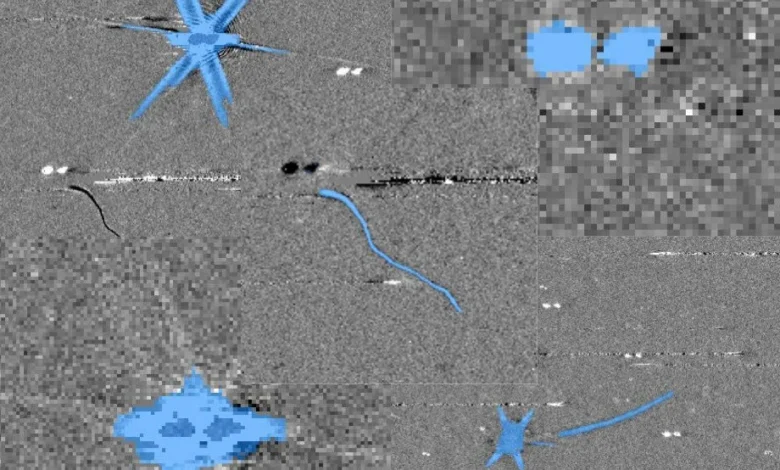
The quest to map the expansion of the universe and decipher the nature of dark energy requires unprecedented precision in astronomical observation. As NASA and the European Space Agency (ESA) deploy advanced observatories like the Euclid space telescope and prepare for the upcoming launch of the Nancy Grace Roman Space Telescope, the sheer volume of incoming data presents a significant logistical challenge: distinguishing between genuine cosmic signals and observational noise. To address this, NASA has introduced Artifact InSPECtor, a new citizen science initiative designed to enlist the public in training artificial intelligence (AI) systems to purge "artifacts"—spurious signals that threaten to corrupt scientific findings.
The Challenge of Cosmic Signal Processing
Modern space telescopes do not merely capture photographs; they function as sophisticated analytical laboratories. Both Euclid and the Roman Space Telescope utilize high-precision spectrographs, instruments that act as optical prisms to decompose incoming light into detailed spectral signatures. By analyzing these "rainbows," astrophysicists can determine the chemical composition of galaxies, the velocity at which they are receding, and the influence of supermassive black holes.
However, the data transmitted from these deep-space assets are frequently compromised by artifacts. These are unintended signals that appear in the data stream, originating from internal hardware quirks, cosmic ray strikes on sensitive detectors, or light scattering within the telescope housing. Much like a digital photograph marred by a lens flare or a speck of dust, these artifacts can mimic the light signature of a distant galaxy, leading to erroneous measurements if left unaddressed.
The Role of Artificial Intelligence and Human Oversight
Astronomers have turned to machine learning to automate the identification and removal of these artifacts. By training neural networks to recognize common error patterns, researchers hope to process petabytes of data with minimal manual intervention. Yet, AI systems are only as effective as the datasets they are trained upon. When dealing with brand-new instruments like Euclid’s Near-Infrared Spectrometer and Photometer (NISP), the AI often struggles to differentiate between a novel astronomical discovery and an instrumental anomaly.
Artifact InSPECtor serves as a bridge in this process. By recruiting volunteers to review real-world telescope data, the project generates a "gold standard" training set of labeled images. These human-validated inputs teach the AI how to refine its detection algorithms. Nine-year-old participant Maeve F., among the project’s early testers, noted the collaborative nature of the initiative, emphasizing that the human element remains essential even in the age of automated data processing.
A Chronology of Collaborative Exploration
The trajectory of this project is tied to the current and future operational timelines of NASA’s flagship cosmology missions.
- July 2023: The ESA-led Euclid mission launched from Cape Canaveral, designed to survey the "dark universe" by mapping the geometry of the cosmic web.
- 2024: NASA officially integrated Euclid data into its broader astrophysical research framework, necessitating robust data-cleaning pipelines.
- Late 2024: The launch of the Artifact InSPECtor project as part of NASA’s broader citizen science portfolio, inviting global participation.
- Early 2027 (Projected): The launch of the Nancy Grace Roman Space Telescope. Roman will provide a complementary wide-field view of the sky, offering deeper sensitivity than Euclid and requiring even more sophisticated artifact-removal protocols.
The Science of Dark Energy and Cosmic Expansion
The stakes for this data cleaning are high. Current cosmological models suggest that approximately 68% of the universe is composed of dark energy—a mysterious force that is accelerating the expansion of the cosmos. Another 27% is dark matter, which exerts gravitational influence but remains invisible to traditional sensors.
Euclid and the Roman Space Telescope are the first instruments with the capacity to map the distribution of galaxies across cosmic time with sufficient resolution to track the "equation of state" of dark energy. If the data is "noisy" due to artifacts, the precision of these measurements decreases, potentially obscuring breakthroughs in fundamental physics. By improving the efficiency of the AI, the Artifact InSPECtor project directly facilitates a higher signal-to-noise ratio in the mission’s final catalogs, effectively increasing the scientific yield of billions of dollars in aerospace investment.
Analytical Implications for Future Astronomy
The methodology behind Artifact InSPECtor reflects a growing trend in big-data science: "Human-in-the-loop" computing. As telescopes become more sensitive, the volume of data grows exponentially, outpacing the ability of small research teams to review every frame. Projects like this demonstrate that public engagement is not merely an outreach tool, but a functional necessity for the success of complex space missions.
Furthermore, the project highlights the importance of open-science principles. By allowing the public to interact with raw data streams, NASA is fostering transparency in how scientific conclusions are reached. The democratization of data analysis allows researchers to leverage the pattern-recognition capabilities of the human brain, which, when properly guided, often outperforms narrow AI in identifying irregular or non-repetitive artifacts.
How to Participate
The Artifact InSPECtor interface is designed to be accessible across multiple platforms, including tablets, smartphones, and desktop computers. Volunteers are provided with training materials that explain how to identify the tell-tale signs of cosmic ray strikes versus the distinct signatures of light spectra from distant galaxies.
As the program moves toward the 2027 integration of the Roman Space Telescope, the volume of incoming data is expected to increase significantly. The contributions of citizen scientists will serve as the primary mechanism for scaling up the AI’s accuracy. Interested individuals can access the project portal at https://go.nasa.gov/3Uyrguy to begin the orientation process.
Conclusion
The endeavor to map the history of our universe is an iterative process that relies on the synergy between state-of-the-art engineering and human intuition. Through the Artifact InSPECtor project, NASA is not only refining its technical capabilities but is also fostering a global community of contributors. As the Euclid and Roman missions continue to peer into the farthest reaches of space, the work performed by volunteers will remain a critical, often overlooked component in the chain of discovery that leads to a deeper understanding of the dark forces shaping our reality. Whether helping to verify the redshift of a galaxy or identifying a glint of stray light, every participant is contributing to a more accurate portrait of the cosmos.