UK Online Safety Act Progress Report Reveals Rapid Expansion of Age Verification Systems Amid Persistent Regulatory Challenges

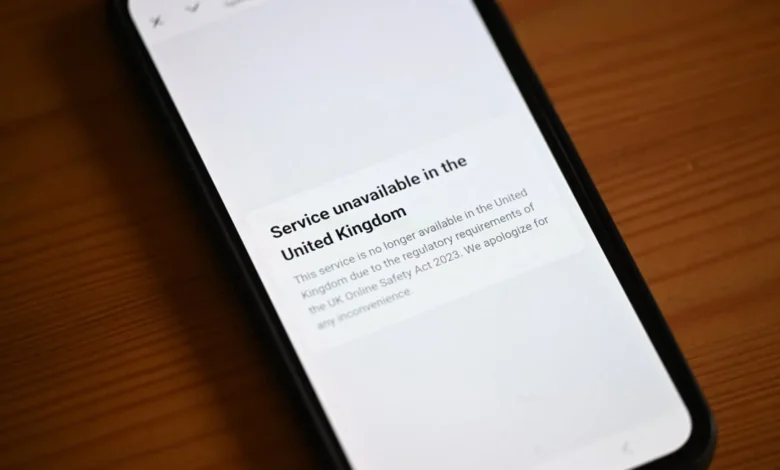
The United Kingdom’s communications regulator, Ofcom, has published a comprehensive progress report nearly one year after the landmark Online Safety Act (OSA) moved into its active enforcement phase, detailing a monumental shift in how digital platforms manage access to age-restricted content. The report highlights that age assurance technologies are now being deployed at an "unprecedented scale" across the British digital landscape, signaling a fundamental change in the relationship between minors and potentially harmful online environments. According to the data, the proportion of children encountering "highly effective" age checks when prompted rose from 25 percent in July 2025 to 43 percent by January 2026, marking a significant milestone in the government’s effort to shield younger users from adult-oriented material.
The Online Safety Act, which received Royal Assent in late 2023 and saw its primary age-verification mandates take effect in mid-2025, represents one of the most ambitious attempts globally to regulate the internet. It requires robust age checks for any site hosting content "restricted to adults." While the primary focus has historically been on the commercial pornography industry, the scope of the law is notably broad, encompassing non-explicit but age-sensitive content, such as specific subreddits dedicated to smoking cessation or online forums discussing high-stakes gambling and extreme fitness.
Statistical Overview of Implementation and Compliance
Ofcom’s latest findings suggest that the industry is moving toward compliance, albeit at varying speeds. Between July and December of the previous year, the regulator recorded 69 million completed age checks across a sample of 32 major digital services. This figure represents a staggering 23-fold increase compared to the preceding six-month period, illustrating the rapid adoption of verification tools as platforms scramble to avoid significant financial penalties. Under the Online Safety Act, non-compliant companies can face fines of up to £18 million or 10 percent of their global annual turnover, whichever is higher.
The report also sheds light on the browsing habits of minors through Ofcom’s "Children’s Passive Online Monitoring" study. The research found that 8 percent of children aged 8 to 14 participated in visits to pornographic providers. However, the implementation of age gates appears to be having a tangible deterrent effect. Half of these children only reached sites where age checks were active, preventing further access. Furthermore, the duration of these encounters suggests that many minors are being blocked almost immediately; 87 percent of visits to such sites lasted less than 30 seconds, while 65 percent were terminated in under 10 seconds.
In terms of industry-wide compliance, Ofcom reported that all of the UK’s top 10 most-visited pornographic websites have now installed age assurance mechanisms. Looking at the top 100 most popular adult sites, 64 have implemented the required checks, while 10 have opted to "geo-block" UK users entirely rather than comply with the technological requirements of the law. Despite this progress, the regulator noted that a significant number of smaller or less prominent sites remain in breach of the law, prompting the opening of 23 formal investigations into providers overseeing 88 distinct adult services.
Chronology of the Online Safety Act and Future Milestones
The journey toward the current regulatory environment has been marked by several key phases:
- Late 2023: The Online Safety Act is passed by Parliament, establishing Ofcom as the primary regulator with new powers to oversee social media companies and search engines.
- Early 2024 to Mid-2025: Ofcom conducts a series of consultations with technology firms, privacy advocates, and child protection groups to define what constitutes "highly effective" age assurance.
- July 2025: The statutory requirements for age verification on adult sites officially go into effect, leading to the first massive wave of implementation.
- January 2026: Ofcom completes its first major review of the law’s impact, revealing the 23-fold increase in verification events.
- October 2026 (Upcoming): Ofcom is scheduled to deliver a formal assessment to Parliament defining the specific technical standards for "highly effective age checks" required to verify users over the age of 16.
- January 2027 (Upcoming): A specialized report on app-store-level age verification is due, which could shift the burden of proof from individual websites to platform providers like Apple and Google.
Vulnerabilities in Search Discovery and Social Media
While the direct implementation of age gates on websites is improving, Ofcom identified a critical "discoverability" gap involving major search engines. The report found that a significant number of children are still encountering adult content through search results that bypass initial filters. Specifically, 33 percent of the results on the first page of Google Search for certain adult-themed queries led to pornographic sites that lacked age checks or geo-blocking. For Microsoft’s Bing, the figure was even higher, at 54 percent.
Although the Online Safety Act does not explicitly mandate that search engines use age assurance to prevent minors from seeing these results, Ofcom stated that both Google and Bing are currently collaborating with the regulator to address the visibility of non-compliant sites. This highlights a broader challenge in digital regulation: as one avenue for harmful content is closed, users—particularly tech-savvy minors—often migrate to less regulated entry points.
Furthermore, the report highlighted concerns regarding the efficacy of age checks on social media and dating platforms. In December 2025, data showed that over 10 percent of 15 to 17-year-olds successfully accessed three popular dating apps, despite those apps having age-gating mechanisms in place. This has led Ofcom to issue a stern warning to social media companies regarding their methodology.
The Shift Away from Age Inference Models
One of the most significant technical takeaways from the Ofcom report is the regulator’s pivot away from "age inference" methods. Age inference typically uses artificial intelligence to estimate a user’s age based on their online behavior, interests, or interaction patterns. While less intrusive than other methods, Ofcom has deemed these models insufficiently accurate for high-risk compliance.
In a press statement, Ofcom urged social media companies to abandon inference models in favor of more robust methods listed in their official guidance. These include document-based verification (scanning a passport or driver’s license), facial age estimation technology (which analyzes facial features to estimate age without identifying the individual), and credit card or bank-based verification.
The regulator’s stance is that for child protection duties to be fulfilled, the margin of error inherent in behavioral inference is unacceptable. This policy shift is expected to cause friction with privacy advocates who argue that "hard" verification methods—such as uploading government IDs—create centralized databases of sensitive information that could be vulnerable to data breaches.
Broader Implications: Social Media Bans and Curfews
The findings in the Ofcom report arrive at a time when the UK government is moving toward even stricter digital controls. Plans are currently being finalized to implement a total ban on social media for children under the age of 16. This proposed ban would utilize the same age-assurance framework established by the Online Safety Act.
The effectiveness of such a ban remains a subject of intense debate. Critics often point to a recent study from Australia, which suggested that social media bans are frequently ineffective because younger users find workarounds or because the age estimation tools used are too easily bypassed. To address these concerns, the UK government has also announced a proposed "social media curfew" for teenagers aged 16 and 17, aimed at reducing late-night screen time and mitigating the mental health impacts of social media use.
Analysis of Global Regulatory Impact
The UK’s aggressive stance on age verification is being watched closely by regulators in the United States, the European Union, and Australia. By forcing the hand of major pornographic providers and social media giants, the UK is effectively setting a "Gold Standard" for digital age gating that may eventually become a global default.
However, the report also underscores the "cat and mouse" nature of internet regulation. The fact that 10 of the top 100 porn sites chose to geo-block the UK suggests that some providers would rather lose a market than comply with stringent data and verification laws. For the UK government, this is viewed as a success—removing harmful content from the reach of British citizens. For digital rights advocates, it raises questions about the fragmentation of the "splinternet," where access to information is dictated by increasingly complex national borders.
As Ofcom moves toward its 2027 goals, the focus will likely shift from whether age checks exist to how accurate they are. The forthcoming report on app-store-level verification could be the most disruptive yet, as it may require companies like Apple and Google to take legal responsibility for the age-appropriateness of every application downloaded on their devices.
In conclusion, while the first year of the Online Safety Act has seen a massive logistical and technological mobilization, Ofcom’s report makes it clear that the work is far from finished. The transition from 25 percent to 43 percent effectiveness is a significant upward trend, but it also leaves a majority of children still potentially exposed to ineffective checks. The next 24 months will be critical in determining whether the UK can close the gaps in search discovery and social media access, or if the digital world remains too fluid for traditional statutory enforcement.
Related posts: