Meta Announces Petal: The World’s First Petabit-Capacity Subsea Cable Connecting the United States and France

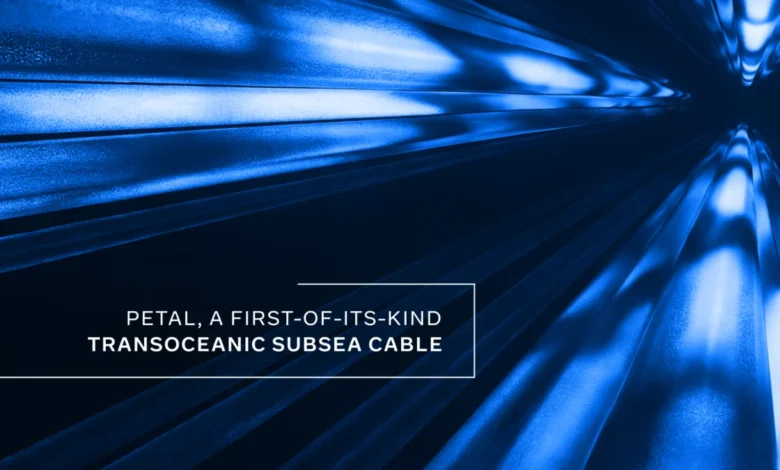
In a landmark development for global telecommunications, Meta has unveiled plans for "Petal," the first transoceanic subsea cable system designed to achieve a staggering one-petabit-per-second (Pbps) transmission capacity. Spanning approximately 7,000 kilometers across the Atlantic Ocean, the project marks a paradigm shift in data infrastructure, effectively doubling the capacity of the most advanced cables currently in operation. This initiative represents the most significant generational leap in transoceanic cable technology in history, promising to fortify the digital backbone that sustains the modern global economy.
The Anatomy of a Digital Superhighway
Subsea cables function as the invisible circulatory system of the modern world. Despite the rise of satellite-based internet constellations, these submerged fibers carry roughly 99% of all intercontinental digital traffic. From real-time financial transactions and international cloud computing synchronization to personal messaging and video streaming, the integrity of the global internet rests upon these physical conduits.
The Petal project, currently scheduled for service in 2029, is not merely an incremental improvement; it is a fundamental redesign of how data is transmitted across vast distances. Traditional subsea cables rely on standard single-core fiber optics, which have faced physical limits regarding how much light—and therefore data—can be transmitted through a single strand. Petal bypasses these limitations by employing advanced multi-core fiber technology. By integrating multiple cores into a single fiber strand, engineers have created a system that can handle massive data throughput without requiring a proportional increase in physical footprint or power consumption.
A Chronology of Subsea Innovation
The history of subsea connectivity has evolved from the telegraph cables of the 19th century to the high-capacity optical fiber networks of today. In recent years, the acceleration of digital demand—driven by the proliferation of artificial intelligence, high-definition streaming, and cloud services—has forced a rapid evolution in cable design.
- 1858: The first transatlantic telegraph cable is completed, reducing communication time between Europe and North America from weeks to minutes.
- 1988: The first transatlantic fiber-optic cable, TAT-8, is laid, providing a massive upgrade over copper predecessors.
- 2010s: The "Big Tech" era begins, with companies like Meta (then Facebook), Google, and Microsoft shifting from being mere tenants of cable capacity to becoming primary investors and owners of subsea infrastructure.
- 2025: Meta announces Project Waterworth, underscoring its long-term strategy to secure independent connectivity.
- 2029 (Projected): Petal enters service, becoming the first transoceanic cable to reach the petabit-per-second threshold.
Technical Breakthroughs and Efficiency Gains
The engineering behind Petal addresses one of the most pressing challenges in telecommunications: the "capacity crunch." As demand for bandwidth increases, service providers have historically responded by laying more cables. However, the costs associated with permitting, material production, and the environmental impact of deep-sea laying are substantial.
Petal changes this equation by increasing efficiency. By utilizing multi-core fiber, the system achieves a massive increase in throughput while maintaining a sustainable physical footprint. To put a petabit per second into perspective: this bandwidth is roughly equivalent to the amount of data required to allow 75% of the world’s current population to stream music simultaneously.
Meta has partnered with industry leaders to bring this vision to life. NEC, a global specialist in subsea systems, is providing the technical expertise for the cable’s deployment. Sumitomo Electric Industries is serving as the primary fiber producer, leveraging its research into high-density, low-loss fiber optics. Furthermore, French telecommunications incumbent Orange has been identified as a key partner for the landing station on France’s Atlantic coast, ensuring the cable integrates seamlessly into the European terrestrial network.
Official Perspectives and Industry Reactions
While Meta has not released direct quotes from individual executives, the company’s broader strategy, as articulated through its recent engineering disclosures, emphasizes a "commitment to connectivity." By investing in over 20 subsea projects, Meta has positioned itself as a critical architect of the global internet.
Industry analysts suggest that this investment serves a dual purpose: it secures the low-latency, high-bandwidth paths necessary for Meta’s own ecosystem of AI-driven products and social platforms, while simultaneously providing the necessary "lift" for the broader internet economy. By lowering the cost-per-bit, such infrastructure projects theoretically allow for more affordable data access in emerging markets and provide the resilience required to withstand localized outages or cyber-physical disruptions.
The Economic and Geopolitical Implications
The deployment of Petal carries significant weight in the context of international digital infrastructure. As nations increasingly view data sovereignty and connectivity as matters of national security, the ability to build and maintain ultra-high-capacity links becomes a strategic asset.
- Economic Resilience: High-capacity cables are the lifeblood of international trade. Faster, more reliable data movement between the U.S. and Europe reduces operational costs for multinational corporations and accelerates the delivery of cloud services.
- AI Acceleration: The current boom in generative AI requires the constant movement of massive datasets across the Atlantic for training and inference. Petal provides the necessary "pipe" to facilitate this data flow without creating bottlenecks.
- Environmental Sustainability: By doubling capacity without doubling the amount of physical material or the number of cables required, Meta is effectively lowering the carbon footprint associated with each bit of data transmitted. This is a critical factor for companies aiming to meet rigorous ESG (Environmental, Social, and Governance) targets.
Future-Proofing the Global Network
The decision to land Petal on the Atlantic coast of France underscores the importance of the U.S.-Europe corridor. This route remains one of the busiest and most critical data pathways in the world. As the internet continues to transition from a text-and-image-based platform to one dominated by video, augmented reality (AR), and immersive virtual environments, the requirements for bandwidth will only grow.
Petal represents a "future-proofing" strategy. By building to a petabit-per-second standard now, the consortium is creating a system that will not reach its capacity ceiling for many years, even as global data consumption continues to grow exponentially. This longevity is vital, as subsea cables are notoriously difficult and expensive to maintain once deployed at depths exceeding 4,000 meters.
Conclusion: A New Standard for Infrastructure
As we look toward the end of the decade, the Petal project stands as a benchmark for modern engineering. It serves as a reminder that the "cloud" is not a mystical, ethereal space, but a physical reality anchored to the ocean floor. The collaboration between Meta, NEC, Sumitomo, and Orange highlights the necessity of public-private partnerships in building the infrastructure of the future.
With the project currently in its development phase, the global telecommunications community will be watching closely as the engineering hurdles of multi-core, long-distance fiber deployment are overcome. If successful, Petal will not only connect two continents with unprecedented speed but will also establish a new standard for how the world designs its most critical information highways. For users, businesses, and governments alike, the promise of a petabit-class link offers a glimpse into a future where the limitations of distance are further diminished, creating a more interconnected and data-capable global society.
Related posts: