Meta Announces Petal the First Subsea Cable with Petabit Capacity to be Deployed Across an Ocean

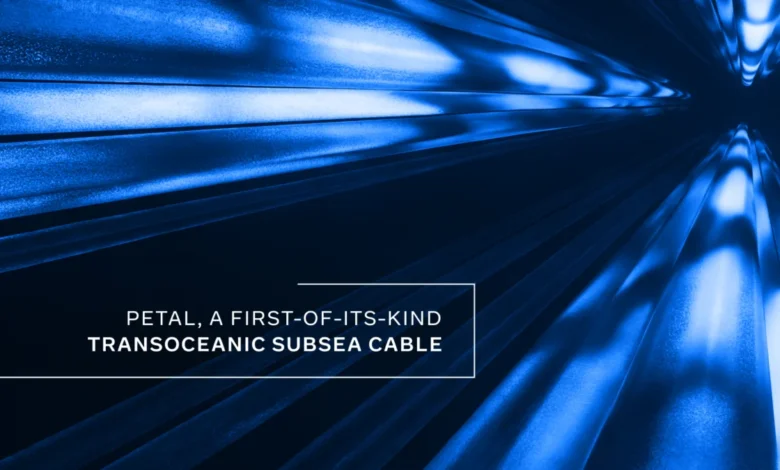
The landscape of global telecommunications is on the verge of a historic transformation as Meta formally announces Petal, the world’s first transoceanic subsea cable system capable of delivering petabit-level capacity. Spanning a massive 7,000-kilometer (approximately 4,350 miles) route between the United States and France, the project represents a paradigm shift in how data traverses the Atlantic. By doubling the throughput of the most advanced existing systems, Petal is set to become the highest-capacity subsea cable ever conceived, marking the single most significant generational leap in submarine infrastructure history.
The Anatomy of the Global Internet
To understand the gravity of the Petal project, one must first recognize the fundamental role of subsea cables in the modern economy. Contrary to the common perception of a "cloud-based" internet, approximately 99% of all intercontinental data traffic is transmitted via a complex, fragile web of fiber-optic cables resting on the ocean floor. From high-frequency financial trades and real-time cloud computing synchronization to personal messaging and global news dissemination, the physical integrity of these cables underpins the stability of the global internet.
As the digital economy matures, the appetite for bandwidth has surged exponentially. The rise of generative AI, high-definition video streaming, and massive cloud-based enterprise services has placed unprecedented strain on existing trans-Atlantic infrastructure. Petal is designed not merely as an incremental upgrade but as a foundational necessity to prevent bottlenecks that could stifle global digital growth over the next decade.
Pushing the Limits of Fiber-Optic Engineering
At the heart of the Petal project is a breakthrough in fiber technology. Historically, increasing capacity required a linear increase in physical hardware: more cables, more fibers, and more power-hungry repeaters. Petal breaks this cycle through the implementation of advanced multi-core fiber technology at transoceanic distances.
While current state-of-the-art cables operate in the terabit-per-second range, Petal is engineered to deliver a staggering 1 petabit per second—1,000 terabits. To put this capacity into perspective, it would theoretically support the concurrent streaming of music for 75% of the total human population. Crucially, the engineering team behind Petal has achieved this performance boost without requiring a proportional increase in physical footprint or energy consumption. By optimizing the transmission medium itself, Meta and its partners have successfully decoupled capacity growth from the traditional, resource-intensive scaling models that have governed the industry for decades.
A Strategic Alliance: The Partnership Ecosystem
The realization of a project of this magnitude requires a synergy of technical expertise and logistical infrastructure. Meta has structured a coalition of industry leaders to manage the complex deployment process. NEC, a global titan in subsea cable systems and engineering, has been tapped to provide the technical architecture. The specialized fiber optics—the "nervous system" of the cable—are being developed in collaboration with Sumitomo Electric Industries, a leader in material science and optical fiber production.
On the European front, Meta is partnering with the French telecommunications giant Orange. This collaboration is vital for the landing of the cable on the Atlantic coast of France, integrating the transoceanic line into the existing terrestrial European fiber backbone. This landing site serves as a crucial gateway, ensuring that the petabit-class capacity can be distributed effectively across the continent to data centers, internet exchanges, and enterprise hubs.
Chronology of Modern Connectivity
The history of trans-Atlantic communication has evolved from the copper telegraph lines of the 19th century to the high-speed laser-pulsing fiber of today. Meta’s involvement in this sector has been rapid and aggressive. Over the past several years, the company has transitioned from a software and social media provider to a significant stakeholder in global physical infrastructure.
- 2010s: Meta (then Facebook) begins early involvement in cable consortia to secure bandwidth for its growing platform needs.
- 2020-2024: An era of massive investment, including projects such as 2Africa, which encircles the African continent, and Project Waterworth, which has already established significant new corridors.
- 2025: The formal announcement of Petal, signaling a move toward "petabit-class" infrastructure.
- 2026-2028: The manufacturing and subsea laying phase, involving specialized vessels and deep-sea engineering teams to navigate the Atlantic floor.
- 2029 (Expected): The scheduled "in-service" date, where the cable will begin carrying commercial traffic between the US and France.
Economic and Societal Implications
The deployment of Petal carries significant macroeconomic implications. Infrastructure analysts note that the cost of international bandwidth is a primary driver for the pricing of digital services. By significantly lowering the cost per bit of data transported, Petal is expected to facilitate more affordable and higher-quality digital services for businesses and individuals alike.
Furthermore, this cable serves as a hedge against future demand surges. As industries shift toward decentralized AI processing, the need for low-latency, high-bandwidth connections between US-based model training clusters and European data centers will become a primary competitive advantage. The Petal cable acts as a strategic asset, ensuring that the transatlantic digital corridor remains robust against the unpredictability of future traffic growth.
Official Perspectives and Industry Reaction
While specific financial details of the investment remain private, the move is widely viewed by industry analysts as a defensive and offensive masterstroke. "Meta is essentially building the private highway for the next generation of the internet," noted one independent telecommunications consultant. "By controlling the underlying pipe, they are not only securing their own operations but also establishing a dominant position in the global data transit market."
The involvement of legacy providers like Orange suggests that the project is not a closed ecosystem but rather a collaborative effort to upgrade the shared global infrastructure. Officials from the participating companies have emphasized that the project is an investment in the "digital backbone," a term used to describe the essential, often invisible, layers of the internet that allow for the modern digital life to function.
Sustainability and Future-Proofing
A common criticism of massive infrastructure projects is their environmental and material impact. However, the design of Petal addresses these concerns through efficiency. By maximizing the amount of data transferred per unit of fiber, the project minimizes the amount of plastic, metal, and cabling required to achieve its throughput goals. The reduction in the number of repeaters—the power-intensive nodes that must be serviced underwater—also contributes to a lower long-term maintenance footprint.
As we look toward 2029, Petal serves as a blueprint for future cable systems. The industry is already watching the development of multi-core technology with high interest. If Petal proves successful in real-world conditions, it is likely that the standard for all future subsea installations will shift toward this higher-density, higher-efficiency model.
Conclusion: A New Standard
The announcement of Petal is more than a press release; it is a signal that the infrastructure of the internet is entering a new era. The transition to petabit-class connectivity represents the next frontier in the effort to link continents more effectively. As Meta and its partners move toward the 2029 activation date, the project will be closely monitored as a test case for whether global infrastructure can keep pace with the hyper-accelerated demands of the artificial intelligence age. By bridging the Atlantic with unprecedented capacity, Petal is set to redefine the limits of global connectivity, ensuring that the digital world remains as fluid and accessible as ever, regardless of the physical distances that separate us.
Related posts: