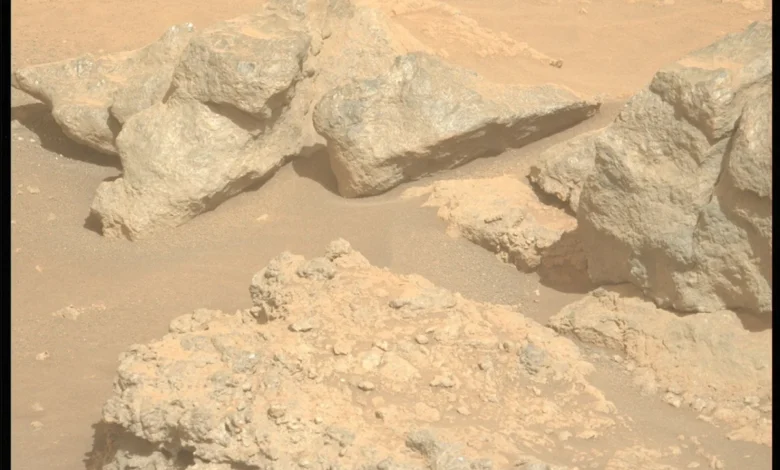
The Mars 2020 Perseverance rover continues its extensive exploration of the Jezero Crater region, recently documenting a significant geological contact point at an outcrop designated as "Tinga." This site, located near the southern periphery of the "Idubi" outcrop, serves as a focal point for understanding the complex volcanic and impact-related history of the Martian surface. By analyzing the juxtaposition of distinct rock units, mission scientists hope to decode the chronological sequence of events that shaped the landscape billions of years ago.
Geological Context of the Jezero Region
Jezero Crater, a 45-kilometer-wide impact basin, is widely considered one of the most promising sites for astrobiological investigation on Mars. Its geological record preserves evidence of an ancient delta system and a variety of igneous and sedimentary processes. The recent findings at Tinga add a layer of complexity to the region’s history, highlighting the interplay between massive impact events and subsequent volcanic activity.
The "Idubi" outcrop, which dominates the immediate vicinity of the Tinga target, is primarily composed of olivine-rich igneous rock. Olivine is a magnesium-iron silicate mineral that forms in cooling magma and is highly sensitive to weathering processes. Its presence in significant quantities suggests a history of volcanic emplacement or cooling from a large-scale impact melt sheet. The contact zone observed at Tinga provides a rare cross-sectional view of how these olivine-rich rocks interact with underlying geologic strata.
Chronology of the Tinga Investigation
The investigation of the Tinga site represents a culmination of months of meticulous maneuvering by the Perseverance rover team. Following the rover’s traverse across the crater floor and its detailed survey of the deltaic deposits, the mission transitioned toward the crater rim and beyond to investigate the broader regional geology.
- Early Mission Phase (2021-2023): Perseverance focused on the primary delta deposits, confirming that Jezero Crater once hosted a persistent lake system. The rover identified organic matter and varied mineralogy that pointed toward a potentially habitable environment in the ancient past.
- Transition to Crater Rim (2024-2025): As the rover moved toward the rim, mission planners identified the "Idubi" outcrop as a high-priority scientific target. The unique spectral signature of the olivine-bearing rocks prompted a multi-month detour to facilitate high-resolution imaging and spectroscopic analysis.
- The Tinga Discovery (October 2026): In mid-October 2026, the rover identified the distinct contact point between the breccia unit and the overlying dark, olivine-rich rocks. Preliminary data from the rover’s SuperCam and Mastcam-Z instruments suggested that this boundary represents a critical interface between two distinct geological epochs.
Analysis of the Breccia and Igneous Contact
The geological structure at Tinga is defined by a lowermost unit composed of polymict breccia. Breccias are rocks composed of angular clasts—broken fragments of older minerals or rock—cemented together in a fine-grained matrix. In the context of an impact basin like Jezero, such formations are typically the result of high-energy kinetic events that shatter the bedrock and reassemble the fragments.
Margaret Deahn, a Ph.D. candidate at Purdue University and a member of the mission team, has noted that the Tinga breccia likely reflects the violence of the original Jezero impact. However, the presence of the higher-standing, dark olivine-bearing rocks suggests a subsequent event. Scientists are currently debating two primary hypotheses:
- The Emplacement Hypothesis: The dark, olivine-rich rocks were deposited as a volcanic flow or a cooling melt sheet following the initial impact, essentially blanketing the brecciated landscape.
- The Metamorphic Hypothesis: The dark rocks were part of the pre-existing crust that underwent thermal alteration—or "baking"—due to the heat generated by the proximity of the Idubi igneous unit. In this scenario, the contact at Tinga represents a thermal boundary where the heat from the molten olivine-rich material reacted with the underlying impact-generated breccia.
Determining which of these scenarios is correct is essential for the mission’s broader goal of reconstructing the Martian timeline. If the olivine unit is a younger flow, it implies a long period of volcanic activity that persisted well after the basin was formed. If it is a result of thermal metamorphism, it provides evidence of the immense temperatures involved in the crater’s creation.
Supporting Data and Technical Observations
The Perseverance rover utilizes a sophisticated suite of instruments to conduct in situ analysis of these rock units. The SuperCam instrument, capable of analyzing chemical and mineralogical composition from a distance using laser-induced breakdown spectroscopy (LIBS), has been instrumental in characterizing the Tinga site.
Data from the mission indicates that the olivine-rich unit extends well beyond the rim of Jezero, suggesting that these rocks are part of a regional geologic formation rather than a localized anomaly. The contrast in density and elemental composition between the breccia and the overlaying dark rocks is stark, allowing the team to use the rover’s navigation cameras to map the contact zone with millimeter precision.
Furthermore, the integration of orbital data from the Mars Reconnaissance Orbiter (MRO) has allowed scientists to correlate the ground-level observations at Tinga with large-scale surface features. This multi-scale approach is vital for ensuring that the findings at Tinga are not misinterpreted as isolated incidents but are viewed as representative of the larger geological environment.
Official Perspectives and Scientific Impact
While the mission team continues to process data, the consensus within the planetary science community is that the Tinga site is of significant scientific value. NASA officials have highlighted the site as an example of why the rover’s extended mission is necessary. "Every time we encounter a feature like Tinga, we are forced to re-evaluate our models of Martian crustal evolution," stated one mission lead.
The study of Tinga also has implications for the ongoing Mars Sample Return (MSR) campaign. Understanding the relationship between these rock units helps mission planners select the most scientifically diverse samples for eventual return to Earth. By identifying rocks that have undergone specific thermal histories, the team can ensure that the samples chosen for return provide the most comprehensive picture of the planet’s history.
Broader Implications for Martian Geology
The discovery and analysis of the Tinga contact point underscores the importance of ground-based exploration. While orbital imaging can identify mineralogical diversity, only the in situ analysis provided by a rover can resolve the stratigraphic relationships between rock units. The "story" of Tinga is one of destruction and subsequent modification—a narrative that is essential for understanding how the red planet transitioned from a warm, water-rich environment to the arid world observed today.
As Perseverance moves further away from the delta and continues its traverse, the lessons learned at Tinga will inform the selection of future targets. The mission team remains focused on the "origin story" of Jezero, seeking to determine the exact sequence of events that enabled the crater to transition from a violent impact site to a potentially habitable lake, and finally, to the dry, rocky landscape that stands today.
Ongoing analysis of the spectroscopic data from Tinga is expected to be published in upcoming peer-reviewed journals, providing the scientific community with a clearer understanding of the igneous processes that shaped the Martian surface. For now, the rover continues its slow, methodical journey, capturing the geological diary of a planet that still holds many secrets beneath its dusty, wind-swept surface. The work at Tinga is not merely about identifying rocks; it is about reconstructing the history of a world that serves as the closest mirror to our own early Earth, offering insights into the fundamental processes that govern planetary evolution across the solar system.