Perseverance Rover Uncovers Complex Aqueous History Within Mars Jezero Crater Margin Unit

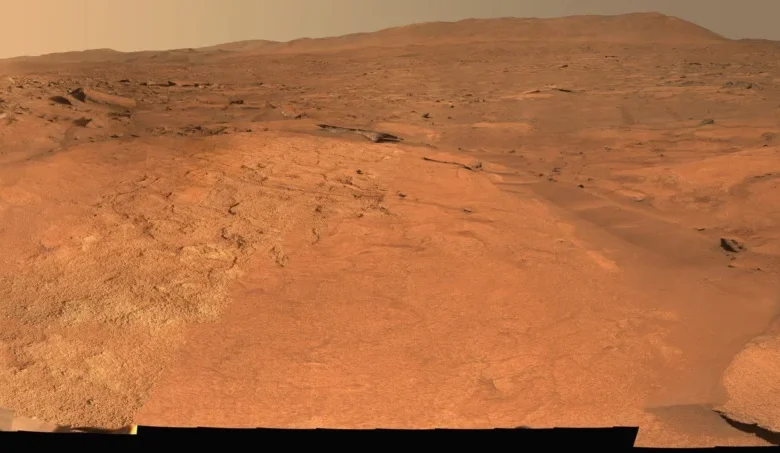
The search for ancient life on Mars has reached a pivotal turning point following the recent exploration of the Jezero Crater’s “Margin Unit” by NASA’s Perseverance rover. While mission planners initially hypothesized that the region would consist primarily of sedimentary sand deposits—prime candidates for preserving organic biosignatures—the actual findings have defied expectations. Instead, the rover encountered olivine-rich igneous bedrock, a discovery that has fundamentally altered the scientific understanding of the crater’s geological evolution and its capacity to have hosted life billions of years ago.
A Geological Surprise at the Shoreline
When Perseverance arrived at the Margin Unit in September 2023, the mission team expected to document layers of ancient lakebed sediments. Orbital imagery had long suggested that this region, which sits along the historic shoreline of a massive, long-extinct lake, would be composed of fine-grained deposits. However, data transmitted by the rover’s sophisticated SuperCam instrument revealed that the substrate is largely volcanic in origin.
Igneous rocks, particularly those rich in olivine, are formed through the cooling of magma or volcanic activity. Unlike sedimentary rocks, which accumulate layer by layer, these igneous formations offer a different, yet equally valuable, chronological record. The mineral crystals within these rocks act as time capsules, capturing the chemical conditions present at the moment of their solidification. Through the analysis of more than 185 distinct bedrock targets, researchers have determined that this igneous foundation was not a static feature but a dynamic participant in the crater’s complex environmental history.
Chronology of Alteration: Three Distinct Aqueous Events
The investigation, published in the journal Communications Earth & Environment, outlines a sequence of three distinct water-related alteration phases that transformed the Margin Unit. This discovery provides a detailed window into the volatile nature of early Martian environments.
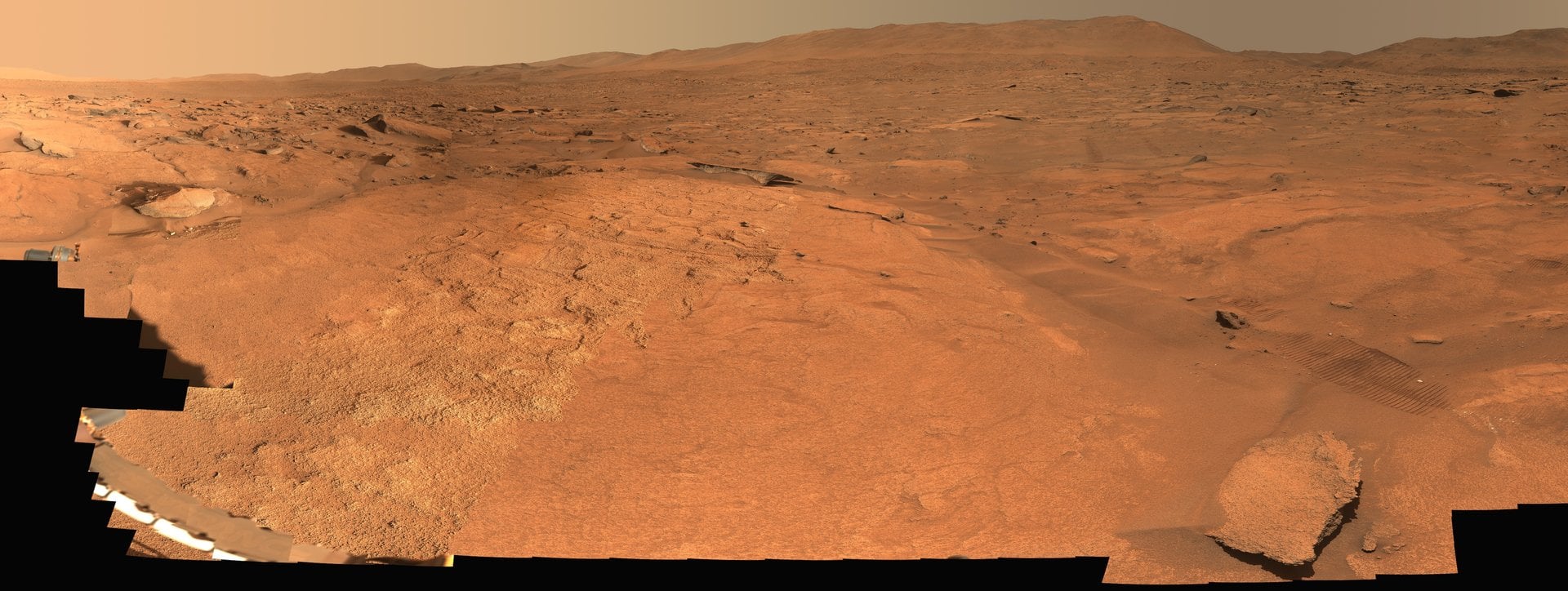
- The Groundwater Phase: In the earliest identified period, neutral to CO2-rich groundwater circulated through the igneous bedrock. As this fluid moved through fractures in the rock, it chemically reacted with the olivine, resulting in the formation of carbonate ridges. Over geological time, the surrounding softer rock eroded away, leaving these durable carbonate structures as prominent, exposed features at lower elevations.
- The Lacustrine Interaction: The second phase involved direct contact with the paleolake that once filled Jezero Crater. During this period, the rocks underwent physical reworking. Perseverance observed fractured olivine grains surrounded by silica, a mineral signature that typically results from prolonged exposure to liquid water. The higher concentration of silica in rocks located below the ancient water line confirms that the crater’s inundation played a central role in the chemical modification of the site.
- The Hydrothermal Event: The final stage of activity suggests a period of significant thermal flux. The rover identified mineral veins containing calcium-sulfate and fluorite, reaching thicknesses of approximately 25 centimeters. Because fluorite generally requires high-temperature hydrothermal circulation to form, its presence indicates that the region was subjected to localized volcanic or geothermal heating long after the initial cooling of the bedrock.
Data-Driven Insights and Mineralogical Analysis
The precision of the Perseverance mission is made possible by the SuperCam, which utilizes laser-induced breakdown spectroscopy (LIBS) and remote Raman spectroscopy to analyze the elemental composition of Martian rocks from a distance. By measuring the reflected light from these targets, scientists can identify specific mineral signatures without requiring physical samples to be collected immediately.
The disparity in rock composition between high and low elevations provided the researchers with a control group of sorts. At elevations near 2,350 meters (7,700 feet), the rock remained largely pristine, exhibiting textures consistent with slow-cooled igneous material that had experienced minimal interaction with water. In contrast, at sites 265 meters (870 feet) lower—the areas associated with the ancient shoreline—the rock was heavily altered. This vertical transition allowed scientists to map the influence of the lake level and groundwater table with remarkable accuracy.
Perspectives from the Scientific Community
The lead author of the study, Dr. Candice Bedford of Purdue University, emphasizes that these findings represent a significant departure from pre-mission projections. “Before we arrived at the Margin Unit, the main hypothesis—derived from orbital observations—was that the carbonate seen from orbit formed from interaction with the lake that existed in Jezero Crater,” Bedford noted in a NASA press release. “But now we know that this location became a sort of crossroads for aqueous systems.”
The implications of these findings extend far beyond the borders of Jezero Crater. Because Jezero sits within one of the most significant carbonate-rich regions on the Martian surface, the processes observed here likely mirror geological developments occurring in other parts of the planet. Dr. Eleni Ravanis, a planetary scientist at the University of Hawaii at Manoa and co-author of the study, highlighted the importance of the silica deposits found in the lower units. The chemical transition from olivine to carbonate naturally leaves behind silica, which is one of the most effective minerals for the preservation of potential biosignatures.
Broader Implications for Martian Habitability
The presence of these minerals is not merely a geological curiosity; it is a critical variable in the ongoing search for life. On Earth, the interaction between water and olivine-rich rocks is a known driver for the production of hydrogen. This process, known as serpentinization, provides a chemical energy source that can sustain microbial life in extreme, subsurface environments. If similar reactions occurred in the cracks and fissures of the Jezero Margin Unit, the geological history of the crater becomes significantly more favorable to the prospect of past habitability.
Furthermore, the discovery of hydrothermal activity—evidenced by the fluorite-bearing veins—suggests that Mars possessed internal heat sources capable of sustaining liquid water circulation for extended durations. This confirms that early Mars was not just a cold, static world, but a planet with active subterranean plumbing capable of creating the necessary conditions for biological precursors to thrive.
Reconstructing the Martian Climate
The "Margin Unit" study serves as a humbling reminder of the limitations of remote sensing. While satellites provide an essential global view, the granular data returned by rovers on the ground often overturns long-held assumptions. This "ground truth" is vital for the next phases of the Mars 2020 mission, which include the collection and eventual return of these samples to Earth.
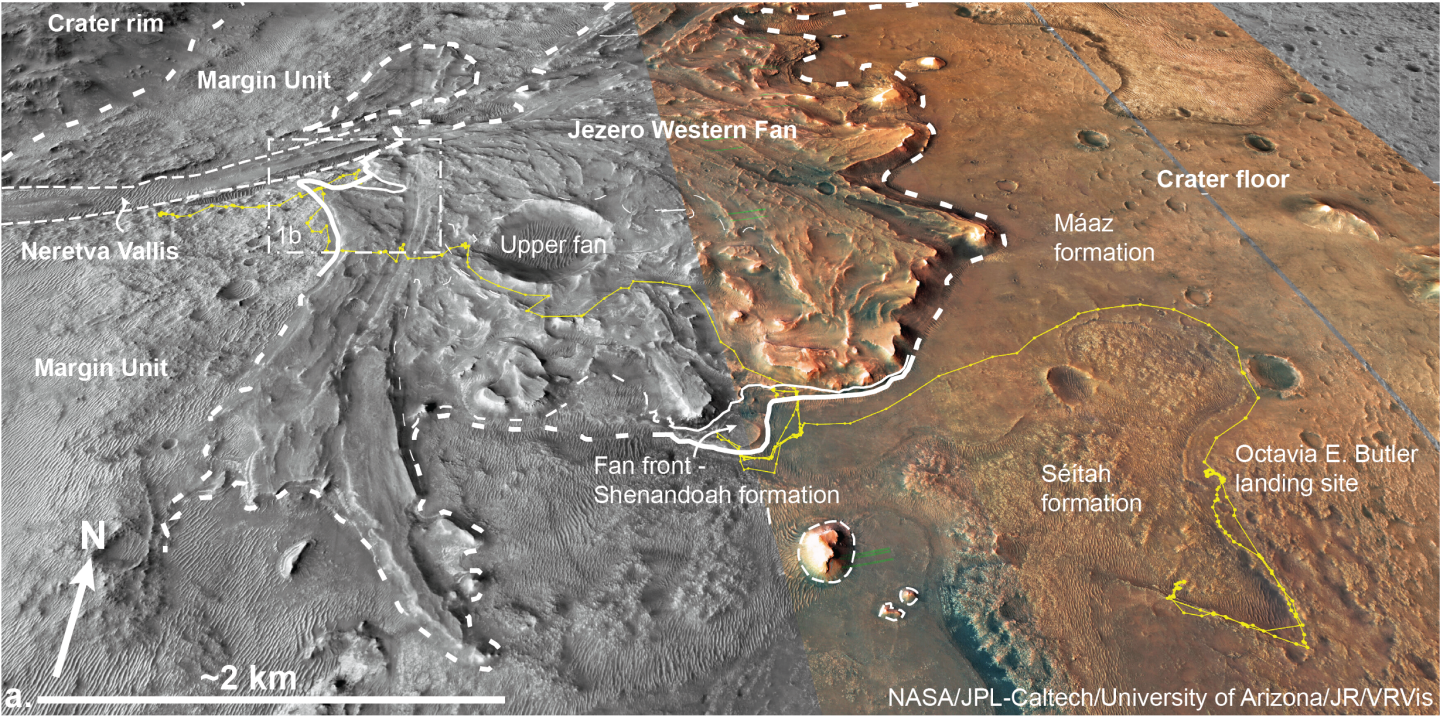
As the Perseverance team continues to navigate the complex topography near the Neretva Vallis and the Western fan, the data collected from the Margin Unit will serve as a roadmap. The ability to distinguish between purely geological mineral formation and potential biosignatures requires a granular understanding of the environment. By establishing the three-phase history of these rocks, the mission has successfully narrowed the search parameters for the most promising samples to be returned to Earth.
Ultimately, this research suggests that Mars had a much more sophisticated and prolonged hydrological history than previously estimated. The combination of standing surface water, circulating groundwater, and intermittent hydrothermal activity creates a trifecta of environments that are, by Earth standards, highly conducive to life. As NASA and its international partners look toward future missions, the lessons learned in the Jezero Crater will redefine the criteria for selecting landing sites and analyzing the potential for ancient life on the Red Planet. The "surprises" encountered by the rover are not setbacks, but rather the essential components of a new, more nuanced narrative of the Martian past—a narrative that portrays Mars as a world that was once, in its own way, vibrant and evolving.
Related posts: