How a Danish Astronomer’s Accidental Discovery of the Speed of Light Changed Our Understanding of the Universe

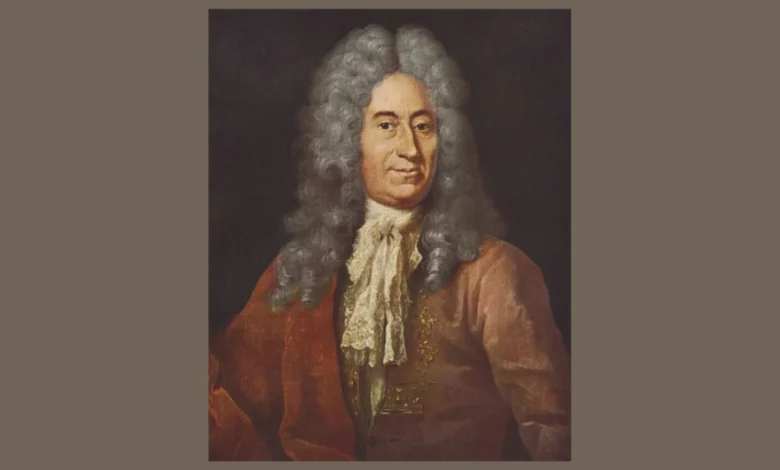
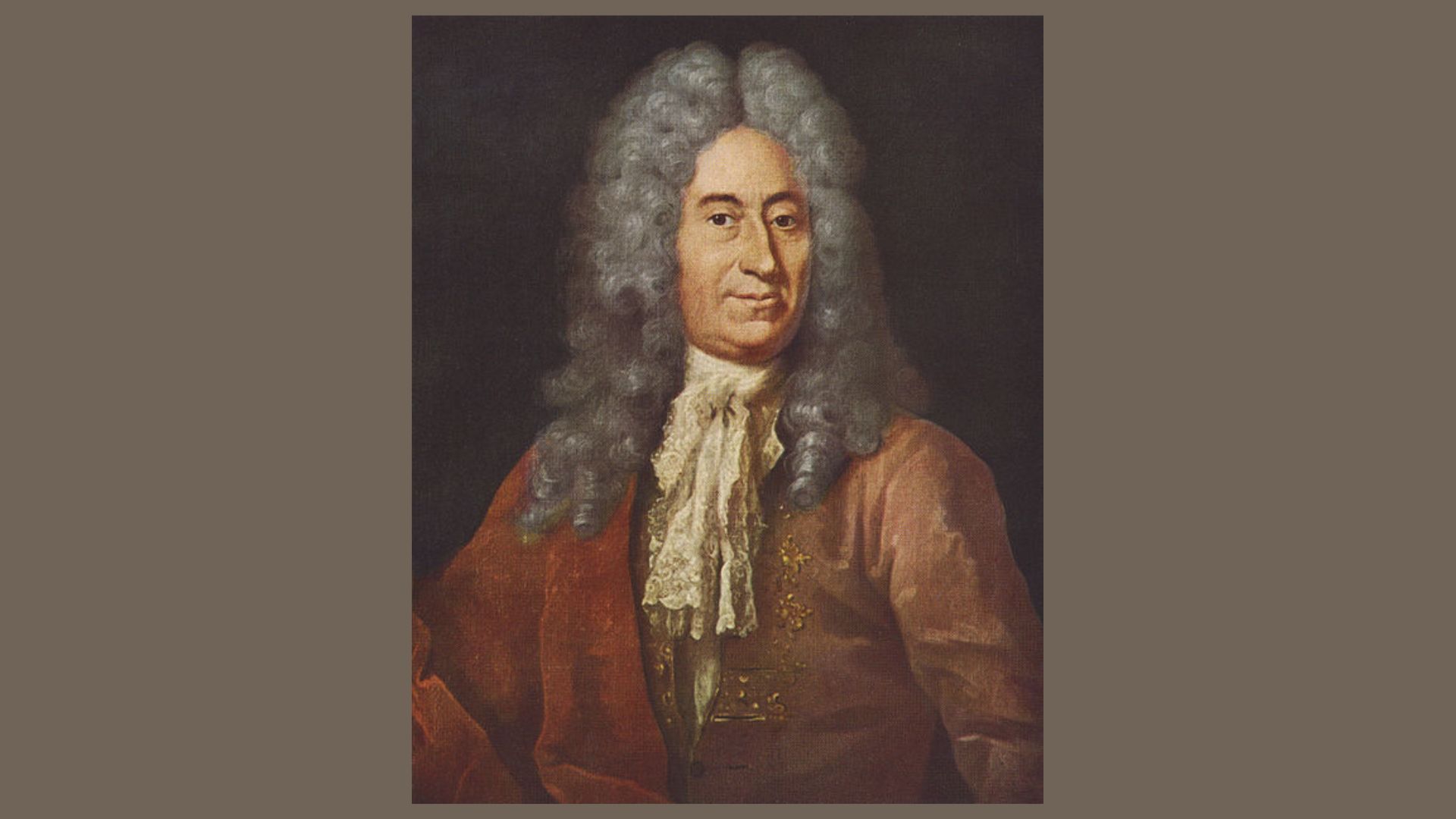
On November 21, 1676, Danish astronomer Ole Rømer stepped before the Royal Academy of Sciences in Paris to present a radical proposition that would forever alter humanity’s perception of the cosmos: light does not travel instantaneously, but rather moves at a finite, measurable speed. Prior to this groundbreaking revelation, mainstream scientific consensus held that light bridged distances across space instantaneously—that when a candle was lit or a star flared, its illumination was registered everywhere in the universe at the exact same microsecond. Rømer’s empirical observations shattered this long-standing philosophical dogma, laying the foundational groundwork for modern astrophysics, Albert Einstein’s theory of special relativity, and our modern comprehension of the scale of the universe.
The Quest for a Cosmic Clock
The remarkable discovery was not the result of a deliberate quest to measure light, but rather a byproduct of 17th-century navigation and astronomy challenges. During the Renaissance and the Scientific Revolution, European maritime powers faced a critical crisis: while latitude was easily calculated using the stars, determining longitude at sea remained a frustrating and often fatal riddle. Accurate timekeeping was the key to solving longitude, but pendulum clocks of the era were notoriously unreliable on pitching ships.
Astronomers turned their eyes upward in search of a celestial timekeeper. Galileo Galilei had recently discovered Jupiter’s four largest moons—Io, Europa, Ganymede, and Callisto—in 1610. Because these moons were regularly eclipsed by the massive shadow of Jupiter, early scientists realized that these occultations occurred with clockwork regularity. Ole Rømer, working at the Paris Observatory under the direction of Giovanni Domenico Cassini, set out to map the precise orbital period of Io, Jupiter’s innermost Galilean moon, to create a universal ephemeris table that sailors could use to determine their longitude anywhere on Earth.
Io orbits Jupiter rapidly, completing a full revolution in approximately 42.5 hours. Rømer meticulously tracked the moments Io vanished behind Jupiter’s shadow and reappeared on the opposite side, compiling years of observations. However, as he analyzed the data, an inexplicable discrepancy emerged that threatened to derail his entire project.
An Unsettling Discrepancy in the Data
Rømer noticed that the timing of Io’s eclipses was stubbornly inconsistent. The deviations did not follow a random error margin; instead, they correlated directly with Earth’s changing position relative to Jupiter in their respective orbits around the sun.
When Earth was positioned closest to Jupiter during their orbital convergence, Io’s eclipses occurred roughly 11 minutes ahead of the calculated mathematical schedule. Conversely, as Earth and Jupiter moved further apart on opposite sides of the solar system, the observed eclipses lagged behind schedule by a corresponding 11 minutes.
To Cassini and many of his contemporaries, these temporal anomalies were attributed to observational errors, atmospheric disturbances, or irregularities in Io’s orbit caused by gravitational tugs from the other Jovian moons. But Rømer suspected something far more profound. He hypothesized that the delays were not happening at Jupiter, but rather along the journey of the light itself as it traveled across the expanding and contracting expanse of space between Earth and Jupiter.
The Breakthrough and Presentation of 1676
By factoring in the changing distance between the two planets, Rømer realized that light required a specific duration of time to traverse the solar system. When Earth was closer, light had a shorter distance to travel to reach astronomers’ telescopes; when Earth was farther away, the photons required extra time to cross the additional interplanetary gap.
Armed with this hypothesis, Rømer successfully calculated a pattern and made a bold, public prediction for an upcoming eclipse of Io scheduled for November 9, 1676. When the eclipse occurred precisely as his new timing model predicted—offset by the calculated transit time of light—he had the empirical proof he needed.
On November 21, 1676, Rømer formally presented his findings to the Royal Academy of Sciences. Although his initial calculation for the speed of light was hindered by contemporary inaccuracies in knowing the exact dimensions of Earth’s orbit and the astronomical unit, his conceptual leap was absolute. Rømer estimated that light took about 22 minutes to travel a distance equal to the diameter of Earth’s orbit around the sun. (Later refinements by Dutch physicist Christiaan Huygens and English scientist Isaac Newton helped convert Rømer’s observations into a velocity value, which is very close to the modern standard of approximately 299,792 kilometers per second, or 186,282 miles per second).
Scientific Reactions and the Skepticism of Cassini
Despite the elegance of Rømer’s deductions, his discovery was not immediately embraced by the entire scientific establishment. Giovanni Domenico Cassini, Rømer’s mentor and a towering figure at the Paris Observatory, famously rejected the finite speed of light hypothesis for years. Cassini argued that if light took time to travel across the solar system, other observed phenomena involving Jupiter’s moons should exhibit similar discrepancies, which he believed they did not.

Other contemporary intellectuals, however, quickly grasped the revolutionary implications of Rømer’s work. Christiaan Huygens used Rømer’s data to calculate a numerical estimate for light’s velocity, writing that Rømer’s discovery "proved with great ingenuity that light is propagated in time, and not instantaneously." Isaac Newton later incorporated Rømer’s findings into his own optical and gravitational theories, cementing the concept that light travels at a finite velocity through the vacuum of space.
It was not until decades after Rømer’s death, when English astronomer James Bradley discovered the aberration of starlight in 1728—an entirely independent phenomenon caused by the motion of Earth relative to incoming starlight—that the scientific community universally accepted that light travels at a finite, measurable speed.
Why Rømer’s Discovery Mattered: The Ultimate Cosmic Speed Limit
The realization that light has a finite speed fundamentally transformed human inquiry, transitioning natural philosophy into modern empirical physics. Without a defined speed of light, humanity would remain trapped in a Newtonian absolute framework of space and time, incapable of understanding the true scale and architecture of the universe.
- Unlocking the Scale of the Universe: Because light travels at a constant velocity, it serves as a cosmic ruler. Astronomers measure vast interstellar and intergalactic distances in "light-years"—the distance light travels in a single Earth year (roughly 5.88 trillion miles or 9.46 trillion kilometers). Without knowing that light takes time to travel, calculating the distance to nearby stars, let alone distant galaxies billions of light-years away, would be conceptually impossible.
- A Window into the Past: A direct corollary of Rømer’s discovery is that looking out into space is literally looking back in time. When we observe the sun, we see it as it was roughly 8 minutes ago. When we observe distant galaxies, we are peering millions or billions of years into the past, allowing astronomers to construct a chronological history of cosmic evolution from the Big Bang to the present day.
- The Foundation of Special Relativity: Rømer’s constant became the bedrock upon which Albert Einstein built his 1905 theory of special relativity. Einstein postulated that the speed of light in a vacuum is an absolute universal constant, identical for all observers regardless of their relative motion. This principle led to the realization that space and time are inextricably linked into a single fabric known as spacetime, and that mass and energy are interchangeable via the famous equation $E=mc^2$.
- The Ultimate Speed Limit: In modern physics, the speed of light ($c$) acts as an unyielding cosmic speed limit. Objects with mass—ranging from subatomic particles and spacecraft to human beings—cannot accelerate to the speed of light because doing so would require an infinite amount of energy. This physical constraint shapes our understanding of causality, interstellar travel limitations, and the fundamental laws governing matter and energy.
Legacy in Modern Science
Today, Ole Rømer is remembered not merely as an assistant to a prominent 17th-century astronomer, but as the pioneer who unlocked the mechanics of the cosmos. His methodical tracking of Jupiter’s moon Io transformed an observational anomaly into one of the most consequential intellectual breakthroughs in human history.
As humanity continues to push the boundaries of space exploration—communicating with deep-space probes like Voyager at the edge of the solar system, and peering into the early universe with advanced observatories like the James Webb Space Telescope—we remain bound by the universal constant that Rømer first championed on a late November afternoon over three and a half centuries ago.