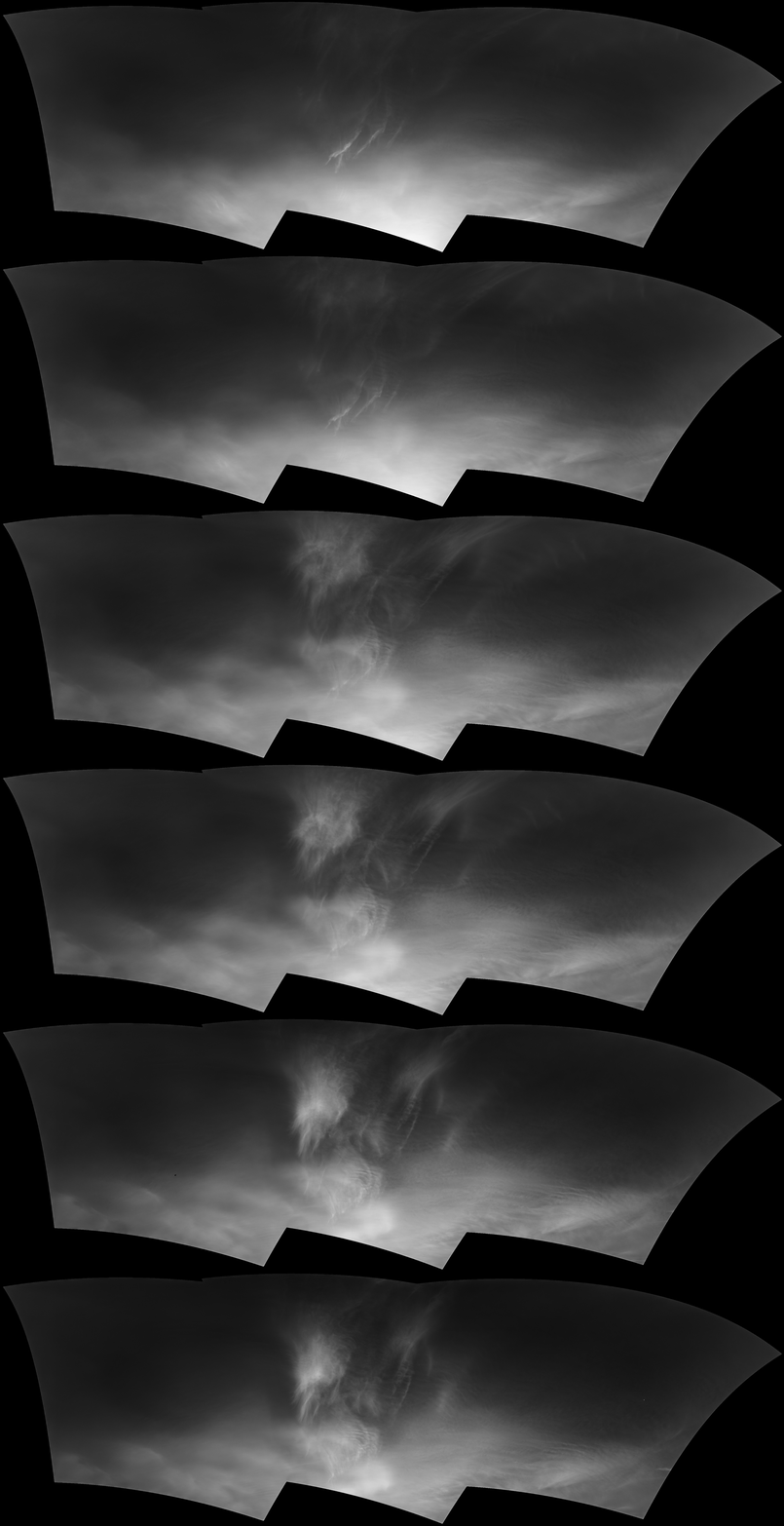
On October 31, 2026, marking the 5,061st Martian day of its mission, NASA’s Curiosity rover turned its navigation cameras toward the sky to capture a hauntingly beautiful atmospheric phenomenon: wispy, iridescent clouds drifting over Gale Crater. This visual record, released by NASA’s Jet Propulsion Laboratory (JPL), offers more than just a striking portrait of the Martian landscape; it provides critical data for atmospheric scientists studying the complex seasonal cycles of the Red Planet. The images, captured in the post-sunset twilight, reveal the thin, ethereal structure of high-altitude ice clouds that materialize for only a brief window during the Martian autumn.
A Decade of Discovery at Gale Crater
The Curiosity rover has been a constant presence on the Martian surface since its landing in August 2012. Over the course of more than 14 years, the rover has traversed the floor of Gale Crater, a massive, ancient impact basin that serves as a geological archive of Mars’ transition from a potentially habitable, water-rich world to the arid, frozen desert observed today.
While the primary mission of Curiosity involves analyzing soil samples and drilling into sedimentary rock to search for organic compounds, the rover also functions as a sophisticated weather station. The detection of these twilight clouds is part of a broader, long-term observational campaign. By monitoring these cloud formations, scientists are able to map the temperature, pressure, and moisture content of the Martian atmosphere at altitudes that are otherwise difficult to probe.
The Science of Martian Twilight Clouds
Martian clouds are fundamentally different from those on Earth. While terrestrial clouds are largely composed of water vapor, clouds on Mars can be made of water ice or, during colder periods, carbon dioxide ice (dry ice). The clouds captured by Curiosity on Sol 5,061 are categorized as high-altitude ice clouds. These formations typically develop at altitudes of roughly 50 to 80 kilometers above the surface.
At this height, the atmosphere is thin and frigid. As the sun dips below the horizon, the temperature drops rapidly, causing water vapor to condense onto microscopic dust particles suspended in the atmosphere. The resulting clouds are often faint, requiring the sensitive sensors of the rover’s navigation cameras—which were originally designed for terrain navigation—to capture the subtle light-scattering effects. The glow observed in the images is a result of sunlight catching the ice crystals from below the horizon, a phenomenon similar to noctilucent clouds observed on Earth.
Chronology of the Martian Seasonal Cycle
The timing of this observation is not coincidental. Martian weather is highly seasonal, dictated by the planet’s eccentric orbit and its axial tilt. The autumn season in Gale Crater brings specific atmospheric conditions that favor the formation of these high-altitude clouds.
- 2012: Curiosity touches down in Gale Crater, beginning its mission to analyze the history of liquid water on Mars.
- 2014-2016: Early atmospheric studies establish a baseline for seasonal temperature fluctuations.
- 2021: Curiosity begins a more intensive study of "seasonal pulse" patterns, identifying recurring cloud structures.
- 2026 (October 31): The rover captures the latest high-resolution imagery of twilight clouds, providing a data point for the 5,061st sol of operations.
This data allows researchers to construct a chronological model of how the Martian atmosphere has evolved over the last decade. By comparing images taken in 2026 with those from earlier years, scientists can discern whether atmospheric circulation patterns are shifting, providing insights into the current stability of the Martian climate.
Operational Challenges and Engineering Prowess
Operating a robotic explorer for over 14 years is an unprecedented engineering feat. Managed by the Jet Propulsion Laboratory (JPL) in Pasadena, California, on behalf of NASA’s Science Mission Directorate, Curiosity has exceeded its original mission parameters by more than a decade. The fact that the rover remains capable of performing complex photographic maneuvers while continuing its geological analysis is a testament to the durability of the hardware and the ingenuity of the flight software teams.
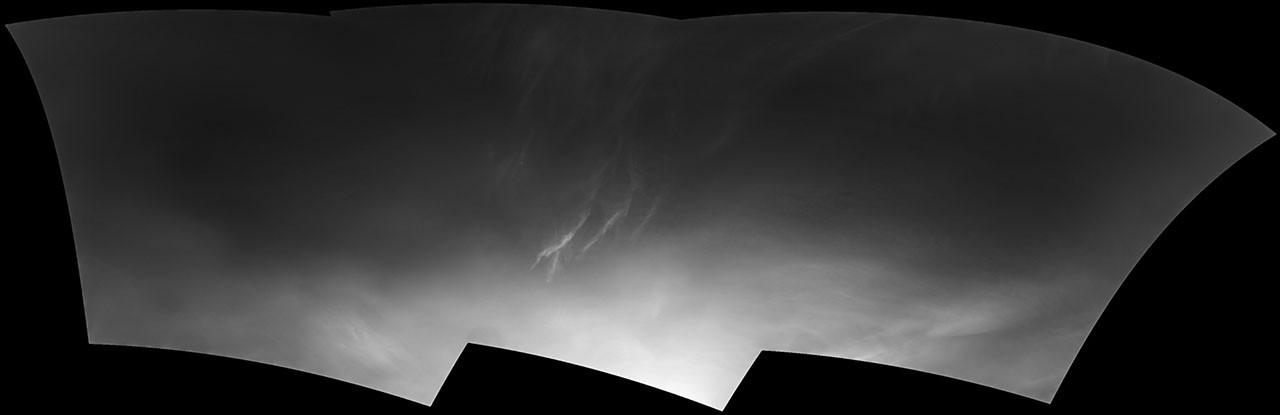
The navigation cameras used for this imagery are not the primary scientific imagers on the rover; however, their ability to be repurposed for atmospheric science is a core aspect of the mission’s flexibility. The command sequence required to capture these clouds involves precise timing: the rover must be parked, the cameras must be calibrated for low-light conditions, and the images must be transmitted back to Earth via the Deep Space Network (DSN) during narrow communication windows with orbiting satellites like the Mars Reconnaissance Orbiter (MRO).
Data Implications and Scientific Utility
The primary value of these images lies in the study of atmospheric dynamics. Data gathered by Curiosity suggests that the Martian atmosphere is more active than previously believed. The presence of these clouds indicates that water vapor is being transported to high altitudes, a process that has significant implications for our understanding of the planet’s water cycle.
Furthermore, the observation of these clouds assists in validating Global Circulation Models (GCMs). By comparing the visual evidence of cloud density and location with computer simulations, meteorologists can refine their understanding of how heat is distributed across the Martian globe. This is vital for future robotic and human missions, as predicting surface winds and atmospheric density is essential for the safe landing of spacecraft.
Expert Perspectives on the Findings
While individual cloud sightings might seem like a routine observation, atmospheric scientists view them as essential puzzle pieces. "Every time we capture a high-altitude cloud event, we are effectively taking a cross-section of the Martian atmosphere," notes one lead scientist familiar with the mission. "We are looking at the interplay between surface temperatures, dust storms, and the upper-level wind currents. These clouds are the visible indicators of invisible processes that have been shaping Mars for billions of years."
The collaboration between the Curiosity team and the broader Mars Exploration Program ensures that this data is not kept in isolation. It is shared with the global scientific community to support research into comparative planetology—the study of how Earth and Mars diverged on such drastically different evolutionary paths.
Looking Toward the Future
As Curiosity continues its trek through the foothills of Mount Sharp, the mountain at the center of Gale Crater, the mission will continue to focus on the intersection of geology and meteorology. The rover’s findings regarding the Martian climate provide a crucial "ground truth" that complements the data collected by orbital missions.
The 5,061-sol milestone serves as a reminder of the longevity of the Mars Exploration Program. While newer rovers like Perseverance are currently exploring different regions of the planet, the cumulative data provided by Curiosity remains the gold standard for long-term Martian environmental monitoring. As the planet moves into the winter season, researchers anticipate further opportunities to observe the evolution of these atmospheric structures.
The twilight clouds of Gale Crater are more than a spectacle of light and shadow; they are a window into the current state of our neighbor planet. Through the eyes of Curiosity, humanity continues to build a comprehensive atlas of a world that once mirrored our own, refining our understanding of the solar system and our place within it. For those interested in tracking the ongoing progress of the mission, NASA provides updated logs and raw image galleries through the mission’s official portal, ensuring that the legacy of Curiosity remains accessible to both the scientific community and the general public.