ESA’s Hera Mission Captures First Close-Up Imagery of the Didymos Asteroid System Following Historic DART Impact

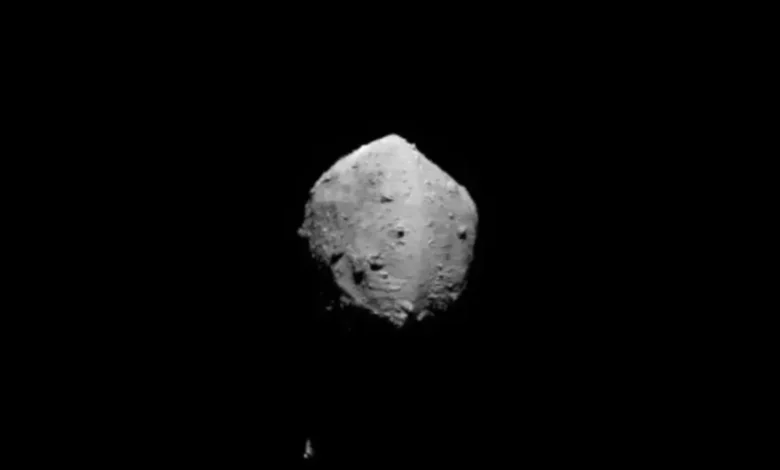
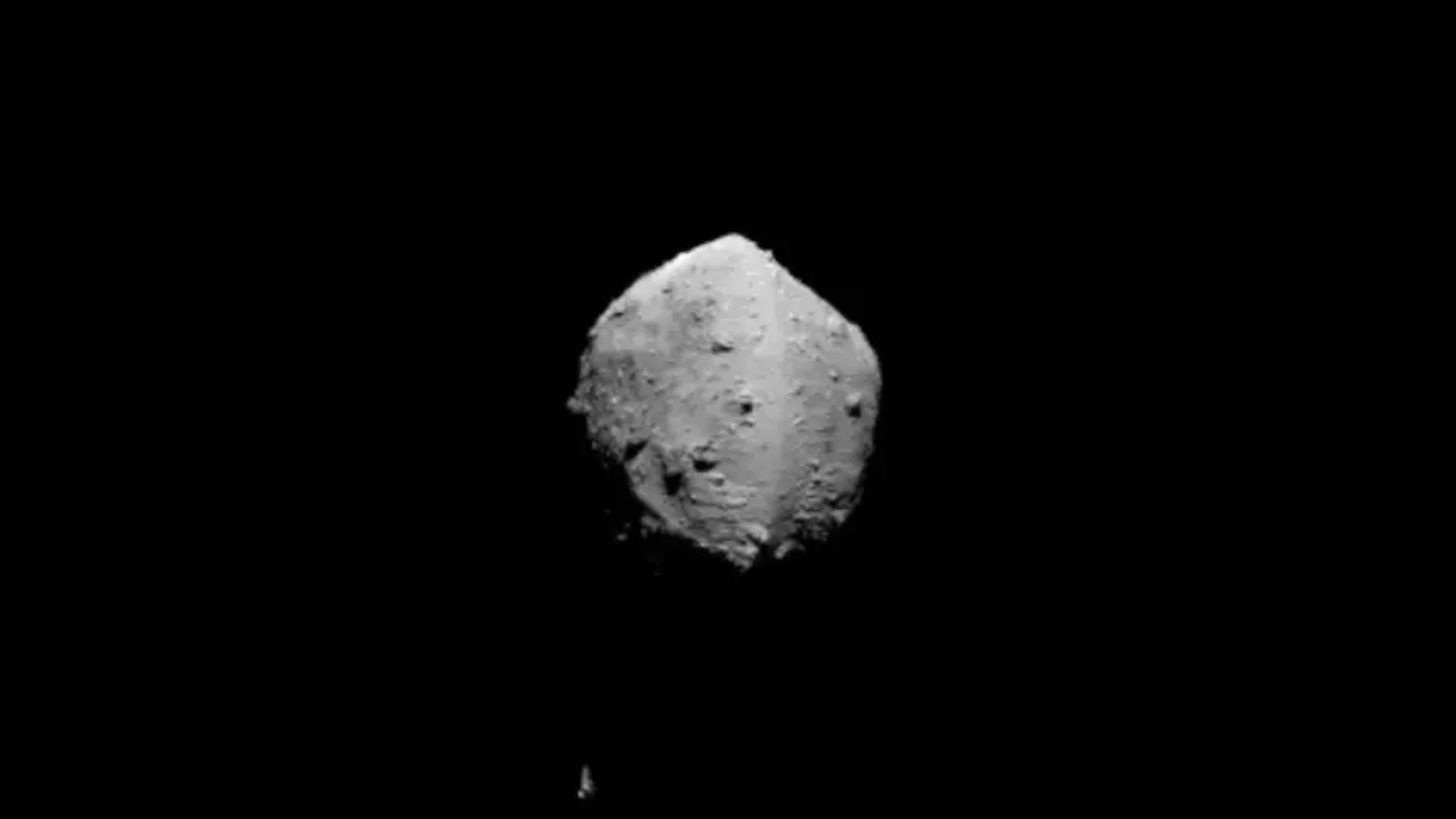
In a landmark achievement for planetary defense, the European Space Agency’s (ESA) Hera spacecraft has successfully initiated its close-up observation phase of the Didymos binary asteroid system. This mission marks a critical follow-up to the September 2022 Double Asteroid Redirection Test (DART), a NASA mission that demonstrated the kinetic impactor technique for potential asteroid deflection. On November 5, 2026, Hera returned its inaugural high-resolution imagery, focusing on the primary body, Didymos, from a distance of approximately 37 miles. This visual data provides the first comprehensive look at the system since the impact, offering scientists a rare opportunity to study the aftermath of a controlled planetary defense experiment and the geological evolution of binary asteroid systems.
A Chronology of the DART-Hera Campaign
The narrative of human intervention in the trajectory of a near-Earth object (NEO) began in earnest with the development of DART. Launched in November 2021, the spacecraft was engineered to intercept the binary asteroid system consisting of the larger primary, Didymos (roughly 2,559 feet in diameter), and its smaller, orbiting moonlet, Dimorphos (approximately 525 feet in diameter).
On September 26, 2022, DART executed a high-velocity collision with Dimorphos at a speed of 14,000 miles per hour. The primary goal of the mission was to alter the orbital period of the moonlet around the primary body, thereby proving that a spacecraft could successfully nudge a potentially hazardous asteroid off a collision course with Earth. NASA confirmed shortly after the impact that the mission had exceeded expectations, shortening the orbital period of Dimorphos by approximately 32 minutes—far surpassing the ten-minute minimum threshold for mission success.
Following the impact, the global scientific community transitioned from a phase of kinetic demonstration to a phase of meticulous analysis. The Hera mission was subsequently launched to bridge the knowledge gap, serving as a forensic investigation to measure the physical properties of the crater, the internal structure of the asteroids, and the precise amount of mass ejected during the impact. Hera’s arrival in the vicinity of Didymos this November marks the beginning of its comprehensive survey phase.
Understanding the Didymos-Dimorphos System
The Didymos system is classified as a near-Earth binary, a configuration where two asteroids are gravitationally bound. The primary, Didymos, is a rapidly rotating, top-shaped asteroid characterized by a prominent equatorial ridge—a feature common to many small, fast-spinning asteroids.
The Hera mission’s recent images provide a sharp contrast to the data gathered by the DART spacecraft in its final moments. While DART provided a “one-way ticket” perspective, focused solely on the impact site on Dimorphos, Hera is equipped with a suite of sophisticated instruments—including high-resolution cameras, laser altimeters, and spectrometers—designed to map the entire system.
"The first thing we said was, ‘Wow!’" stated Patrick Michel, the Hera mission’s principal investigator. "This is the other side of Didymos from the one that DART’s camera showed us shortly before impact, so this feels like looking at a whole new world."
The images highlight the rugged, crater-strewn landscape of Didymos, which appears to have a distinct geological profile compared to its smaller companion. Scientists are particularly interested in determining the extent to which debris ejected from the impact on Dimorphos has settled on the surface of the primary body. Because the two objects are separated by a distance of only about 0.7 miles, the system acts as a closed laboratory, where the "splatter" from the impact provides a unique geological record of the kinetic transfer.
Supporting Data and Technical Significance
The Hera spacecraft’s arrival at the Didymos system is not merely for the purpose of photography. The mission is tasked with solving several lingering questions that have persisted since 2022:
- Mass Determination: By observing the orbital dynamics with high precision, Hera will calculate the exact mass of both objects, a variable that was previously estimated using models and light-curve observations.
- Impact Crater Analysis: While ground-based telescopes and the James Webb Space Telescope monitored the dust plume, only an on-site observer can accurately measure the size and morphology of the impact crater created by DART. This is crucial for calibrating models of how different asteroid compositions react to kinetic impactors.
- Internal Structure: Through radio science experiments, the team aims to determine whether these asteroids are "rubble piles"—loose collections of boulders and dust held together by weak gravity—or more monolithic structures.
The mission is effectively the "post-mortem" of the DART experiment, essential for the future development of planetary defense technologies. Should a future NEO be identified on a collision trajectory with Earth, the success of a deflection mission will depend heavily on the internal consistency and structural integrity of the target asteroid.
Official Responses and Future Objectives
The European Space Agency, in collaboration with international partners, has maintained a high level of transparency regarding the Hera mission’s progress. Mission scientist Michael Kueppers emphasized the complexity of the data collection process, noting, "We have exciting work ahead of us to sort it out. We look forward to seeing much more of both bodies and systematically mapping all the changes we identify."
ESA has confirmed that a significantly larger set of high-definition imagery and multispectral data is scheduled for public release on November 25, 2026. This release is expected to provide the first clear look at the impact crater on Dimorphos, which remains largely obscured in the current, preliminary imagery due to lighting conditions and the orbit of the spacecraft.
The broader international scientific community has reacted with cautious optimism. Organizations such as the International Asteroid Warning Network (IAWN) have noted that the data provided by Hera will be instrumental in refining the "impact hazard assessment" protocols. By understanding the outcome of a controlled collision, space agencies can better predict the behavior of asteroids in the 100-to-500-meter size range, which represents the most common threat profile for global or regional catastrophes.
Broader Impact and Implications for Planetary Defense
The success of the DART-Hera sequence represents a transition in human history. For the first time, humanity has not only observed the heavens but has actively participated in modifying the mechanics of the solar system. The implications for the future of space exploration are profound.
If the kinetic impactor technique is deemed sufficiently predictable—a conclusion that depends heavily on the findings from the Hera mission—it could become the standard for addressing near-Earth threats. However, the data gathered by Hera may also reveal limitations. For instance, if the impact resulted in more fragmentation than expected, or if the asteroid’s internal structure effectively dampened the momentum transfer, it might indicate that future missions require different strategies, such as multi-impact arrays or nuclear stand-off devices for larger, more resilient targets.
Furthermore, the study of binary asteroids offers insights into the formation of the early solar system. Didymos and Dimorphos are effectively "time capsules" of solar system debris, and their study provides data on the conditions that existed during the formation of planets. The Hera mission, while primarily focused on defense, is thus contributing to fundamental astrophysics.
As Hera continues its orbit, it will deploy two small "CubeSats"—Juventas and Milani—which will perform close-range radar tomography and surface composition analysis, respectively. These instruments will provide the "ground truth" for the asteroid’s surface, potentially identifying the presence of water ice or minerals that could be exploited for future in-situ resource utilization (ISRU) missions.
In summary, the images released in November 2026 serve as a catalyst for a new era of space science. While the DART impact demonstrated the "how," the Hera mission is now answering the "why" and "what happened." The findings from this mission will inform the next generation of space defense, ensuring that when the next significant rock crosses the path of Earth, humanity is prepared with the empirical evidence needed to mount a successful response. The scientific community waits with anticipation for the data to come, marking a pivotal moment in our stewardship of the planet and our understanding of the celestial environment we inhabit.