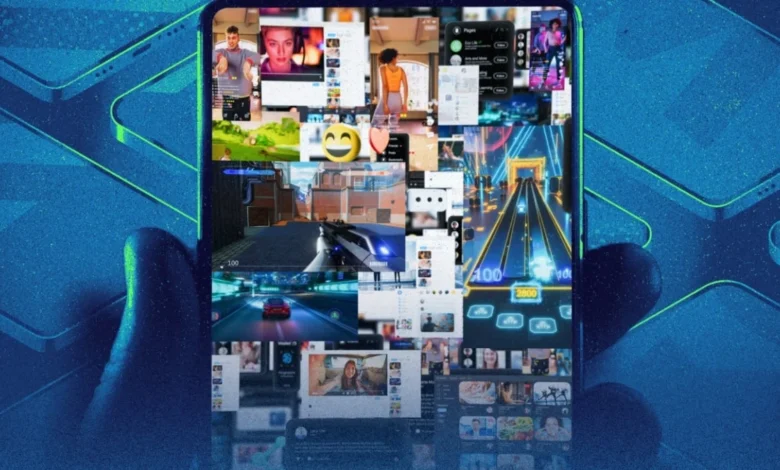
In the modern digital ecosystem, the threshold for sustained attention is shrinking. For many, a forty-five-minute scroll through TikTok feels instantaneous, while a two-minute video played at standard speed can feel like an arduous, interminable commitment. This paradox—where individuals consume more content than ever while simultaneously possessing less patience for any single piece of media—has become a defining characteristic of contemporary life. In Japan, this phenomenon has been distilled into a sharp, evocative piece of youth slang: dopagaki.
Derived from a portmanteau of "dopamine" and gaki—a derogatory Japanese term for a child or "brat"—the word describes an individual who is perpetually tethered to the promise of instant digital gratification. While the term may initially appear to be a clinical critique of screen dependency, its evolution from a niche observation about music composition to a self-aware label used by teenagers reflects a profound shift in how society understands its relationship with technology.
The Origins: From Musical Analysis to Cultural Critique
The term dopagaki did not emerge from a medical journal or a psychological study, but rather from the analytical discourse surrounding popular culture. In December 2024, a user on the social media platform X (formerly Twitter) dissected the structural composition of "Lilac," a track by the prominent Japanese rock band Mrs. GREEN APPLE. The user noted that the song was engineered with such a relentless succession of high-energy melodies and rapid musical payoffs that it barely allowed the listener a moment of respite.
The user labeled the song’s structure as being designed for a "dopamine-addicted brat" (dōpamin chūdoku no gaki). The critique suggested that modern pop music, much like short-form video content, is increasingly optimized to trigger frequent reward responses in the brain. This observation resonated with a broader audience, quickly spreading across Japanese social media. The term was eventually shortened to dopagaki, transforming a specific critique of music production into a broader sociological descriptor for the "scrolling generation."
The Chronology of a Viral Lexicon
The ascent of dopagaki as a household term within Japanese youth culture occurred rapidly throughout 2026. By June 2026, the term had been formally identified by the Joshikosei Lab, a marketing research group specializing in the habits of high school girls. In a survey conducted by the group, dopagaki was listed as one of the seven most significant trending expressions of the mid-year period.

The research highlighted that the term was being used as a form of "self-deprecating humor." Rather than solely acting as a slur used by older generations to disparage younger ones, the term was adopted by the demographic it described to label their own habits—such as the compulsion to watch TikTok videos while performing mundane tasks like bathing or grooming. By October 2026, subsequent polling by Japanese media outlets confirmed the term’s endurance; 16 percent of surveyed high school students identified it as their most-used slang, while an additional 17 percent acknowledged its ubiquity on their social feeds.
Data-Driven Reality: The Attention Economy
The rise of dopagaki as a cultural touchstone aligns with global trends in digital consumption. According to the DataReportal Digital 2027 Global Overview Report, the average adult user spends approximately 19 hours and 18 minutes per week on social media and video streaming platforms. This equates to over two and a half hours of daily engagement with content streams designed to maximize "stickiness" through algorithmic curation.
The "dopamine-addicted" aspect of the term is grounded in neurobiological reality, though it remains a colloquialism rather than a clinical diagnosis. When users engage with hyper-stimulating content, the brain releases dopamine—a neurotransmitter associated with reward-seeking behavior. As platforms implement features like infinite scroll, video chapters, and micro-dramas, they create a feedback loop that rewards the brain for constant switching. This environment has effectively trained users to prioritize the "hook" over the substance, rendering long-form or slow-burn content increasingly difficult to process for the average consumer.
A Comparative Analysis: The "iPad Kid" vs. The "Dopagaki"
While Western internet culture has adopted terms like "iPad kid" or "brainrot" to describe similar behaviors, dopagaki occupies a distinct space. The "iPad kid" is frequently used as a pejorative, targeting children who appear disconnected from reality due to tablet use. "Brainrot," meanwhile, is an aesthetic descriptor for the absurd, nonsensical content that has become a staple of modern algorithms.
Dopagaki is unique in its inherent self-awareness. While it carries a sting of condescension when used by others, its adoption as a form of irony suggests that the digital native is keenly aware of their own cognitive conditioning. It is an acknowledgement that the "boredom" they feel is not a character flaw, but a symptom of living in a hyper-optimized attention economy.
Official Responses and Societal Implications
Educational and mental health professionals in Japan have observed this trend with cautious interest. While the term itself is informal, it has provided a vocabulary for parents and educators to discuss digital consumption with the younger generation. Some advocates for digital literacy suggest that the normalization of dopagaki may actually be a positive development, as it fosters a meta-cognitive awareness of screen habits.

However, the broader implications remain sobering. If the demand for constant stimulation is being met by an entertainment industry that designs its products to be "dopamine-heavy," the cycle of dependency is unlikely to break without systemic intervention. Industry analysts note that media companies are currently in an arms race for attention, with the success of a video or song often measured by its ability to prevent the user from clicking away. This creates a structural incentive for creators to shorten their content, accelerate their editing, and maximize the density of "satisfying" moments.
The Future of the Digital Attention Span
The persistence of dopagaki in the Japanese lexicon indicates that the issue of digital overconsumption is not a passing phase but a structural adjustment to how humans interact with information. As the line between the user and the platform continues to blur, the terminology used to describe this relationship will likely continue to evolve.
Whether dopagaki remains a fleeting piece of 2026 slang or becomes a permanent fixture in the study of media psychology, its message is clear: the modern consumer feels trapped by the very tools they use to find entertainment. The fact that the youth have chosen to laugh at this trap through a term that highlights both the "addiction" and the "bratty" impatience it fosters suggests a desperate need for a recalibration of how we consume the world around us.
As the digital landscape continues to fragment, the ability to sit with silence—to watch a video without skipping to the "best part" or to listen to a song without needing an immediate melodic payoff—may become a rare, counter-cultural skill. For now, the term dopagaki serves as a mirror, reflecting a generation that is fully aware of the strings pulling their attention, yet still, by design or by choice, continues to scroll.