Historical Detective Work Corrects Date of Earth’s First Recorded Solar-Induced Technological Disruption

A team of space-weather researchers has solved a century-old historical puzzle, correcting the timeline of what was long believed to be the earliest documented instance of a solar storm disrupting terrestrial technology. Through meticulous archival investigation, scientists have established that a famous 19th-century railway disturbance in southwest England actually occurred seven years later than previously documented, shifting the historical record and offering profound insights into the long-standing vulnerability of human infrastructure to space weather.
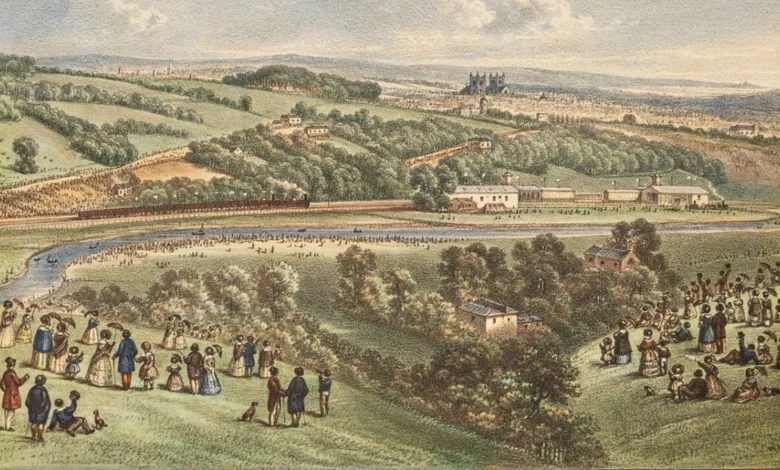
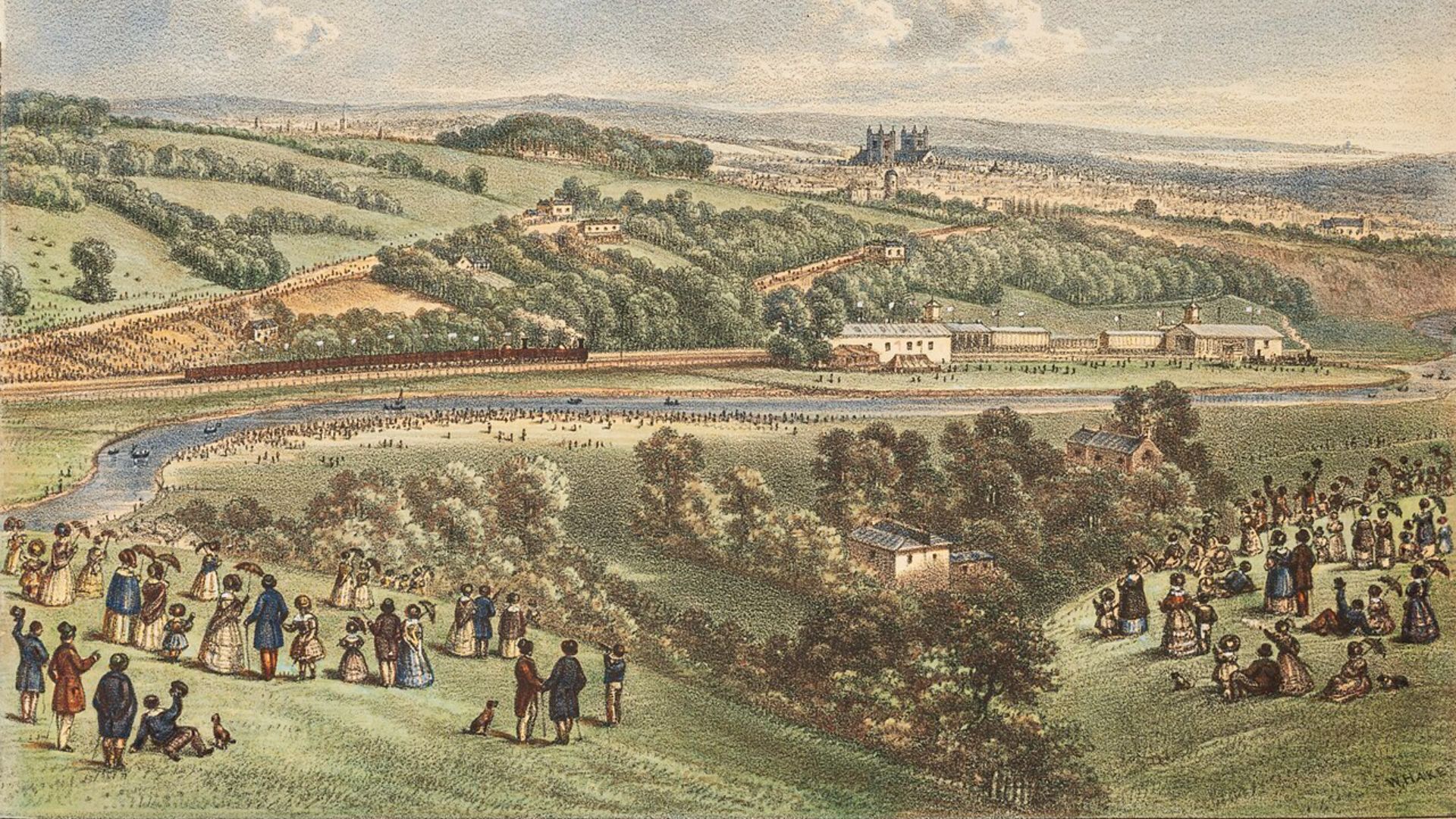
The anomaly in question initially came to light in an 1871 edition of the scientific journal Nature. According to the historical report, an electrical disturbance on October 18, 1841, flooded the telegraph network governing railway signals near Exeter, Devon, resulting in an unexpected 16-minute delay for a departing train. For generations, historians of science and space weather researchers cited this specific incident as the inaugural milestone in the timeline of technological disruptions caused by geomagnetic activity originating from the sun.
However, a modern investigation led by space physics experts revealed significant chronological inconsistencies that demanded a thorough historical review.
Unraveling the Timeline: A Historical Detective Story
The breakthrough came when a research team spearheaded by Jim Wild, a professor of space physics at Lancaster University and President of the Royal Astronomical Society, alongside Mike Hapgood of RAL Space—the United Kingdom’s National Space Laboratory—began cross-referencing the 1871 Nature report with primary historical documentation.
The primary red flag emerged from transport history itself. The specific railway line connecting Exeter that featured in the original account did not actually open until 1846—five years after the alleged 1841 disruption. Recognizing this stark chronological impossibility, the team embarked on a rigorous detective effort to unearth the true sequence of events.
"Our research has a hint of a detective story—piecing together a wide range of archived records to better understand a historically severe space-weather event," explained Mike Hapgood.
To reconstruct the true timeline, the researchers synthesized an array of disparate historical data sources. They scoured digitized nineteenth-century newspapers, historical railway timetables, archived records of solar observations, accounts of mid-latitude sightings of the northern lights (aurora borealis), and newly digitized historical geomagnetic measurements.
By correlating these independent datasets, Wild and his colleagues concluded that the solar storm and subsequent telegraph disruption in Exeter did not take place in 1841. Instead, the overwhelming weight of historical evidence points to October 18, 1848, as the true date of the event, coinciding with a documented, highly intense geomagnetic storm that battered Earth’s upper atmosphere.
Redefining the Chronology of Space Weather Impacts
This correction fundamentally alters the chronology of early technological interactions with space weather. Because the Exeter incident must now be formally reassigned to 1848, it loses its status as the earliest recorded case of a solar storm interfering with electrical infrastructure.
That distinction now belongs to a separate incident documented on the Midland railway network, which operated extensive rail lines across large swathes of the United Kingdom. Archival records indicate that geomagnetic currents disrupted telegraph operations on the Midland network in March 1847—predating the revised Exeter event by more than a year and a half.
Despite losing the top spot in chronological priority, the Exeter railway delay remains a watershed moment in the history of science and engineering.
"Although this means it is not the earliest recorded space weather impact, it remains one of the first clear examples of solar activity disrupting critical infrastructure," said Jim Wild. "It also demonstrates the value of combining scientific records with contemporary newspaper reports and archival documents when reconstructing historic space weather events."
The 19th-Century Dawn of Electrical Vulnerability
The corrected timeline emphasizes a critical reality for modern society: human technological vulnerability to solar activity is nearly as old as electrical technology itself. For millennia, humanity lived beneath the protective shield of Earth’s magnetic field and atmosphere, largely insulated from solar emissions save for occasional, breathtaking displays of the aurora borealis.
However, the advent of the Industrial Revolution in the early-to-mid 19th century fundamentally changed this dynamic. The rapid global expansion of long-distance communication and transportation networks—specifically the electric telegraph and signal-controlled railways—created vast metallic conductor loops across the surface of the planet. These long wires acted essentially as massive antennas, inadvertently capturing geomagnetically induced currents (GICs) generated when powerful coronal mass ejections (CMEs) slammed into Earth’s magnetosphere.
The vulnerability of these early systems was dramatically underscored less than a decade after the Exeter incident, during the legendary Carrington Event of September 1859. Widely recognized as the most severe solar storm in recorded history, the Carrington Event caused unprecedented global chaos. Telegraph operators reported that systems continued to function even with their primary batteries disconnected, running entirely on power supplied by the geomagnetic currents coursing through the lines. In some instances, the overwhelming electrical surges sparked fires, shocked operators, and completely paralyzed communication links across Europe and North America.
Modern Implications and Contemporary Vulnerabilities
While historical space-weather events like the 1848 Exeter delay and the 1859 Carrington Event offer fascinating glimpses into the Victorian era’s encounter with the cosmos, modern scientists emphasize that the underlying risk has multiplied exponentially in the contemporary era.
"Society has been experiencing the effects of space weather on technology for almost as long as electrical technologies have existed," noted Wild.
Yet, experts warn that the scale of potential disruption has shifted dramatically. While mid-19th-century infrastructure was limited to simple telegraph wires and basic railway signals, modern civilization depends heavily on complex, highly integrated, and global technologies. Satellites in low Earth orbit, global navigation satellite systems (GNSS), commercial aviation routing, high-frequency radio communications, and massive high-voltage electrical power transmission grids are all acutely sensitive to space weather.
"While today’s space weather monitoring capabilities are far more advanced than anything available in the 1800s, the modern technologies we depend on are also much more vulnerable to solar storms," explained Hapgood.
A severe geomagnetic storm occurring today on the scale of the Carrington Event could induce widespread, catastrophic blackouts, permanently fry critical power transformers, cripple orbital spacecraft, and disrupt global financial and internet communications for weeks or months. Consequently, government agencies, space agencies, and utility operators worldwide maintain continuous monitoring programs to forecast solar activity and provide advanced warning to grid operators and satellite managers.
The Sun’s Current Activity Cycle
The historical findings arrive as Earth navigates the turbulent peak of the current solar cycle. The sun operates on an approximately 11-year cycle of magnetic activity, characterized by a transition from a quiet solar minimum to an active solar maximum defined by sunspots, solar flares, and coronal mass ejections.
Solar Cycle 25 officially reached its peak in October 2024, initiating an extended period of heightened space weather. Although the sun is now beginning to transition out of this maximum phase on its multi-year journey toward the next solar minimum projected for around 2030, powerful storms remain a persistent possibility.
In May 2024, the planet experienced its most severe geomagnetic storm in decades, producing spectacular auroral displays visible across unusually low latitudes worldwide and testing the resilience of modern satellite fleets and power grids. As researchers continue to analyze historical archives alongside real-time data from spacecraft like NASA’s Solar Dynamics Observatory, the lessons of the 1848 Exeter railway delay serve as a timely reminder that Earth’s technological destiny is inextricably linked to the dynamic behavior of our nearest star.
Related posts: