Microsoft Unveils Next Generation AI Infrastructure and Open Source Hardware Innovations at OCP Global Summit 2026

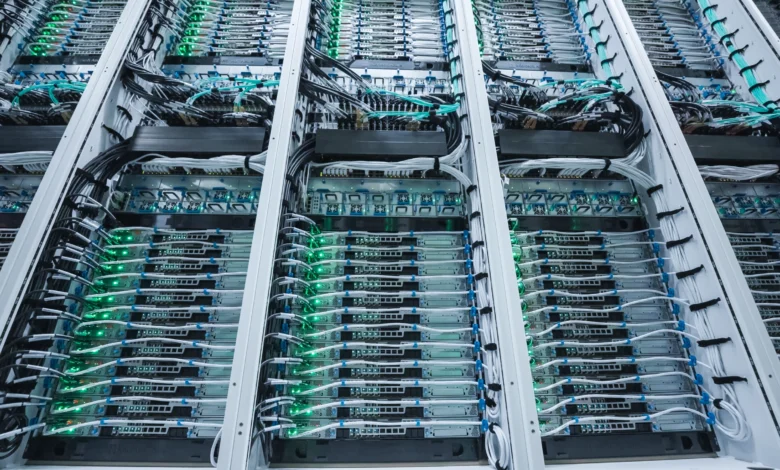
The rapid acceleration of artificial intelligence has transitioned from a period of experimental deployment to an era of "Super Intelligence," necessitating a radical rethink of the underlying physical architecture that powers global digital services. At the Open Compute Project (OCP) Global Summit 2026, Microsoft detailed its comprehensive strategy to build a "Frontier Firm"—an organizational model where human judgment and AI-driven intelligence operate in a continuous, symbiotic loop. To support this vision, the company unveiled a massive upgrade to its hardware stack, spanning custom-designed silicon, high-voltage power delivery systems, and advanced liquid cooling technologies.
The Strategic Shift: Co-designing Silicon for Inference
As the AI industry matures, the focus of compute demand has shifted from massive model training to high-frequency inference—the process of running models to provide real-time answers. Microsoft’s response to this shift is anchored by the Maia family of accelerators. The newly announced Azure Maia 300 represents a significant leap in architectural efficiency, specifically engineered to handle the demands of long-context reasoning and multi-step agentic workflows.
According to technical specifications released at the summit, the Maia 300 is designed to deliver a 40% increase in tokens per watt compared to current GPU-based market standards. When deployed in a full 96-accelerator rack configuration, the system achieves up to seven times the token throughput of the preceding Maia 200 model. This performance gain is critical for businesses operating at scale, where energy efficiency directly correlates to operational cost and environmental sustainability.
The Maia 200, which is currently undergoing deployment across data centers in the United States, Australia, and Europe, has already demonstrated its efficacy. Microsoft reports that the silicon provides a 1.7x improvement in tokens per watt for internal services like Microsoft Teams and Copilot, validating the company’s "system co-design" philosophy, which involves optimizing the model, kernel, and hardware in a single, unified development loop.
Agent-Native Computing: The Cobalt 200 CPU
While accelerators handle the heavy mathematical lifting of AI, the orchestration of agentic workflows—where AI agents proactively perform tasks like data retrieval and memory management—requires a different type of compute power. Microsoft introduced the Cobalt 200, an agent-native CPU built to handle the complexities of these new interaction patterns.
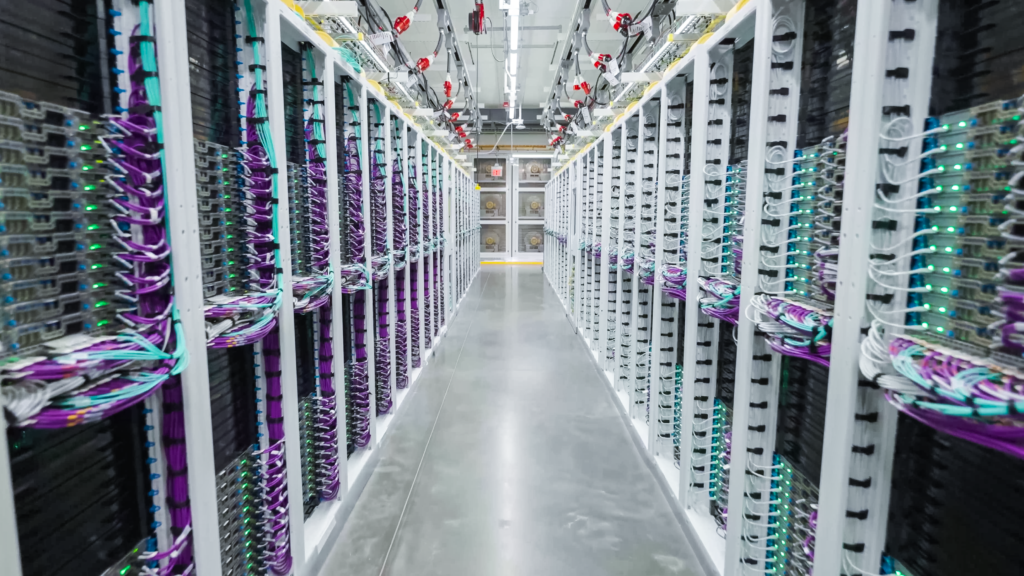
By offloading specific orchestration tasks to the Cobalt 200, Microsoft has achieved a 50% performance improvement over the previous generation Cobalt 100. Perhaps more significantly for end-users, the chip reduces agent call latency by 33%, a critical metric for conversational AI experiences that rely on instantaneous feedback. The chip also offers a 23% increase in throughput, ensuring that as agentic workloads grow in complexity, the infrastructure remains resilient and responsive.
Revolutionizing Infrastructure: Power and Cooling at Scale
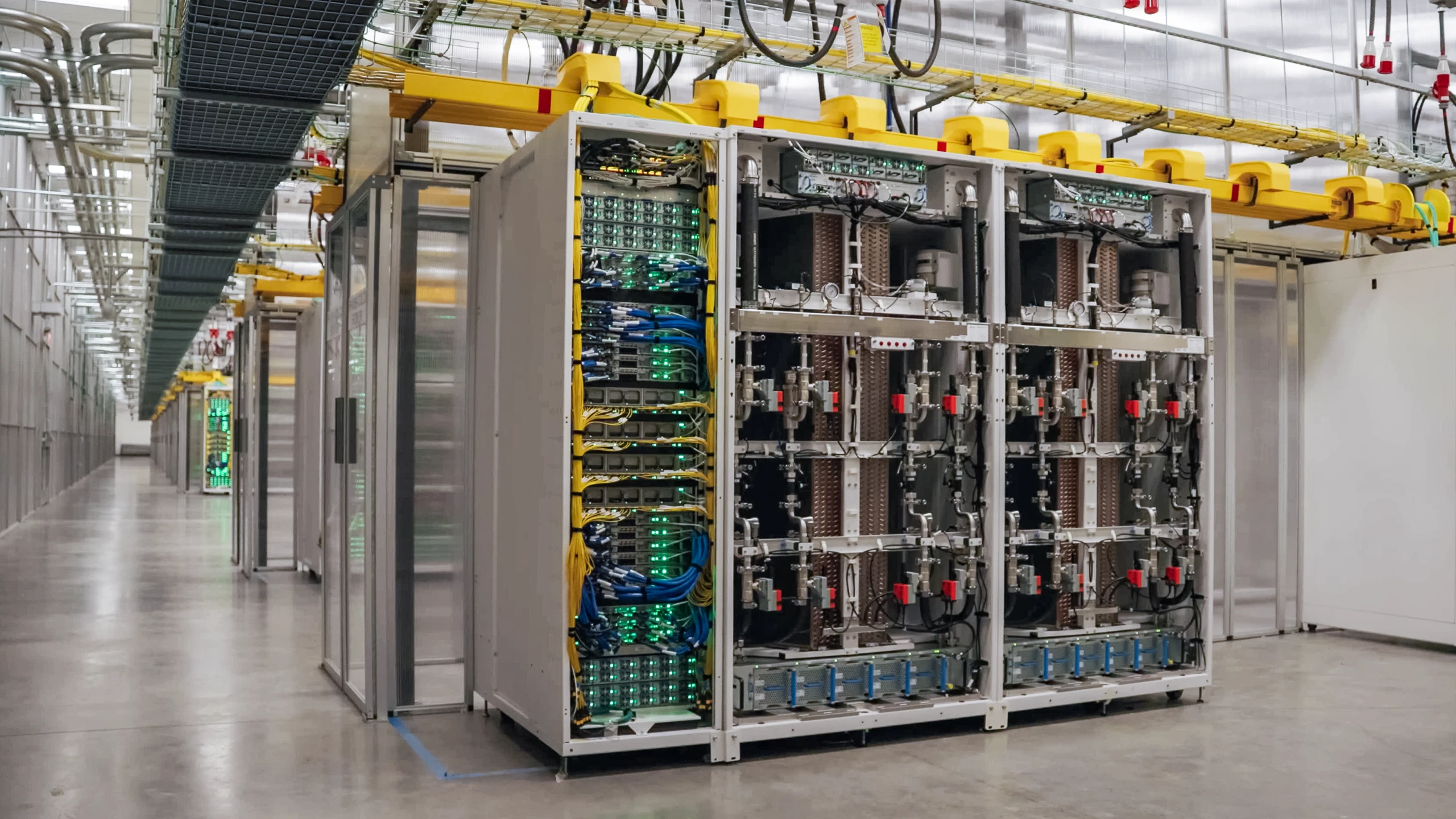
The physical constraints of AI—specifically the intense heat and massive power requirements of modern data centers—have led Microsoft to rethink the entire power delivery chain. The company is spearheading a transition toward 800-volt direct current (VDC) infrastructure, a move intended to minimize power conversion losses that occur when electricity is stepped down multiple times.
Central to this transition is "Mt. Diablo," a disaggregated, high-voltage data center sidecar architecture. By separating power conversion from the compute racks, Microsoft allows both to scale independently, supporting modular loads ranging from 100 kilowatts to over one megawatt. This architecture is designed to accommodate the increasing density of next-generation AI hardware, which traditional 48V or 240V systems struggle to support efficiently.
Cooling, similarly, has moved from a facility-level concern to a first-class design requirement. The introduction of the third-generation Azure Heat Exchanger Unit, dubbed "Mt. Atlas," nearly doubles the cooling capacity of its predecessor without increasing the physical footprint. This is complemented by a "zonal cooling" strategy, which employs multiple independent water loops at varying temperatures to match the specific thermal profiles of different hardware, such as air-cooled CPUs versus liquid-cooled accelerators.
Networking and Open Source Security
The intelligence generated by these systems is only as valuable as the network that distributes it. Microsoft’s collaboration on the Multipath Reliable Connection (MRC) architecture aims to redefine Ethernet for AI-scale workloads. By utilizing a multi-plane network architecture, MRC allows for the scaling of clusters to over 100,000 GPUs. This approach reduces congestion through intelligent packet spraying and minimizes failure points, addressing the bottlenecks that often plague massive distributed training clusters.
Security remains a cornerstone of this infrastructure strategy. Following the success of Azure Integrated HSM, Microsoft, in partnership with Marvell and Oracle, has launched the "Tessera Integrated HSM" initiative. By open-sourcing the architecture, protocols, and silicon specifications for these hardware security modules, the partners aim to establish a transparent, community-vetted standard for protecting cryptographic keys, ensuring that security is baked into the hardware layer rather than existing as a secondary software overlay.
The Broader Impact: Sustainability and Future-Proofing
The rapid growth of AI infrastructure poses a significant challenge to global environmental goals. Microsoft has integrated sustainability into its hardware development cycle, aiming for carbon-negative, water-positive, and zero-waste operations by 2030. This involves using low-embodied-carbon steel and concrete in construction, as well as maintaining Circular Centers that recycle or reuse over 90% of server components.
The implications of these developments are twofold. First, for the enterprise sector, Microsoft’s approach provides a path toward adopting AI without assuming the prohibitive costs of bespoke hardware management. By offering these technologies through the Azure cloud, Microsoft essentially abstracts the complexity of silicon and power management, allowing customers to focus on model deployment.
Second, the industry-wide move toward open standards, exemplified by the Open Compute Project and the OCI MSA (Optical Compute Interconnect Multi-Source Agreement), signals a shift away from proprietary vendor lock-in. By inviting industry partners to collaborate on specifications for Ethernet networking, power conversion, and security, Microsoft is attempting to create a "rising tide" effect where the entire ecosystem becomes more efficient and resilient.
Analysis: A New Era of Vertical Integration
The trajectory established by the 2026 OCP Global Summit confirms that the competitive advantage in the AI era is no longer found solely in software algorithms, but in the tight vertical integration of the entire stack. By designing the silicon (Maia/Cobalt), the power delivery (Mt. Diablo), the networking (MRC), and the security (Tessera) in tandem with the workloads they serve, Microsoft is effectively creating a closed-loop system.
However, the success of this strategy hinges on the company’s ability to maintain an open ecosystem. As the industry faces pressures related to electricity consumption and grid stability, the transition to 800VDC and modular cooling will require widespread adoption by utilities and hardware manufacturers. The collaborative nature of the announcements suggests that Microsoft recognizes it cannot build the future of AI in isolation; instead, it is positioning itself as the primary architect of a new, standardized foundation for the next decade of digital evolution.
As these technologies move from the lab to full-scale production, the metrics of success will be defined by latency, tokens-per-watt, and the ability to maintain these benchmarks while meeting stringent sustainability mandates. For the broader industry, the OCP 2026 disclosures provide a clear roadmap: the future of AI is modular, open, highly efficient, and—above all—physically demanding. The companies that successfully master the intersection of these variables will likely define the next chapter of the global economy.