Utahs New Green River Energy Center Signals a Monumental Shift in the Regional Energy Landscape

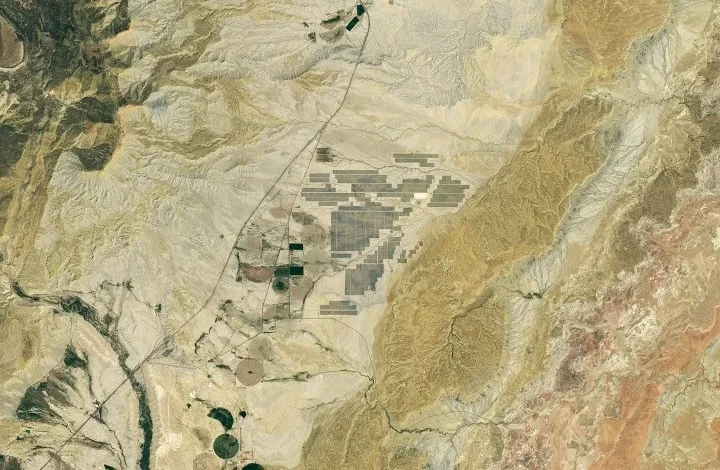
The commissioning of the Green River Energy Center in June 2026 represents a landmark achievement in the American West’s transition toward a diversified energy portfolio. Located in the heart of Utah’s Castle Valley, approximately 130 miles southeast of Salt Lake City, this massive utility-scale facility combines solar photovoltaic generation with advanced battery energy storage systems (BESS). As one of the largest installations of its kind in the Intermountain West, the project marks a significant departure from the region’s historical reliance on fossil fuels and underscores the rapid evolution of the state’s electricity grid. Captured by the Landsat 8 satellite, the facility spans several square miles of previously undeveloped land in Emery County, featuring a sprawling array of nearly one million solar panels and a sophisticated battery complex designed to stabilize the regional power supply.
A Historical Pivot: From Coal Hub to Solar Stronghold
For over a century, the geography of central Utah has been synonymous with coal. The Wasatch Plateau, which borders Castle Valley to the west, has hosted active mining operations since the late 1800s. For generations, the economy of Emery County and the surrounding areas was built upon the extraction and combustion of coal, which fueled the state’s industrial growth and provided a reliable source of baseload power. Coal was so central to the state’s identity that it was officially designated as Utah’s state rock.
However, the arrival of the Green River Energy Center in 2026 signifies a profound structural change. The facility is not merely an addition to the grid; it is a replacement for the aging energy paradigms of the past. By utilizing existing transmission lines originally constructed for coal-fired power plants, the Green River Energy Center demonstrates a strategic approach to the energy transition. This repurposing of infrastructure reduces the need for new, disruptive corridors of high-voltage lines, allowing the renewable energy sector to "plug into" the legacy of the coal industry while steering the state toward a lower-carbon future.
Technical Specifications and Capacity of the Green River Energy Center
The scale of the Green River Energy Center is vast, both in physical footprint and electrical output. The facility boasts a solar-generating capacity of 400 megawatts (MW), supported by an additional 400 MW of integrated battery storage. This 1:1 ratio of generation to storage is a critical component of modern grid design, addressing the inherent intermittency of solar power.
The installation includes nearly one million individual solar panels, arranged in a manner that optimizes sun exposure in the high-desert environment of Castle Valley. Accompanying these panels are approximately 500 large-scale battery units. These batteries serve as a reservoir, capturing excess electricity produced during the peak daylight hours—when solar production often exceeds demand—and discharging it into the grid during the evening or during periods of cloud cover.
According to project estimates, the facility has the capacity to produce enough electricity to power more than 100,000 homes. This output is primarily destined for Salt Lake City and other major metropolitan areas across the Wasatch Front, providing a clean energy lifeline to the state’s most populous regions.
Chronology of Utah’s Energy Evolution
The development of the Green River Energy Center is the culmination of a decade-long shift in Utah’s energy policy and market dynamics. A look at the state’s energy generation data reveals a clear trajectory:
- 2015: Coal accounted for approximately 75 percent of Utah’s total electricity generation. At this time, utility-scale solar was virtually non-existent in the state’s energy mix, representing nearly zero percent of production.
- 2020–2024: Technological advancements and falling costs for lithium-ion batteries and photovoltaic cells led to a surge in renewable energy permits. During this period, several smaller solar farms were established, and the planning for the Green River Energy Center began in earnest.
- 2025: Coal’s share of the state’s electricity generation dropped to roughly 50 percent, while solar rose to account for approximately 14 percent. This period also saw an increase in geothermal and natural gas investments to provide grid flexibility.
- June 2026: The Green River Energy Center officially comes online, significantly boosting the state’s solar and storage capacity and setting the stage for further reductions in coal dependency.
This timeline illustrates that while coal remains a significant part of the landscape, its dominance is waning in favor of more cost-competitive and environmentally sustainable alternatives.
Supporting Data: The Role of Battery Storage in Grid Stability
One of the most significant challenges facing renewable energy adoption is the "duck curve"—a phenomenon where solar production peaks at midday when demand is relatively low, and then drops off sharply in the evening just as consumer demand spikes. The Green River Energy Center addresses this through its massive 400 MW battery storage component.
Data from the U.S. Energy Information Administration (EIA) indicates that 2026 is a record-breaking year for battery storage integration across the United States. The Green River project is part of a broader national trend where developers are increasingly pairing solar arrays with storage to create "dispatchable" renewable energy. This allows grid operators to treat solar plants more like traditional power plants, with the ability to call for power at any hour of the day or night.
The inclusion of 500 batteries at the Green River site ensures that the energy harvested from the Utah sun is not wasted. This storage capacity is essential for maintaining the frequency and voltage stability of the regional grid, preventing blackouts, and reducing the need to ramp up gas-fired "peaker" plants during times of high demand.
Economic and Local Impact in Emery County
The transition from coal to solar has significant implications for local communities. In Emery County, where the Green River Energy Center is located, the project has provided a much-needed economic injection. During the construction phase, the project created hundreds of local jobs, ranging from site preparation and engineering to electrical installation.
While solar facilities typically require fewer permanent employees than coal mines or traditional power plants, the Green River Energy Center contributes to the local tax base, supporting schools, infrastructure, and public services. Furthermore, the project offers a model for a "just transition," where regions traditionally dependent on the extraction industry are prioritized for new energy infrastructure investments. By using the transmission lines of the old coal era, the project maintains Emery County’s status as a critical energy hub for the state, albeit with a different technological focus.
Environmental Monitoring and the Role of Satellite Data
The monitoring of such large-scale land-use changes is made possible through advanced satellite technology. The Landsat 8 satellite, a joint mission between NASA and the U.S. Geological Survey (USGS), has been instrumental in tracking the development of the Green River Energy Center.
Satellite imagery provides planners and policymakers with an objective view of how renewable energy projects interact with the landscape. In the case of the Green River site, Landsat data allows scientists to assess the environmental impact on the desert ecosystem, monitor dust levels during construction, and track the long-term performance of the facility. This data is vital for future planning, as it helps identify the most suitable locations for renewable energy that minimize ecological disruption while maximizing solar yield.
Broader Implications for the Western United States
The success of the Green River Energy Center is being watched closely by other states in the Western Interconnection—the wide-area synchronous grid that links much of the western U.S. and Canada. As states like California, Nevada, and Arizona push for higher renewable energy mandates, the ability of Utah to successfully integrate large-scale storage with solar generation provides a blueprint for regional cooperation.
The facility also highlights the growing importance of the "sunny valley" geography found in the high-altitude deserts of the West. These areas offer high solar irradiance and relatively cool temperatures, which can improve the efficiency of photovoltaic panels compared to hotter, lower-elevation deserts.
Conclusion: A New Era for the Intermountain West
The Green River Energy Center is more than just a collection of panels and batteries; it is a symbol of a region in flux. As Utah navigates the complexities of the 21st-century energy market, the facility stands as a testament to the feasibility of large-scale renewable integration in areas formerly defined by fossil fuels.
By balancing the historical legacy of Castle Valley with the technological requirements of the future, the project ensures that Utah remains a leader in energy production. With 400 megawatts of solar and 400 megawatts of storage now feeding the grid, the state has taken a definitive step toward a more resilient, sustainable, and diversified power system. As the Sun sets over the Wasatch Plateau, the batteries at Green River begin their work, proving that the energy of the day can indeed power the needs of the night.
Related posts: